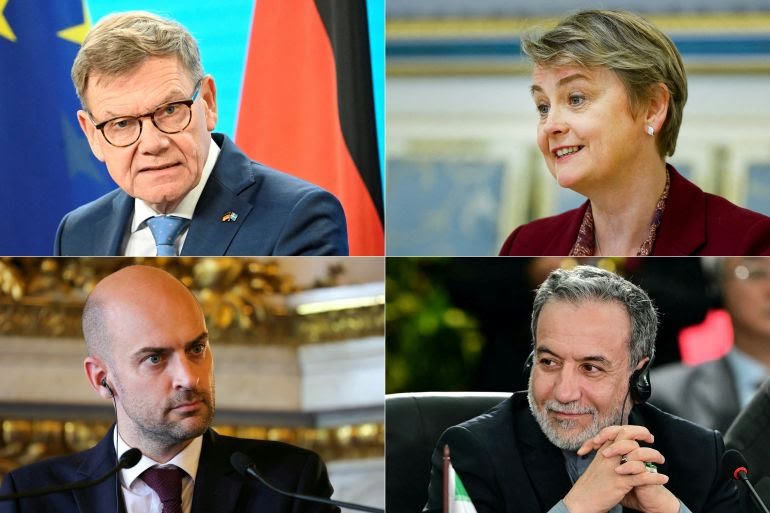
The UK, France, and Germany have declared they want to revive Iran negotiations after triggering UN sanctions via the snapback mechanism.
Their joint statement came more than a month after they reinstated international penalties against Tehran, citing breaches of its nuclear obligations. The three countries reaffirmed their goal of a “comprehensive, durable and verifiable agreement.”
The sanction reinstatement followed a decision by the E3 (UK, France, Germany) to reactivate the snapback clause in the UN Security Council, effectively reimposing long-dormant international sanctions.
Tehran responded by recalling its diplomats to those European capitals. In their statement, the E3 countries cited “serious threat” posed by Iran’s nuclear program and said negotiations must resume under new terms.
Moreover, the European trio pressed for talks involving the United States and outlined conditions for negotiations. They aim to ensure Iran’s nuclear activities remain under strict oversight. They said diplomacy is “the only path” to preventing a nuclear weapon in Tehran. Their approach includes the possibility of phased sanctions relief if Iran returns to compliance.
Meanwhile, Iran has warned it will not resume formal talks immediately. The Iranian Foreign Ministry spokesperson stated that it will assess the implications of renewed sanctions before reconsidering negotiations. He added that diplomacy remains an option “when effective methods align with national interests.”
Furthermore, the timing of the sanctions and diplomacy push raises several questions. Iran already enriched uranium beyond allowed levels and curtailed cooperation with the International Atomic Energy Agency.
Its response signals that Tehran views Western demands as coercive. The European push to revive talks threatens to escalate tensions further if Iran refuses.
In addition, analysts say the E3’s move is a gamble. By reimposing sanctions, they increase leverage. Yet Iran may dig in or retaliate diplomatically or economically. This path risks locking both sides into pressure cycles instead of productive dialogue.
Also, restoring negotiations will require compromises. Iran insists on relief from sanctions and recognition of its sovereignty. Europe and the U.S., in turn, demand verifiable controls, access to nuclear sites, and dismantling of advanced enrichment capabilities. Bridging that gap will test diplomatic creativity.
Finally, as efforts to revive Iran negotiations unfold, the next weeks will be critical. The E3’s call demonstrates intent, but only compelling diplomacy can overcome deep mistrust. Whether Iran responds with cooperation—or more resistance—could decide the future of the nuclear deal and regional stability.
About The Author