
At first, Isabel and her friends didn’t know what she was hearing were bomb blasts. The Caracas native, a graphic designer in her twenties, recalled being up late chatting and listening to music at a friend’s house as U.S. forces struck Venezuela’s capital city in the early hours of Jan. 3—part of an audacious raid to capture Venezuelan dictator Nicolás Maduro. Isabel initially thought the sounds shaking her surroundings were thunder.
[time-brightcove not-tgx=”true”]
As she and her friends scrambled to pick up beer bottles around the room, one pointed out the window at a plume of smoke coming from a nearby military base. More blasts shook the house. Isabel found herself huddling with her friends until dawn—struggling to breathe her way through two panic attacks. “The noise is something I’ll never forget,” she recalled in a phone interview with TIME. The next morning, Isabel ran back home, rarely venturing out since. Like others, her life has been shaped by the intense unease that has fallen over Venezuela in the aftermath of the U.S. raid.
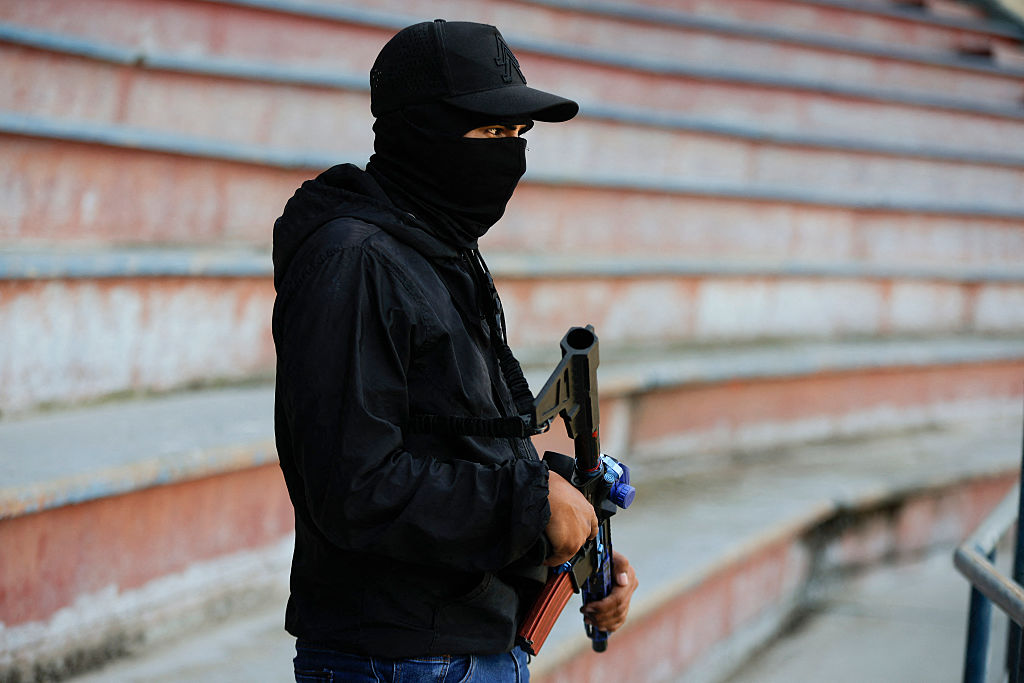
When news of Maduro’s removal first spread on social media early that Saturday morning, many banged pots and pans in celebration. Shouts of hijo de puta—son of a b–ch—could be heard in the streets of Caracas. But the quick flush of celebration has faded as it has become clear that the regime that supported Maduro remains in power. As Venezuelans have slowly emerged from their homes to buy groceries, see family, and go back to work, many are leaving their phones at home, concerned about their devices being searched by armed supporters of the government known as colectivos.
Several Venezuela residents told TIME that the fear of what might be discovered on their phone at a checkpoint has guided their behavior in the days since Maduro’s ouster.
“You can be in jail just because you are thinking differently from the government,” says C., a designer in Caracas who agreed to speak to TIME if she was only referred to by her first initial. She says she has deleted everything on her phone including photos, text conversations and Instagram. “There is a lot of uncertainty,” she says. “We have a fear of speaking, fear of sharing opinions on social media. Especially, we have fear that nothing will change.”
A similar anxiety has gripped Isabel and her friends, who all have resorted to deleting photos and text chains and removing apps. Isabel says she refuses to venture outside her immediate neighborhood to avoid coming across colectivos at a checkpoint and having her phone searched. “Everyone lives in fear at this point,” Isabel says. “I know what they’re capable of doing.”

A meme being circulated among some Venezuelans captures the ambivalent nature of the charged moment in the country. Against a purple background, text in Spanish compares the precautions many around Venezuela have taken since Maduro’s capture to the steps someone might take to hide their tracks if they were cheating on their spouse. “We are like married people with lovers… reading and deleting everything, to not get caught,” the meme says, followed by three emojis that are simultaneously crying and laughing.
On Saturday, the State Department sent out an alert advising U.S. citizens inside Venezuela to leave the country immediately, warning of reports of armed colectivos searching cars at checkpoints for evidence of U.S. citizenship or support for the United States.
Camila, a medical professional in Caracas, slept through the bomb blasts and buzz of American helicopters that took away Venezuela’s dictator. When she woke up around 10 a.m. that Saturday morning, she was stunned by the many text messages on her phone from friends about the news. She didn’t leave her house until Wednesday, afraid of having her phone searched and being sent to El Helicoide, a pyramid-shaped building in the center of Caracas that was designed to be a shopping mall but is better known as a site used by Venezuela’s intelligence agencies for interrogations and torture since the 1980s.
Camila said she heard a rumor that militia were stopping people at gunpoint and forcing them to plug their phones into a special electronic device designed to find anti-regime messages. Camila jokingly called the device Tronchatoro, or Trunchbull, after the sadistic school headmistress in Roald Dahl’s Matilda. Camila says she plans to go back to her office soon, but will be leaving her usual phone at home. Instead, she bought a new cell phone for $60 with a clean memory and a new number.
Despite fear of Tronchatoro, Camila says she feels “lighter” since Maduro’s capture, but still uneasy. She’s had many moments where she’s dared to hope the repressive government that has been in power since the late 1990s would be reformed. There was the potential for a new chapter after Hugo Chavez’s death in 2013. But then Maduro came to power. There were the elections in 2024 that the opposition won, but Maduro refused to accept the result. “You get, like, punched so many times in the face, that you’re scared to have hope.” Camila says. “I have a little hope, but you never get fully hopeful because it might be another punch in the face.”
About The Author