
As President Donald Trump battles with criticism over his Venezuela operation and his renewed push to annex Greenland, he is now encountering backlash due to the Department of Justice’s probe into Jerome Powell, chair of the Federal Reserve. At a time when the Republican Party is likely eager to present a united front, given the high-stakes midterm elections taking place later this year, the Trump Administration’s move to open a criminal investigation into the head of the central bank of the United States has proven to be divisive.
[time-brightcove not-tgx=”true”]
Powell confirmed that the Federal Reserve received grand jury subpoenas from the DOJ on Friday to coincide with its criminal investigation into whether he lied to Congress last June when testifying about the Fed’s headquarters renovation project. Referring to the actions as “unprecedented,” Powell—in a video address—urged the American public to view the investigation “in the broader context of the [Trump] Administration’s threats and ongoing pressure.”
The veteran banker argued that the probe has nothing to do with the renovation project—which he vows Congress was kept abreast of—and is instead rooted in something far more sinister. “The threat of criminal charges is a consequence of the Federal Reserve setting interest rates based on our best assessment of what will serve the public, rather than following the preferences of the President,” Powell claimed.
Further bringing into question the motivations behind the action, Powell condemned the idea that “monetary policy will be directed by political pressure or intimidation.”
Despite being appointed by Trump during his first term, Powell shares a contentious relationship with the President, who has often—and publicly—levied insults at him and called for his removal. Powell encountered Trump’s ire in April when he warned of the potential impact of the President’s controversial tariffs, highlighting the uncertainty they had caused within the economic market. Trump responded by again calling for Powell’s “termination” and claiming that he should have lowered interest rates—a request he has repeatedly made of the veteran banker.
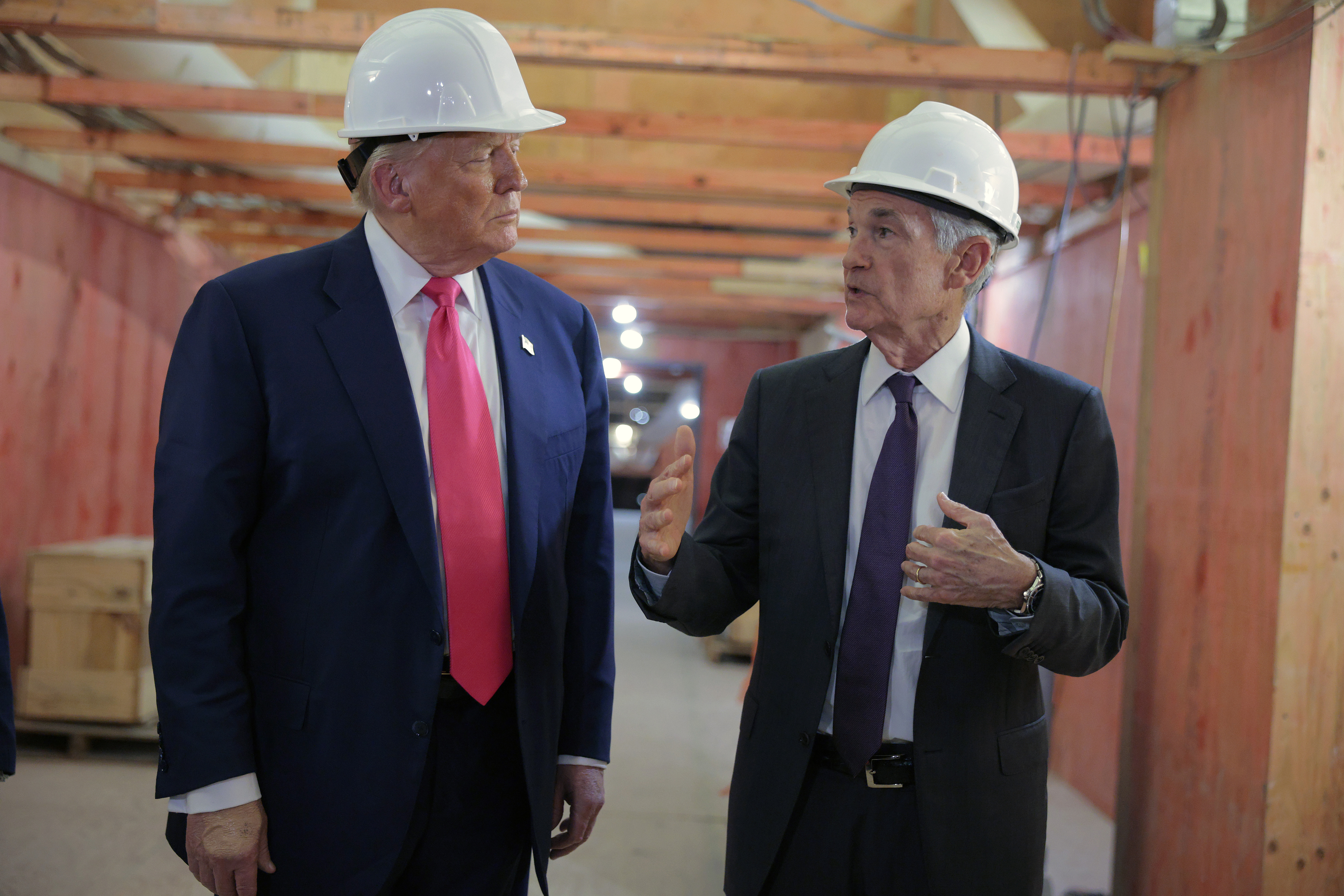
The pair clashed in front of the world stage in July when they met to inspect the construction of the Federal Reserve’s renovation project. During the filmed encounter, the footage of which has been widely revisited since Powell confirmed the probe, the two clashed over the cost of the project. The President claimed to reporters that sums for the construction had increased to $3.1 billion, up from $2.7 billion. Powell shook his head and publicly disagreed with the President, saying: “I’m not aware of that.”
With the clip circulating widely, and with much discussion over the strained relationship between the President and chairman, the White House has stated that Trump didn’t order the DOJ to launch the probe into Powell. “The President has every right to criticize the Fed chair… as for whether or not Jerome Powell is a criminal, that’s an answer the Department of Justice is going to have to find out,” said press secretary Karoline Leavitt. Trump, during an interview with NBC, also denied having prior knowledge of the subpoenas.
TIME has contacted the White House and the Department of Justice for comment.
Powell’s term as chair comes to an end in May 2026, although his term as a governor is set to continue till 2028. Trump is currently looking at candidates who will succeed him. However, many lawmakers are unhappy with the action the DOJ has taken against Powell in the final few months of his run as chairman, earning Trump public rebukes from his own party members.
Sen. Thom Tillis of North Carolina, a member of the Senate Banking Committee, vowed to “oppose the confirmation of any nominee for the Fed—including the upcoming Fed Chair vacancy—until this legal matter is fully resolved.” His decision has been applauded by some of his fellow GOP members.
Here are some of the prominent Republicans who have publicly broken ranks with Trump over the contentious matter:
Sen. Lisa Murkowski of Alaska
Lisa Murkowski, who is also opposed to Trump’s desire to annex Greenland, supported her colleague Tillis’ move to oppose the confirmation of any new Fed nominee until the Powell matter is closed.
Revealing she had spoken directly with Powell, Murkowski said it was “clear” to her that the “Administration’s investigation is nothing more than an attempt at coercion” and urged her fellow lawmakers to also take a stand.
“If the Department of Justice believes an investigation into Chair Powell is warranted based on project cost overruns—which are not unusual—then Congress needs to investigate the Department of Justice,” she said. “The stakes are too high to look the other way: if the Federal Reserve loses its independence, the stability of our markets and the broader economy will suffer.”

Sen. Thom Tillis of North Carolina
Tillis argued that the DOJ’s investigation confirms the concerns he—and others—have long had regarding the White House’s relationship with the Fed.
“If there were any remaining doubt whether advisers within the Trump Administration are actively pushing to end the independence of the Federal Reserve, there should now be none,” he said. Turning the tables, he added: “It is now the independence and credibility of the Department of Justice that are in question.”
Tillis later told reporters that he had yet to speak with the Trump Administration regarding the case, dismissing the probe as “another example of amateur hour.”

Sen. John Kennedy of Louisiana
John Kennedy came out in defense of Powell, stating that he knows the banker “very well” and that he would be “stunned and shocked if he has done anything wrong.”
The Louisiana lawmaker emphasized that the DOJ often issues subpoenas and that anyone accusing the Fed chair of perjury should make sure they have the evidence to back such a claim.
Kennedy, who sits on the Senate Banking Committee, also argued that if one wanted to design a system that would cause “interest rates to go up and not down, you would have the Federal Reserve of the United States and the executive branch of the United States get into a p-ssing contest.”
Voicing his disapproval of the probe a final time, he added: “We don’t need it. We need it like we need a hole in our head. And everybody needs to take their meds and step back a little bit.”

Sen. Susan Collins of Maine
When asked by reporters if the DOJ was being weaponized against the Fed, Susan Collins defended Powell, saying she had always “known him to be a man of integrity.”
While adding that she had yet to review the transcripts at the heart of the dispute, Collins said the probe “may be more about maintaining the independence of the Federal Reserve, which I support.”

Rep. French Hill of Arkansas
French Hill, who worked with Powell at the Treasury during the George H.W. Bush Administration, said that although they’ve disagreed on matters of policy over the years, he knows the banker to be a “man of integrity with a strong commitment to public service.”
Denouncing the probe, Hill said that “pursuing criminal charges relating to his testimony on building renovations at a time when the nation’s economy requires focus creates an unnecessary distraction.”
He voiced his concerns that this avenue could “undermine” the ability of the Trump Administration—and other future Administrations— to make “sound monetary policy decisions.”

Rep. Mike Lawler of New York
Mike Lawler expressed his disagreement with Powell’s action under the Biden Administration, saying the Fed. chair was “late in addressing inflation” and accusing him of being “woefully slow in lowering interest rates in recent years.”
However, he firmly criticized the DOJ’s investigation.
“The independence of the Federal Reserve is paramount and I oppose any effort to pressure them into action,’ said Lawler.

About The Author