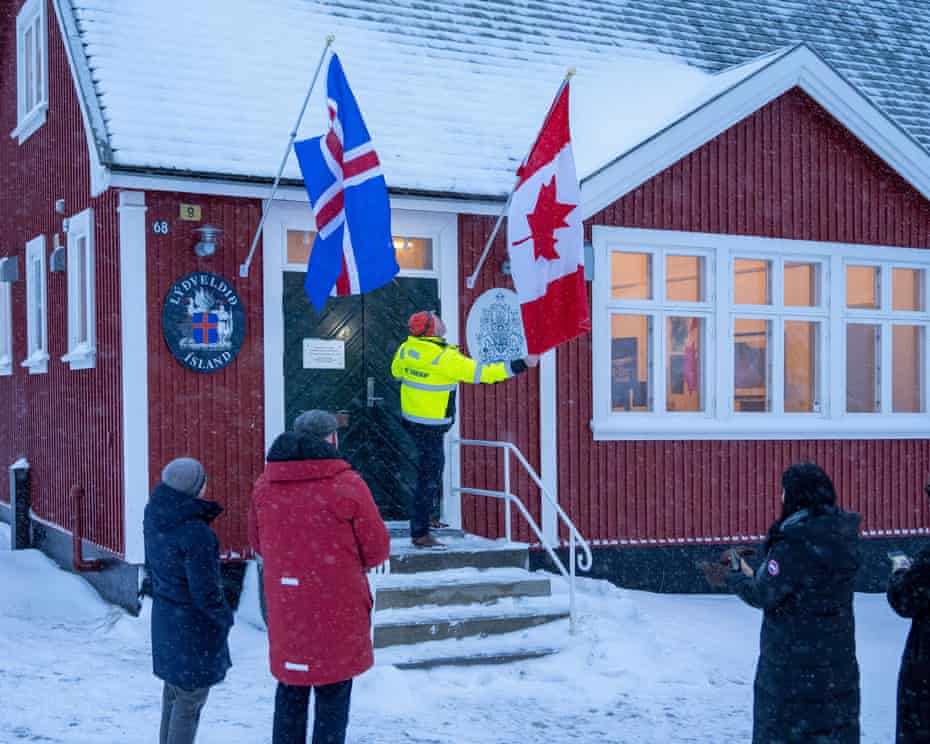
Canada and France formally inaugurated new consulates in Nuuk, Greenland’s capital, on Friday, February 6, 2026. Senior officials attended the ceremonies, including Canada’s Foreign Minister, Anita Anand, and France’s appointed consul, Jean-Noël Poirier.
Observers view the openings as a strong show of solidarity with Denmark and the Greenlandic government. The move comes amid growing geopolitical interest in the Arctic region.
Diplomatic Expansion Amid Arctic Tensions
The establishment of the consulates reflects rising diplomatic and strategic attention on Greenland. The territory holds vast mineral resources and occupies a key position in the Arctic.
Both Canada and France stressed respect for Denmark’s sovereignty and Greenland’s autonomy. They described the missions as tools for cooperation rather than competition.
At the inauguration, Anand said the Canadian consulate would deepen collaboration on shared priorities. She highlighted climate action, security, economic resilience, and Inuit rights as core areas of engagement.
France named Jean-Noël Poirier as Consul General, marking a historic first. No European Union country had previously opened a consulate general in Greenland.
The French mission will focus on strengthening cultural, scientific, economic, and political ties. French officials said engagement with local authorities remains a central objective.
Symbolism and International Response
Analysts say the consulates serve more than operational purposes. They also act as symbolic statements of Western support for Greenland and Denmark’s territorial integrity.
The new diplomatic presence allows closer engagement with Greenlandic leaders and communities. It also expands opportunities for direct cooperation in regional affairs.
Experts note that the missions give Greenland broader international exposure beyond Denmark. This expanded engagement could support long-term goals such as economic diversification and political self-determination.
By opening consulates, Canada and France signaled respect for Greenland’s autonomy. They also pledged to work closely with local institutions on shared priorities.
Looking Ahead: Arctic Cooperation
The openings reflect a broader shift toward multilateral engagement in the Arctic. Diplomatic activity in the region continues to increase.
Officials expect the consulates to promote cultural and scientific cooperation, particularly on climate research. They will also support economic partnerships and trade initiatives.
The missions will provide forums for dialogue on security and regional stability. Canada and France plan to coordinate closely with Denmark, NATO allies, and Arctic neighbors.
This diplomatic expansion highlights how countries are positioning themselves in a changing Arctic landscape. The approach balances respect for sovereignty with collaboration on shared global challenges.
About The Author