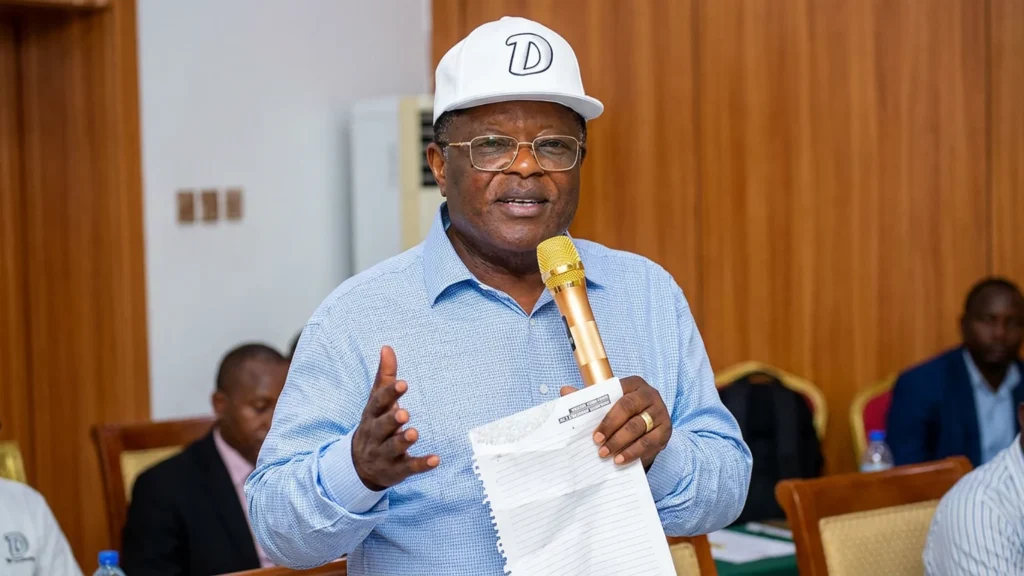
The Federal Executive Council (FEC) has approved the demolition and reconstruction of the Carter Bridge in Lagos. The Minister of Works, David Umahi, announced the decision after the council meeting on Wednesday.
The approval marks an important step in Nigeria’s infrastructure renewal effort. The government continues to prioritise safer and stronger transport networks across the country.
According to David Umahi, engineers inspected the bridge and reviewed its current condition. Their findings showed the need for a full reconstruction. Therefore, the government chose a long-term engineering solution instead of routine repairs.
Ensuring Structural Safety
The Carter Bridge remains one of the busiest bridges in Lagos. Every day, thousands of vehicles travel across it. The bridge connects Lagos Island with other key parts of the city.
Because of this importance, structural safety became a major concern. Engineers therefore conducted detailed technical assessments.
The evaluation showed that rebuilding the bridge would provide stronger support for heavy traffic. In addition, modern engineering designs will improve durability and safety.
Consequently, the reconstruction will introduce stronger structural materials. It will also include improved design features that can handle growing traffic demand in Lagos.
Supporting National Infrastructure Goals
Meanwhile, the approval by the Federal Executive Council aligns with the federal government’s broader infrastructure strategy.
Across Nigeria, authorities continue to rehabilitate highways, bridges, and transport corridors. These projects aim to strengthen national connectivity and boost economic activity.
Bridges require special attention. They carry heavy loads and face constant environmental pressure. Coastal cities like Lagos also experience humidity and seasonal flooding. Therefore, regular structural upgrades remain essential.
By prioritising the Carter Bridge, the government aims to prevent future structural risks. At the same time, the project will improve the reliability of Lagos’ transport network.
Impact on Lagos Mobility
Lagos functions as Nigeria’s commercial hub. Millions of residents depend on its road system every day. Bridges linking the island and mainland therefore play a vital role in urban mobility.
Once completed, the reconstructed Carter Bridge will improve traffic movement. It will also strengthen road safety for commuters and commercial vehicles.
However, construction activities may temporarily affect traffic flow. For this reason, authorities are expected to introduce traffic diversion plans. These measures will help reduce congestion during the reconstruction period.
Commitment to Long-Term Development
Speaking on the project, David Umahi reaffirmed the government’s commitment to modern infrastructure.
He explained that growing cities require reliable transport systems. Efficient road networks support commerce, mobility, and national productivity.
Therefore, infrastructure investments remain central to Nigeria’s development strategy. Projects like the Carter Bridge reconstruction demonstrate this commitment.
Looking Ahead
Infrastructure experts often recommend early reconstruction instead of emergency repairs. This approach prevents sudden structural failures and reduces long-term costs.
For that reason, the approval by the Federal Executive Council represents a proactive decision.
When completed, the new Carter Bridge will serve millions of commuters more efficiently. Furthermore, it will strengthen Lagos’ transport infrastructure for many years to come.
About The Author