
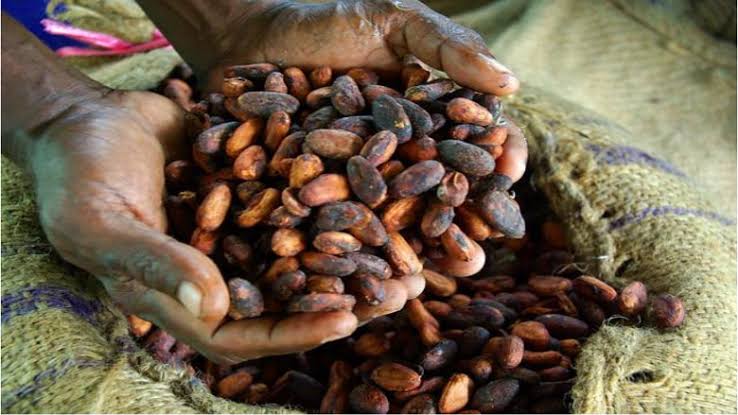
Adzopé, Côte d’Ivoire – A seismic shift is underway in Côte d’Ivoire, the world’s leading cocoa producer, as a new European Union regulation (RDUE) looms large, threatening to reshape the industry and its relationship with global markets. The RDUE, formally adopted in June 2023, prohibits the import of products linked to deforestation, placing unprecedented pressure on Ivorian farmers to demonstrate sustainable and environmentally responsible practices.
The regulation’s core principle is simple: cocoa, along with other key commodities like coffee, rubber, and palm oil, must be proven to originate from land that has not been deforested after 2020. This requirement is forcing significant changes in farming practices across Côte d’Ivoire, where cocoa production is a cornerstone of the national economy.
Across the country’s vast cocoa-growing regions, “sustainability coaches” are now a common sight. Hired by agricultural cooperatives and other organizations, these coaches are equipped with tablets and GPS technology, meticulously monitoring cocoa plantations to ensure compliance with the RDUE. Their task is to map farm boundaries, assess land use, and verify that no encroachment has occurred on protected forest areas.
For farmers like Kobenan Koffi Kouman, a 64-year-old who has cultivated cocoa for decades near Adzopé, the new regulation presents both challenges and anxieties. “If I have encroached on the forest,” Kouman explains, “I won’t be able to export. It’s as simple as that.” His words encapsulate the concerns of many of the approximately 1.2 million Ivorian cocoa producers who depend on exports to the EU for their livelihoods.
The RDUE’s implementation is phased, with micro and small businesses required to comply by December 30, 2025, and larger businesses by June 30, 2026. This phased approach is intended to allow producers time to adapt their practices and invest in the necessary technology and training. However, many farmers express concerns about the costs and complexities of compliance, particularly for those with limited resources.
The regulation is a key component of the EU’s Green Deal, a broad and ambitious strategy to achieve carbon neutrality by 2050. The Green Deal aims to transform the EU into a sustainable and climate-neutral economy, and the RDUE is one of several measures designed to address deforestation and promote responsible sourcing of commodities.
The impact of the RDUE on global commodity markets is expected to be substantial. Côte d’Ivoire, as the world’s leading cocoa producer, will be particularly affected. The regulation could lead to increased costs for European chocolate manufacturers, potentially impacting consumer prices. It could also create opportunities for other cocoa-producing countries that can demonstrate compliance with the EU’s sustainability standards.
The long-term effects of the RDUE remain to be seen. However, it is clear that the regulation is driving significant changes in the cocoa industry and highlighting the growing importance of sustainability and responsible sourcing in global supply chains. The success of the RDUE will depend on the ability of Ivorian farmers to adapt to the new requirements, the effectiveness of enforcement mechanisms, and the willingness of consumers to pay a premium for sustainably produced cocoa.
About The Author