Global deaths linked to wildfire smoke could rise six-fold to 1.4 million people a year by 2100 even with moderate levels of global warming, according to research published Thursday.
It adds to warnings of the significant and growing health impacts from climate-stoked wildfires, which belch out smoke that can drift across continents and oceans.
This latest study, published in Nature, used machine learning and modeling to project the level of wildfire emissions and premature deaths to the end of the century.
“Our key finding is that climate change will substantially increase the health burden from wildfire smoke, even under moderate warming,” co-author Bo Zheng, of China’s Tsinghua University, told AFP.
Researchers predicted that between the periods 2010–2014 and 2095–2099, global fire carbon emissions could rise by 23 percent under mid-range emissions scenarios.
And by the end of the century, they found that wildfire smoke could cause about 1.4 million premature deaths annually—around six times today’s level.
Zheng said this underscored the “urgent need” to reduce greenhouse gas emissions and adapt to climate change.
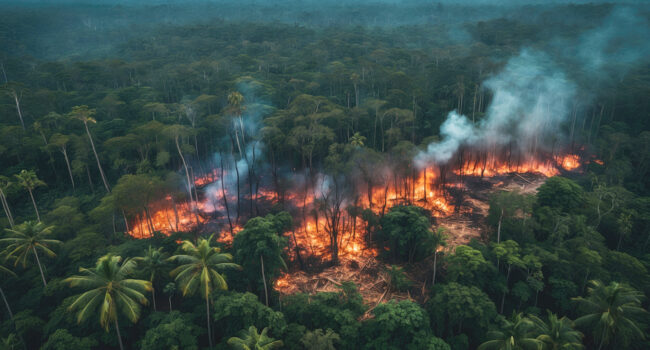
Fires are becoming more frequent and ferocious as human activities and climate change drive warmer conditions and more frequent droughts.
Meanwhile, aging populations stand to be more vulnerable to the health impacts of air pollution.
The health burden would probably fall unequally, the study found, with poorer countries suffering the highest rises in premature deaths linked to fire smoke.
READ ALSO: Deadly Wildfires Rage Across Spain As Record Area Of Land Burnt
The heaviest toll was projected in Africa, where the number of fire-related deaths could rise 11-fold.
Sub-Saharan Africa would be the hardest hit.
Zheng said Africa already had the world’s largest burnt area across its savannas, forests, and grasslands.
“This extensive burning results in disproportionate smoke exposure and health impacts,” he said, adding that fires were often concentrated in areas where access to healthcare could continue to be limited.
Deaths in Europe and the United States could stay roughly at the same level or as much as double by the end of the century.
To project wildfire emissions, the authors used machine learning to estimate the future area burned under different climate scenarios.
They then used computer modeling to simulate harmful PM2.5 pollutants, enabling them to estimate exposure and premature deaths.
Zheng said that the finding of 1.4 million premature deaths by 2100 was “our best understanding.”
But he noted there was still a large range of uncertainty, calling for more measurements of wildfire PM2.5 and the development of better health models to improve precision.
PM2.5 pollutants in wildfire smoke are fine, airborne particles small enough to enter the bloodstream through the lungs and are linked to higher rates of chronic bronchitis, lung cancer, and heart disease.
The authors also noted a lack of international cooperation, with wildfire smoke able to cause health alerts in other countries and even continents.
A recent study, also published in Nature, found that Canada’s record-breaking 2023 wildfires exposed more than 350 million people in North America and Europe to air pollution that likely contributed to tens of thousands of deaths.
AFP
The post Deaths From Wildfire Smoke To Surge In Decades Ahead appeared first on Channels Television.
About The Author