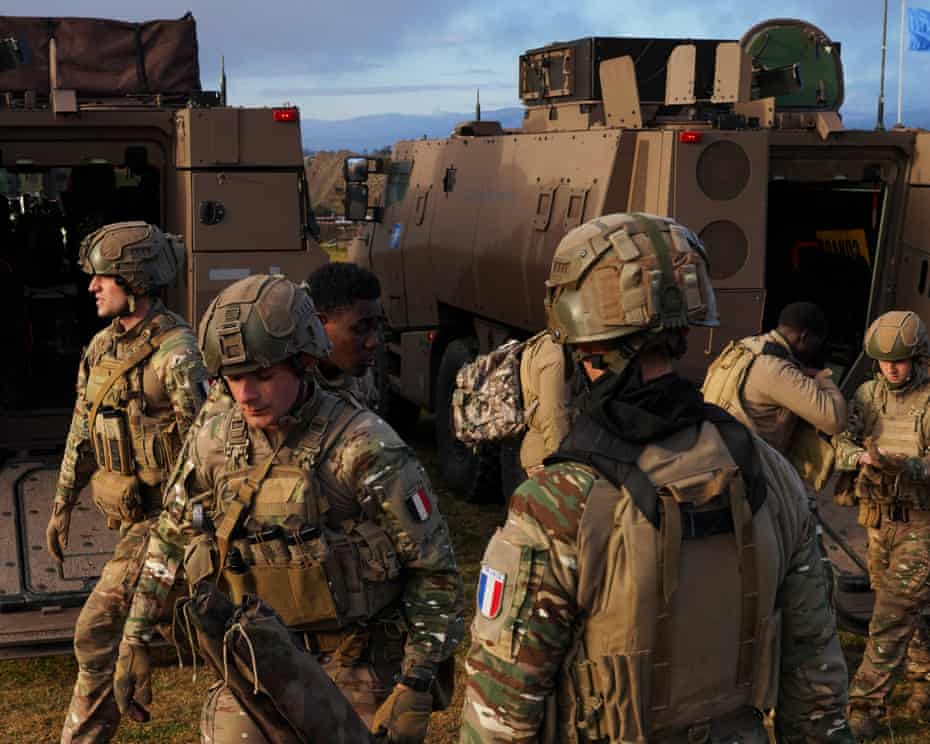
General Laka warned that Europe is beefing up armies across the continent, a shift he believes responds to mounting security threats and changing global power dynamics. He said this surge reflects a broader recognition among European nations that defence and deterrence cannot be postponed. He argued the move signals serious commitment to national and regional security.
Furthermore, he noted that several European countries — including France, Finland, and the Baltic states — are reintroducing or expanding conscription or voluntary military service to bolster troop numbers. He added that countries such as Sweden, Denmark, and Poland now pursue manpower expansion through various service models. According to Laka, the pattern reveals widespread concern over territorial threats and uncertainty about long-term foreign alliances.
Moreover, Laka emphasised that increased manpower represents only part of the response. He pointed out that European nations are also upgrading equipment, enhancing mobility of troops across borders, and investing heavily in defence infrastructure. He said reforms include faster deployment routes for tanks and armored units, streamlined supply chains, and coordinated procurement across the European Union.
Additionally, he stressed that this renewed militarization reflects deeper geopolitical anxiety — especially fear of aggression from powerful external actors. Laka warned that the traditional security guarantee, once taken for granted through alliances, now seems less reliable. He argued that Europe’s rearmament — including beefing up armies — shows a shift toward self-reliance and readiness for potential conflict.
Meanwhile, he acknowledged the challenges ahead. He said public support remains uncertain in nations without recent military traditions. He cautioned European leaders to invest not only in hardware and personnel, but also in training, recruitment incentives, and social acceptance of defence commitments. Without those, the expansion could struggle to deliver meaningful security.
Then, he observed that geopolitical instability — especially conflicts near Europe’s borders — drives this transformation. He suggested that renewed tension has pushed governments to reverse decades-long reductions in defence spending. He described the shift as necessary for survival in a world where threats are unpredictable and traditional alliances may shift rapidly.
Finally, General Laka concluded that European states must now carry the burden of their own security. He stated that beefing up armies offers a path toward strategic autonomy and credible defence. He urged European leaders to move decisively, coordination must increase, and the new military efforts must reflect clarity, intent, and resilience. The era of complacency, he warned, is over.
About The Author