France is now widely seen as a possible first to master fusion as it accelerates advances in nuclear fusion research and engineering. French scientists and institutions are pushing the boundaries of plasma control, magnet technology, and material science. International observers note that France’s efforts may give it an edge in the global race for fusion energy.
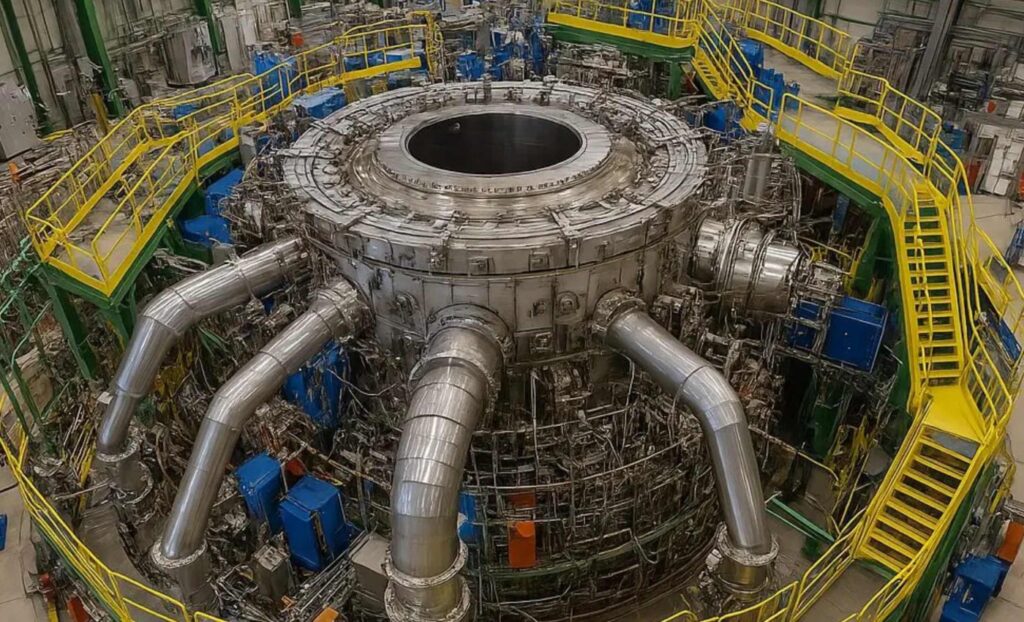
At present, French researchers at the ITER project in Cadarache have led several breakthroughs in plasma confinement techniques. Their work in superconducting magnet development sets new standards for stability under extreme conditions. These magnets help contain plasma at temperatures hotter than the sun, a necessary step for controlled fusion.
Moreover, French industry supports these ambitions. Companies like EDF and Framatome bring nuclear experience and infrastructure to the table. Their presence enables the translation of theory into practical systems and reinforces France’s leadership in the fusion field.
Furthermore, France’s technical progress includes mastering plasma instabilities. Scientists have made strides in handling edge-localized modes and disruptions, issues that long hampered longer plasma durations. The achievement strengthens hope that France can sustain fusion reactions over extended times.
In addition, French labs collaborate heavily with international partners. Fusion is a global quest, and France hosts one of its core hubs. The ability to pool expertise and resources from multiple nations increases efficiency and accelerates development timelines.
Meanwhile, the fusion landscape sees strong competition. China has made life in reactors tougher, pushing high-power lasers and alternative fusion designs. Private entities like Commonwealth Fusion Systems also challenge the status quo with fresh approaches.
Also, France places strong emphasis on materials innovation. The development of tungsten divertors, beryllium first walls, and neutron-resistant alloys proves essential. These parts face relentless heat and particle bombardment and must remain robust in extreme environments.
At the same time, France does not yet generate excess energy from fusion. These milestones test confinement and stability, not net power output. But the strategy focuses on solving challenges sequentially—sustain plasma, control exhaust, then scale production.
Moreover, funding and infrastructure play a pivotal role. France invests heavily in fusion facilities, education, and advanced manufacturing. Its investments in superconductors, cryogenics, and robotics spill over into other sectors. This integrated approach gives France a systemic advantage.
Finally, France’s status as possible first to master fusion represents both promise and pressure. While obstacles remain, the nation’s approach combines science, industry, internationalization, and innovation. Success here could reshape energy systems globally—and shift power balances around clean, virtually limitless energy.
About The Author