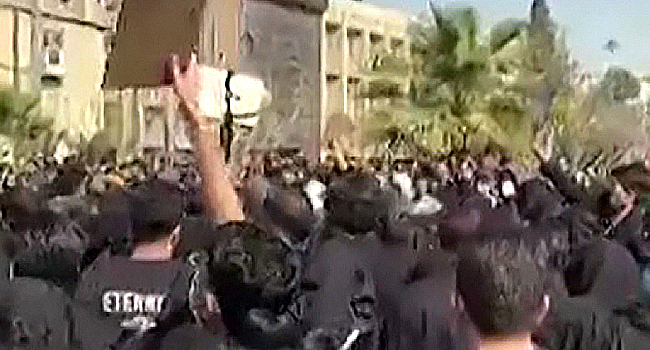
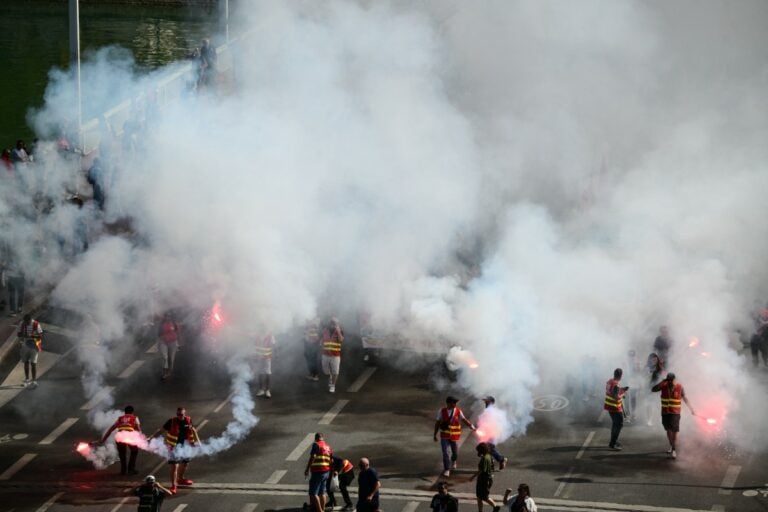
Bold anti-Macron protests swept across France Thursday, as citizens and unions rallied against President Emmanuel Macron’s austerity policies.
Public services stalled, streets filled with demonstrators, and clashes erupted when some protests turned confrontational. Protesters rejected budget cuts they said would hurt ordinary people and demanded urgent changes.
Furthermore, public anger grew over tax policies that many believe favour the wealthy. Demonstrators carried banners stating that the rich prosper while the poor suffer.
Additional frustration came from government proposals to remove two public holidays and end privileges granted to former prime ministers. These policies deepened resentment and fuelled the determination of protest groups.
Moreover, authorities deployed over 80,000 police officers and gendarmes supported with drones, water cannons, and armoured vehicles.
By midday, officials estimated tens of thousands had already joined demonstrations, with projections of hundreds of thousands participating nationwide by evening. The heavy security presence highlighted the scale of unrest and the government’s concern about escalation.
However, protests unfolded with varying intensity across different regions. Many pharmacies closed, while nearly one in six teachers from primary and secondary schools joined strikes.
In Paris, commuters struggled with a near-complete shutdown of the metro system, as only three automated driverless lines remained in operation. This disruption underscored the movement’s broad impact on daily life.
Nevertheless, clashes broke out in cities such as Marseille and Lyon. In Marseille, police used tear gas to disperse groups acting outside authorised routes. In Lyon, masked demonstrators confronted officers at the front of a large march.
On the outskirts of Lille, protesters blocked bus depots in coordinated union-led actions. Even school pupils joined the unrest, with groups blocking entrances to several schools, including a large secondary school in Paris.
Meanwhile, unions and protesters insisted that anti-Macron protests will continue until Macron’s administration changes course. They argue the policies increase inequality and place greater burdens on lower-income citizens.
For many, these demonstrations represent one of the most powerful acts of resistance since the nationwide pension reform protests in 2023. The movement shows no signs of ending soon, as frustration and solidarity continue to grow.
About The Author