France announced that it will deliver Aster missiles and Mirage jets to Ukraine in the coming days as part of an enhanced military assistance package. President Emmanuel Macron declared the new commitment during a “Coalition of the Willing” meeting, signalling stronger support for Ukraine’s air defence and long-range strike capabilities.
He described the provision of French-made systems as a key step in meeting the evolving threats from Russian air and missile attacks.
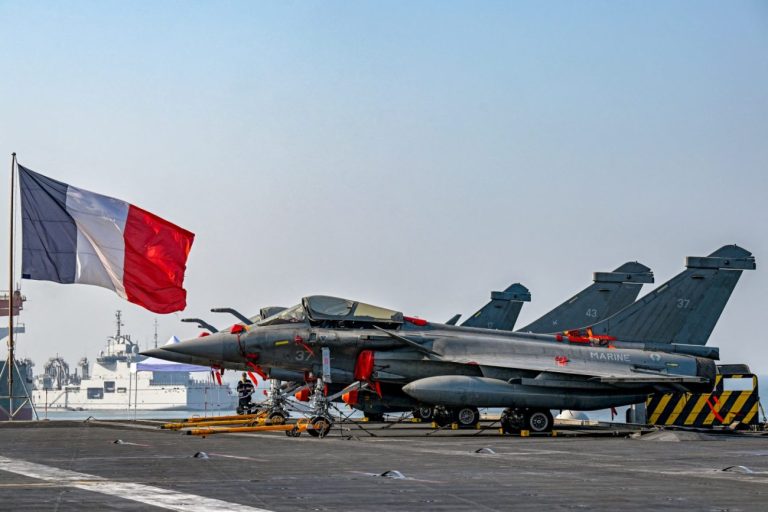
The package includes additional Aster surface-to-air missiles designed to operate within the Franco-Italian SAMP/T system and the delivery of new Mirage-2000 fighter jets originally operated by the French Air Force.
French authorities confirmed that training programmes for Ukrainian pilots and ground crews will accompany the hardware shipments. Macron stressed that these deliveries reflect a strategic shift in European support for Kyiv’s war effort.
Moreover, Ukraine already operates a limited number of Mirage-2000-5Fs transferred earlier by France, and the new tranche aims to bolster its air force’s interception and rapid response capability.
The Aster missiles fill a critical gap in Ukraine’s medium-range air defence umbrella, particularly against cruise missiles and drone attacks. French officials believe the combined package will help Ukraine defend its airspace more effectively and deter further Russian strikes.
Furthermore, Macron emphasised that this move comes amid intensified Russian aggression and the need to maintain pressure on Moscow.
He linked the deliveries to broader strategic goals, including safeguarding Ukrainian infrastructure and energy systems. The president noted that cooperation among allies must evolve beyond incremental aid to concerted action that shifts the balance on the battlefield.
In addition, analysts said that supplying both offensive and defensive platforms creates logistical and training challenges. The Mirage jets require pilot conversion and maintenance arrangements, while the Aster system demands integration into Ukraine’s command-and-control architecture.
Both France and Ukraine will need to synchronise delivery timelines and operational readiness to gain maximum effect.
Also, the political dimension remains significant. For France, empowering Ukraine’s air defence with high-end Western equipment signals a deeper commitment to European security.
It also demonstrates France’s willingness to deploy cutting-edge systems like the Aster and Mirage to third-party nations under crisis conditions. Other coalition members may now feel pressure to match or exceed such support.
Finally, as the Aster missiles and Mirage jets commitment reveals, the war in Ukraine is entering a phase where qualitative escalation matters more than sheer quantity of arms. France’s decision to send high-tier systems could influence not just Kyiv’s defence posture but also the political dynamics within the Western alliance. Ukraine’s ability to absorb and deploy this aid will be monitored closely.
About The Author