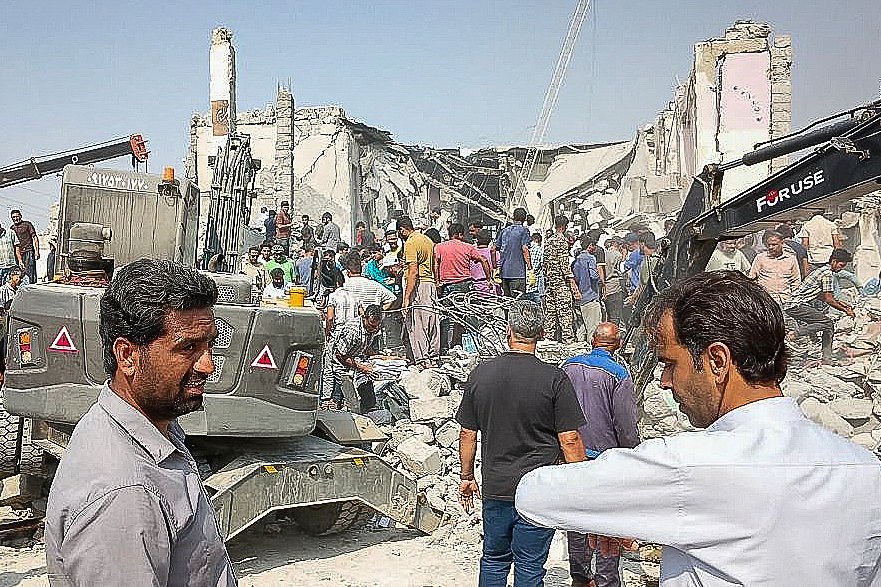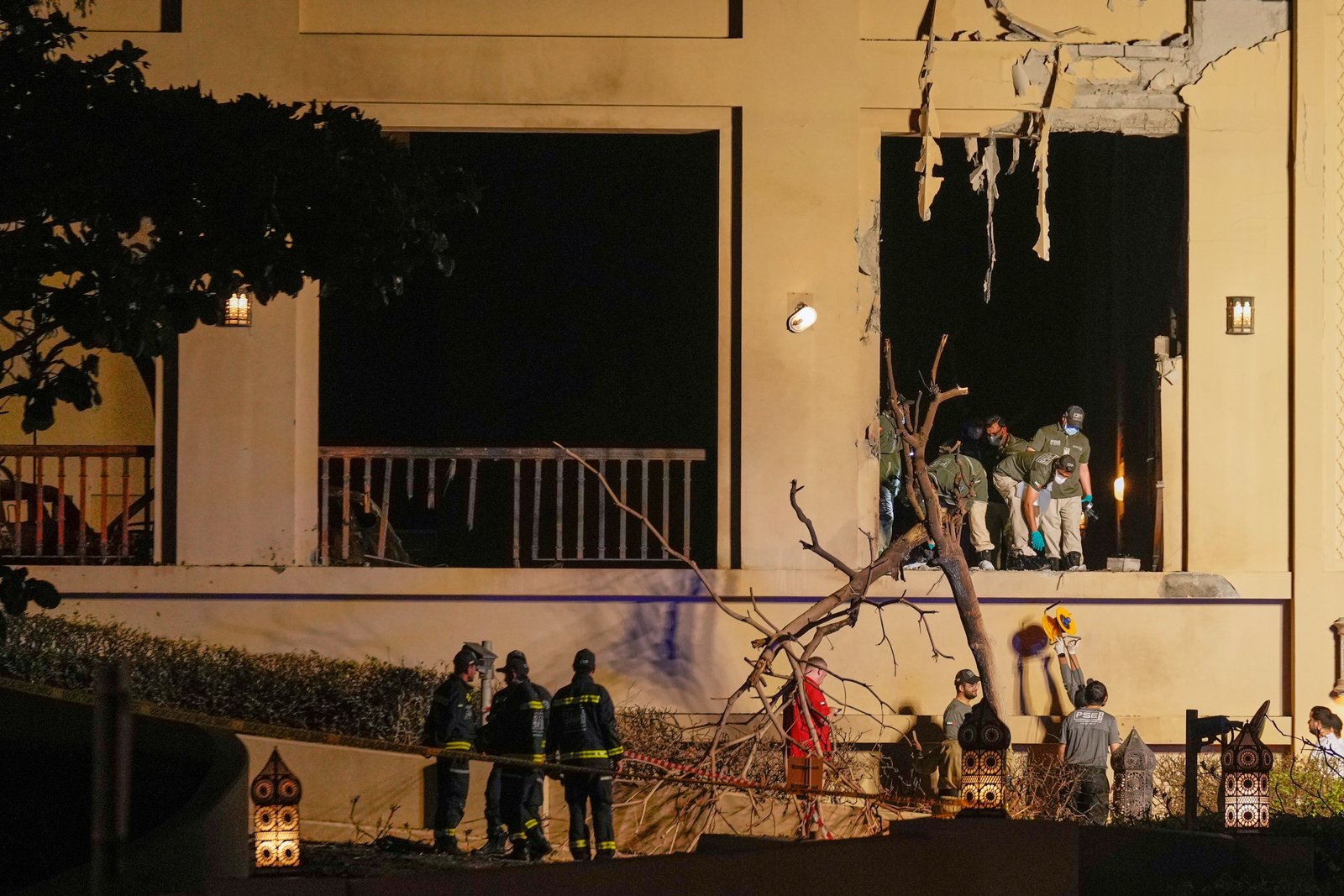
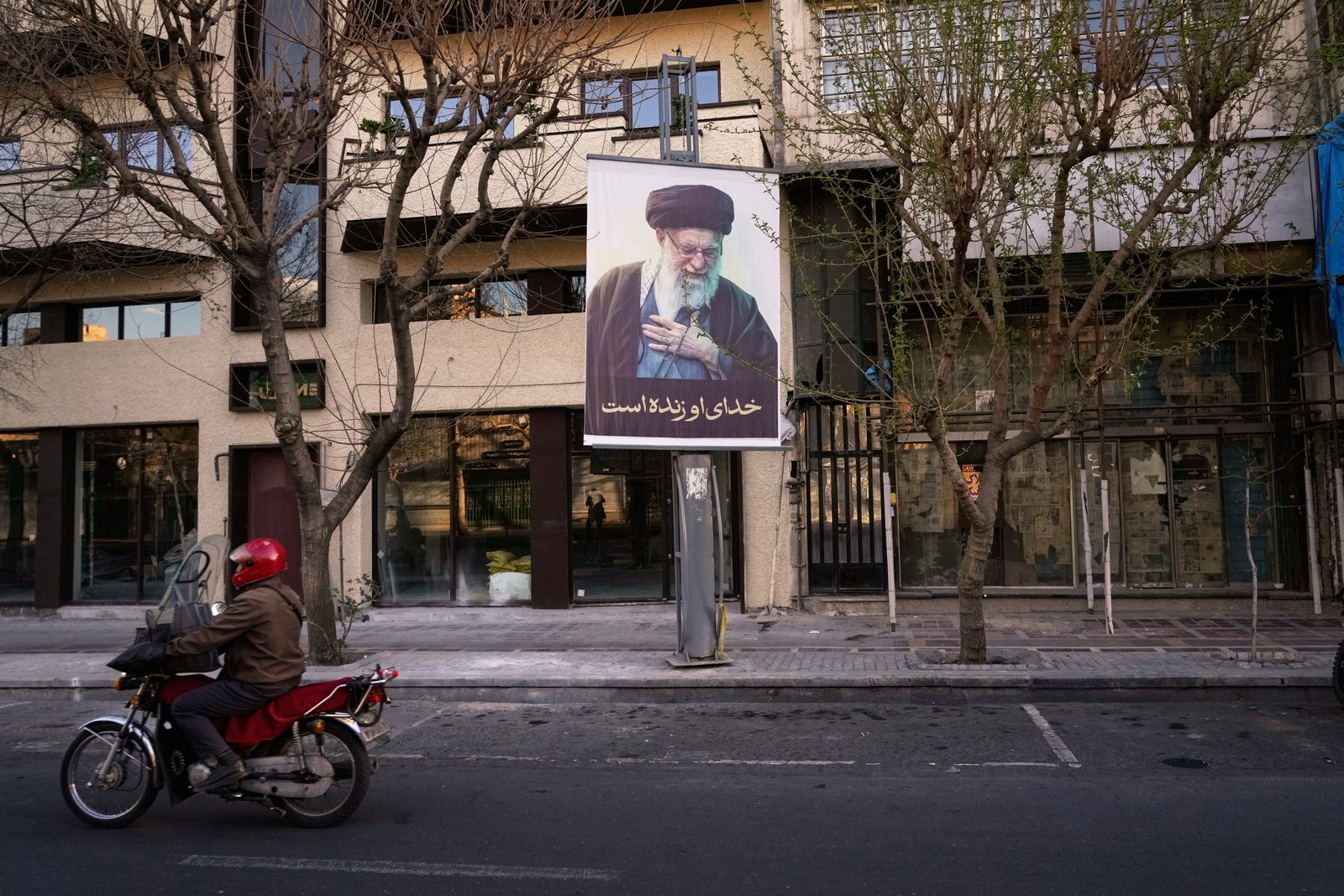

Iranians say the war is unfolding in phases. The first roared across the skies on Saturday morning.
“I had just stepped out of the shower, getting prepared to go out, when the sound of low-flying aircraft startled me,” said Salman, a 45-year-old contractor living in Tehran. “Seconds later, when the sound of two explosions reached us, I realized it had started.”
“I was in a car,” said Marziyeh, a 40-year-old graphic artist. “The music was loud, but suddenly I noticed the drivers around me hit the brakes and started looking around and up at the sky. I was just thinking to myself, ‘Is there going to be war?’ When suddenly I heard an explosion, and I said to myself, Stupid! War has already started.”
Out his window, Salman noticed “two plumes of smoke rising from the vicinity of the Leader’s Beit” —the central Tehran compound where Ayatollah Ali Khamenei lived, and was, at that moment, being buried under the rubble from an Israeli airstrike.
The apparatus of the Iranian regime was already in motion, however. As U.S. and Israeli warplanes pounded targets across Iran, a flurry of communiques went out from state television and state-run news agencies assuring citizens that all would be well: no shortage of basic staples would occur, nor any disruption in services.
But one message stood out.
Issued by the all-powerful Supreme National Security Council, it advised citizens in Tehran and other major cities to leave town: “Travel to other cities to stay safe from the menace of these two evil regimes.” In the capital, many residents heard their cell phone ping, and turned to find the same message had arrived as an SMS: go calmly, it advised, but go.
“Last time they were telling us not to leave the city,” said one Tehran resident. “Why,” she asked, “are they telling us to leave this time?”
The answer arrived minutes later, in the form of a dispatch from the Tasnim News Agency. The outlet, which is linked to the Islamic Revolutionary Guards Corps (IRGC), announced that to ensure security, “Basij neighborhood patrols were activated in all 22 districts of Tehran.” An arm of the IRGC, the Basij are paramilitary volunteers notorious among Iranians for taking the lead in viciously attacking protesters in the streets.
Another Tasnim dispatch made the warning explicit: Prosecutor General Mohammad Movahedi-Azad had ordered a “preventive dealing with any illegal gatherings, riots and behaviors that would cause instability in the society.”
Finally, the news agency posted footage of dozens of Basiji careening through Tehran streets on motorcycles, waving regime flags, and chanting “Allahu akbar!”
Battle for the streets
Iranians interviewed by TIME say they knew the next phase of battle would be for the streets. Since 2009, when the regime refused to seat a reformist candidate who had clearly won the presidency, public protests have been the only channel left open to the majority of Iranians who oppose their authoritarian government. On the night of January 8, throngs across the nation of 93 million filled public spaces to chant “death to the dictator.”
The regime—which had come to power in 1979 behind similar protests—responded by unleashing a level of force it deemed commensurate to the threat it faced. Its security forces killed some 30,000 Iranians that night and the next, senior officials in Iran’s health ministry later told TIME. President Donald Trump repeatedly urged protesters into the streets in January, promising, “Help is on its way.” Two months later, he announced the beginning of the military action that would make good on that vow.
“The hour of your freedom is at hand,” Trump declared in a video posted on Truth Social on Saturday. “Stay sheltered. Don’t leave your home. It’s very dangerous outside. Bombs will be dropping everywhere. When we are finished, take over your government. It will be yours to take.”
In the hours that followed, it was impossible to tell what Iranians made of Trump’s promise. Then, after dark, news that Khamanei had been killed.
“I suddenly heard the whole neighborhood cheering,” said a 63-year-old man in Tehran. “I only realized why when I checked the news and saw reports of Khamenei’s death.”
“People are honking on the streets, people are cheering from windows and rooftops, my hands are shaking from joy,” said a resident from Tehran. Scenes of jubilant cheering were reported from other cities as well.
The night passed with no sign of the snipers who had sown terror from rooftops in January, or the heavy machine guns firing from the bed of pickup trucks. “People are dancing on the streets, and there are no Basiji or Sepahi [IRGC] forces anywhere to be seen,” said a 40-year-old factory owner in Shiraz.
Few, if any, expect the regime Khamenei led to disappear with him. Its loyalists number in the millions, and have the weapons. But for a few hours at least, Iranians found themselves undisturbed.
“I feel a trembling inside me — a feeling I’ve never experienced in my life,” said Mehdi, an engineer in his forties in Mashad. “I think this may be the most important moment of my life. Someone has died who killed all my dreams.”
“It’s as if I’m dreaming. The worry that the regime might not fall even after his death keeps me from being fully happy,’ said Hassan, a 41-year-old lawyer from Tehran. “But I keep reminding myself that nothing was more terrifying than him being alive.”
Amin, an importer, said: “It’s raining rockets, but the people are happy. Trump really lived up to his promise.”
Inexplicably, the internet— which the regime had shut down shortly after the start of the U.S. and Israeli attacks— returned, and with it videos of Iranians partying on streets, setting off fireworks and music began surfacing online. In interviews, some announced a resolve to take back the streets they had been driven from again and again.
“I had filled up the car with food and water, ready to travel up north with my family,” said Mohsen, a 47-year-old businessman from Tehran. “But when I heard Trump say stay in your homes, and take over the country when he’s finished, I changed my mind.”
“If Trump knew he had such steadfast followers here, he would have attacked long ago,” said his wife, who added that she was less than pleased to be staying in the conflict zone with their children.
“We’ve been asking him to help us so many times, now that he’s helping us, how can I not listen to him?” her husband declared.
“How can I go on to the streets if I’m not in Tehran?”
— Additional reporting by Roxana Saberi and Fatemeh Jamalpour
About The Author