
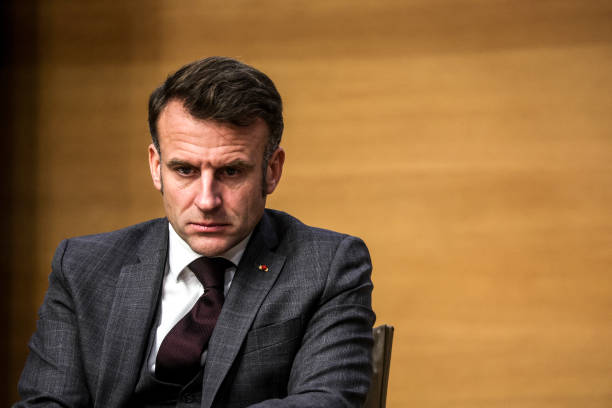
Macron slams U.S. ambassador Charles Kushner after the latter publicly accused France of failing to counter antisemitism properly. In an interview on Face the Nation, Macron called the criticism a diplomatic blunder and insisted that a diplomat should not make such public statements. He also defended his record on antisemitism while rejecting the idea that his criticism of Israeli policies is itself antisemitic.
During the interview in Paris, Macron said Kushner’s remarks were “unacceptable” given his role, and warned that such actions could weaken diplomatic norms. He maintained that mutual respect must guide interstate relations. Macron also noted that a French ambassador would never be permitted to make accusations about another country publicly.
Moreover, Macron argued that defining anti-Zionism as antisemitism remains key, but insisted disagreement with a government like Israel’s does not equal hatred of Jews. He emphasized that his administration had adopted a clear antisemitism definition and had enacted measures to enforce hate-crime laws. In this way, Macron presented his approach as both principled and lawful.
Meanwhile, the White House defended Kushner, with the U.S. State Department stating that he represents American interests and acts accordingly. Nevertheless, France earlier summoned Kushner to its foreign ministry to address his letter. That letter had accused Macron’s government of encouraging violence against Jewish communities and linked French foreign policy to domestic antisemitism.
Additionally, Macron sought to draw a clear distinction between policy critique and bigotry. He stated that criticizing Israel does not automatically make one antisemitic, and warned against equating political disagreement with identity-based hatred. His remarks aimed to separate his positions on Gaza or Palestine from potential accusations of bias.
Furthermore, the timing of Kushner’s letter and Macron’s growing foreign policy pressure created extra friction. Macron is pushing to recognize a Palestinian state at the United Nations, drawing more scrutiny from pro-Israel officials globally. The interplay between foreign policy and domestic narratives now intensifies tension between Paris and Washington.
Finally, as Macron slams the U.S. ambassador, the fallout may test French diplomacy and norms in transatlantic relationships. The manner of handling future critique or rebuke by diplomatic envoys will resonate in international protocols. Macron’s tone signaled that internal policy and external posture must align if France is to defend both security and pluralism.
About The Author