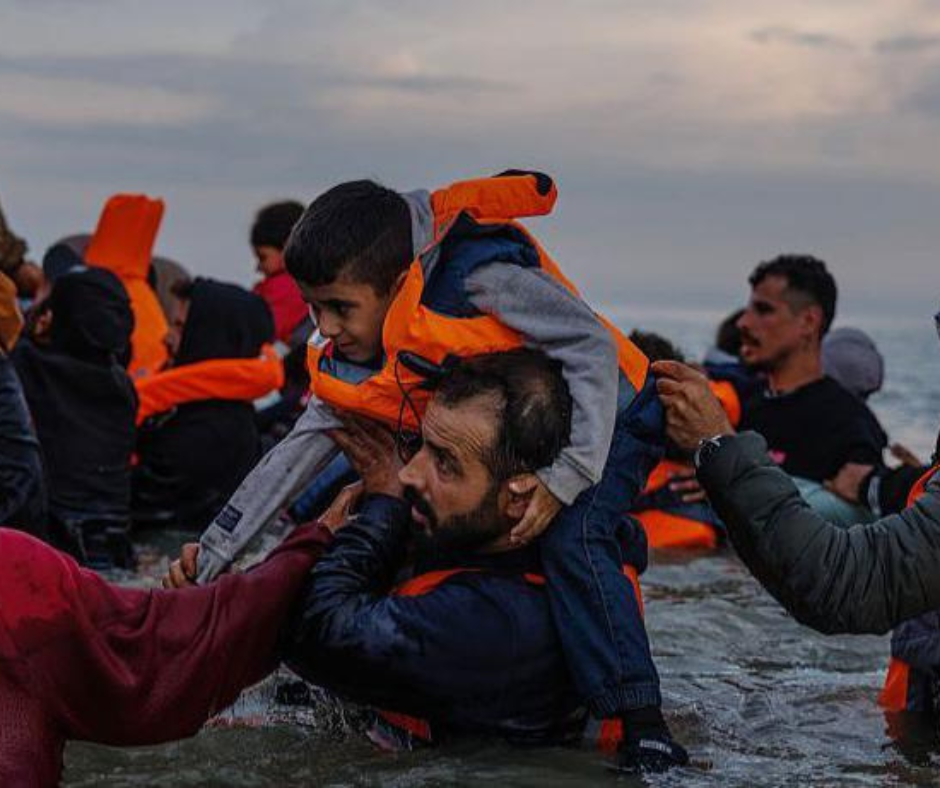
Over the English Channel, the waves told a story far bigger than the tide. More than 1,000 migrants arrived on Britain’s shores in a single day, despite the much-publicized return deal with France.
For many, it was a desperate race against danger, where fragile boats carried dreams, fears, and the hope of a new beginning.
The scene painted two sides of one reality. On one hand, there were exhausted families stepping into uncertainty with nothing but the clothes on their backs.
On the other, a government left to answer hard questions about why the return deal with France has not slowed the crossings.
Over the Channel, Politics Meets Reality
Over promises and policy papers, the Channel remains a stage where human survival collides with political resolve.
The return deal with France was meant to curb such large-scale crossings. Yet, the numbers tell another tale.
More than 1,000 arrivals in a single day show that migrants, driven by war, poverty, and persecution, see the risk as worth taking.
The UK government, while highlighting cooperation with French authorities, now faces rising pressure at home.
Critics argue the deal looks more like a symbol than a solution. Supporters insist that lasting results will take time and deeper coordination.
Over Britain, the Strain Deepens
Over in Britain, the surge has stretched resources thin. Housing shortages, crowded asylum centers, and political debates now dominate the headlines.
Every new boat magnifies the pressure, testing how far compassion and capacity can go before cracks begin to show.
About The Author