

Before the war in Iran broke out, the global adoption of electric vehicles was largely being driven by a number of emerging economies, including India, Mexico and Brazil, who were reporting higher EV sales than developed economies like the U.S. and Japan. Now, the surge in global oil prices triggered by the Strait of Hormuz closure, appears to have brought an unexpected boon to the EV market—with increased interest and sales reported in a number of countries.
United States
At the start of the year, it seemed as though the EV revolution in the U.S. was dead in the water—sales in the final quarter of 2025 were at the lowest point since the end of 2022 as Biden-era government EV subsidies expired and domestic automakers pulled back on their investments in electric vehicle production.
But first-quarter data for 2026 shows that used EV sales were 12% higher than the same time last year and 17% higher than the previous quarter. One factor likely helping push buyers toward these cars is high gas prices, which recently topped $4.00 a gallon for the first time in four years.
U.K. & Europe
In the U.K., electric car sales reached a record high, with 86,120 vehicles sold in March. U.K.-based EV specialist Octopus Electric Vehicles said on March 25 it had seen EV leasing inquiries rise 36% since the start of the conflict.
The French online used-car retailer Aramisauto reported its share of EV sales nearly doubled from Feb. 16 to March 9, rising to 12.7% from 6.5%, while sales of fueled models dropped to 28% of sales from 34%, and sales of diesel models dropped to 10% from 14%.
Germany’s largest online car market, mobile.de, told Reuters that the share of EV searches on its website has tripled since the start of March—from 12% to 36%, with car dealers receiving 66% more enquiries for used EVs than in February.
Asia
Asia receives 80% of the crude oil that passes through the Strait of Hormuz. This has left the region hard hit by the shutdown. The uncertainty is causing an uptick in EV adoption in many countries.
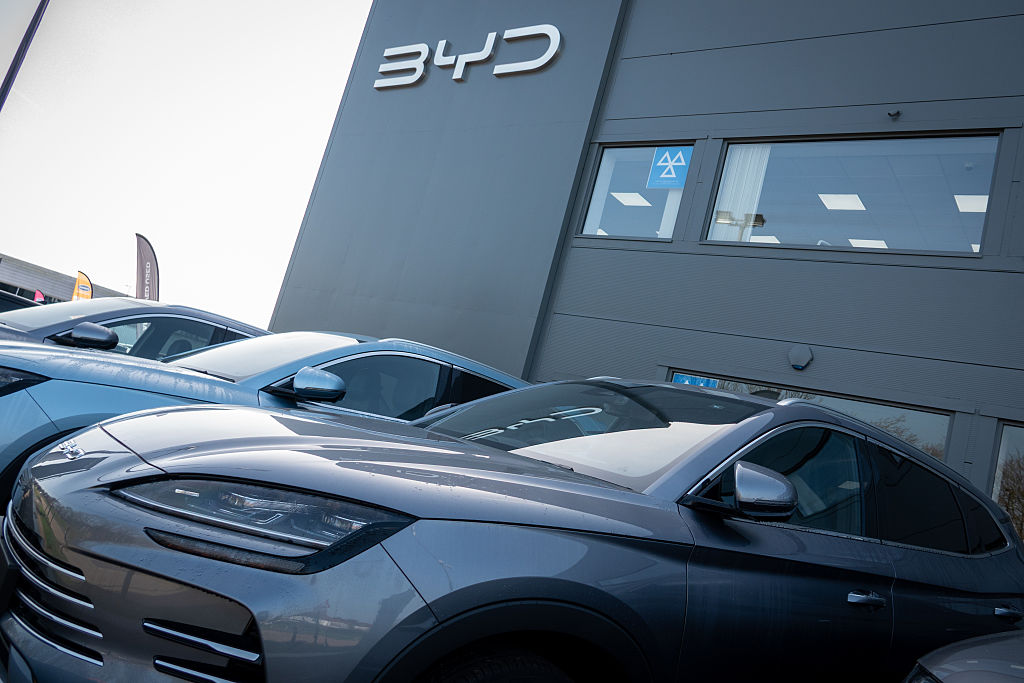
South Korea reported that registrations for electric vehicles more than doubled in March compared to the prior year, due in part to rising fuel prices and government subsidies. In Malaysia, Chinese EV company BYD’s distributor told Reuters that it observed an uptick in enquiries and customer interest in March compared with the first two months of the year. In Pakistan, electric rickshaws have been selling out, according to Bloomberg.
Nepal, on the other hand, has stood out for its above average EV adoption rates. This pre-war trend has helped shield many people from the impact of the spike in oil prices. EVs made up 76% of new car sales in 2024, according to the most recent data from the energy think tank Ember.
New Zealand & Australia
In New Zealand, more than 1,000 EVs were registered in the week that ended on March 22, close to double the week before, making it the country’s biggest week for electric vehicle registrations since the end of 2023, according to the country’s Transport Minister, Chris Bishop.
Australia, meanwhile, has already been experiencing rising EV sales in recent years, but saw a surge in new interest as consumers face rising fuel costs.
As Australian Prime Minister Anthony Albanese said at the end of March: “I don’t think there’s anyone out there today who has bought an electric vehicle who’s regretting the decision at this point in time.”
About The Author