

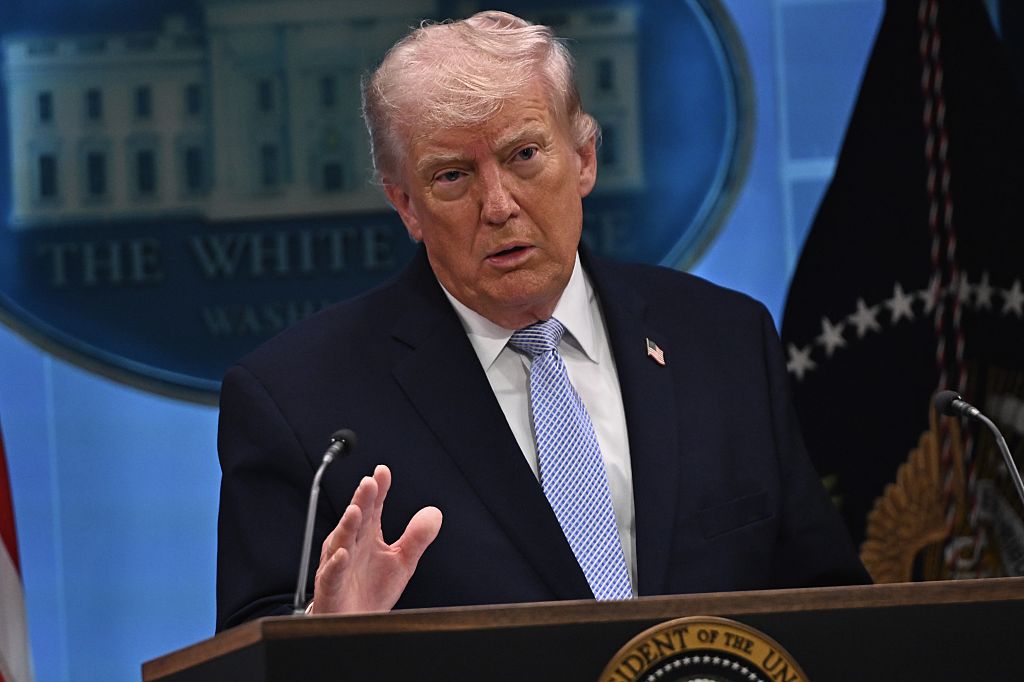
President Donald Trump announced that he has agreed to a proposal for a two-week ceasefire with Iran and the immediate reopening of the Strait of Hormuz, stepping back from a self-imposed deadline to launch sweeping new strikes he warned could devastate the country.
Read more: Would Trump’s Threatened Attacks on Iran’s Infrastructure Be a War Crime?
In a social media post just hours before the 8 p.m. deadline, Trump said he would “suspend the bombing and attack of Iran for a period of two weeks” following his conversations with Pakistan’s leadership and what he described as meaningful progress towards a broader agreement with Iran.
“This will be a double sided CEASEFIRE!” Trump wrote on Truth Social. “The reason for doing so is that we have already met and exceeded all Military objectives, and are very far along with a definitive Agreement concerning Longterm PEACE with Iran, and PEACE in the Middle East.”
He added that the U.S. has received a 10 point proposal from Iran that he believes “is a workable basis on which to negotiate.”
The announcement marked a sudden de-escalation after a day of extraordinary threats in which Trump warned that “a whole civilization will die tonight” if Iran did not agree to his demands. The tentative ceasefire hinges on Iran’s agreement to immediately and fully reopen the Strait of Hormuz, the narrow waterway through which roughly a fifth of the world’s oil supply passes. Since the early weeks of the war, Iran has effectively choked off traffic through the passage, triggering a global energy shock that has sent fuel prices soaring and rattled financial markets.
Trump had previously suggested the United States could rapidly destroy Iran’s bridges, power plants, and other infrastructure—a campaign that military and legal experts warned could devastate civilian life in a nation of roughly 85 million people and risk violating international law.
The decision to walk back his threat underscored a familiar pattern in Trump’s presidency: issuing maximalist threats, only to recalibrate as the risks of carrying them out come into sharper focus. It also reflected the competing pressures bearing down on a White House that has spent weeks edging closer to a wider war while searching for a way out of it.
TIME previously reported that Trump has grown increasingly eager to find an off-ramp. Polling has shown declining public support for the war, while rising fuel prices and market volatility have alarmed Republican lawmakers ahead of the midterm elections. At the same time, the President has been reluctant to end the conflict without being able to claim a decisive victory.
This is a developing story and will be updated.
About The Author