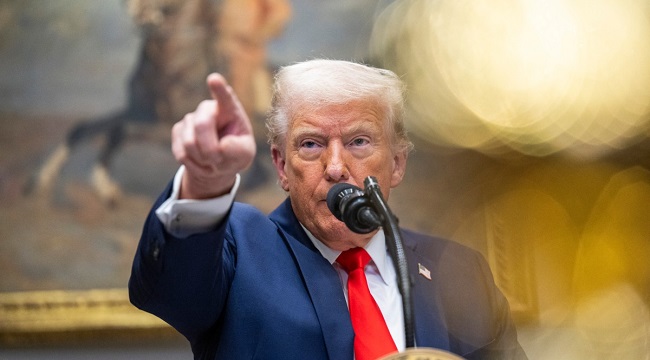
U.S. President Donald Trump took aim at France in a recent interview, asserting that “we’ve had a lot of problems with the French.” During the talk with Fox News, Trump shifted focus from China to France’s tax and export practices.
He argued that U.S. technology firms face unfair taxation by France and questioned whether the French really “are better.” Trump’s remarks mark a notable diplomatic jab at a longstanding ally.
The controversy began when host Laura Ingraham questioned Trump on foreign students from China and their role in espionage. Trump interrupted, saying: “Do you think the French are better, really?
I will tell you, I’m not so sure.” He then laid out grievances involving French digital-services tax and export duties on U.S. tech companies. According to him, the taxation amounted to discrimination against American firms.
Moreover, France reacted swiftly to the comments. Paris described the remarks as unfounded and expressed concern over strained ties. French officials emphasised they adhere to EU tax laws and reiterated that dialogue, not accusation, should guide transatlantic relations. They highlighted that historical cooperation between both countries extends across defence, innovation and global diplomacy.
Furthermore, analysts noted that Trump’s statement reflects deeper tensions in trade, digital regulation and strategic alignment. One major issue involves France’s digital-services tax, which Trump views as disadvantaging U.S. technology firms.
Another is France’s independent posture on foreign policy matters including climate commitments and defense funding in NATO. Observers say the remarks could presage tougher negotiation stances or tariffs.
In addition, the incident may shift alliance dynamics within Europe and North America. U.S. Congress is already pressuring France’s tax framework, and the remarks may embolden lawmakers to pursue retaliatory measures.
Meanwhile, France might seek stronger ties with other European nations to counterbalance U.S. pressure. The diplomatic ripple effects could widen beyond just taxation and into broader security and economic cooperation.
Also, industry sources warn of escalation risks. U.S. tech exports to France and Europe could face higher scrutiny or sanctions if neutral dispute mechanisms fail. Conversely, France may increase its digital tax rate or delay U.S. company access to French markets. Both sides stand at a junction where economic rhetoric may become policy action.
Finally, as Trump slams France the broader significance goes beyond mere insults. The exchange highlights shifting global power dynamics, growing friction between allies, and the intersection of trade, tech and geopolitics. Whether the rhetoric evolves into structural change—or returns to diplomatic normalcy—remains to be seen.
About The Author