
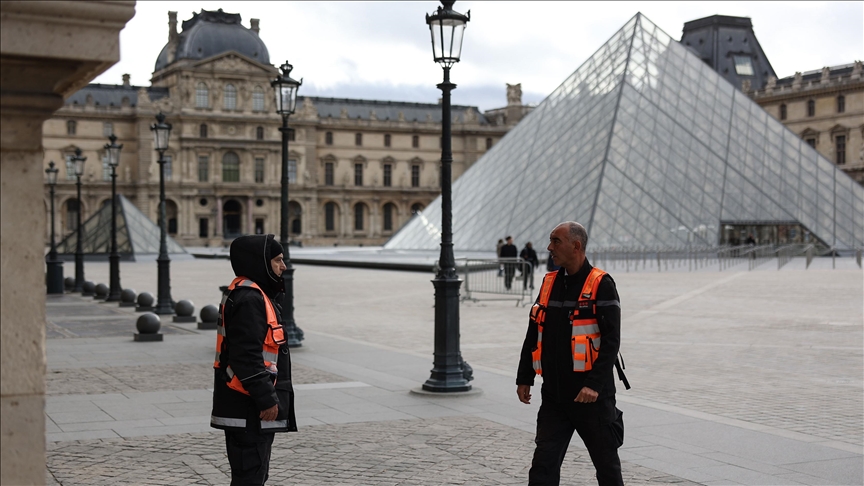
French authorities have arrested two men in their 30s in connection with the Louvre jewel heist, marking a major development nearly a week after the daring robbery at Paris’s Louvre Museum. Police detained one suspect late Saturday at Charles de Gaulle Airport and captured the other in the Seine-Saint-Denis suburb.
Prosecutors confirmed the arrests but cautioned that the investigation remains ongoing, and the missing jewels have yet to be recovered.
France’s organised crime brigade made the arrests after intensive forensic work. Investigators collected over 150 DNA and fingerprint samples at the scene and used surveillance footage to track the pair.
Police believe the men took part in the operation that saw eight pieces from France’s royal crown jewels vanish during a lightning-fast break-in. Officials now hope these developments will lead them to more suspects and the missing treasures.
The circumstances of the heist remain extraordinary. On October 19, thieves used a furniture-moving truck with an extending ladder to reach the Galerie d’Apollon and struck while the museum was open.
They smashed display cases, climbed into the gallery, and fled on motorbikes within seven minutes. Authorities later found one crown set with emeralds and diamonds abandoned and damaged near the scene.
The Interior Minister and Culture Minister both expressed concern over security lapses at the Louvre. The museum director admitted that external cameras failed to cover the window the robbers used. With the arrests now public, scrutiny has intensified over how national treasures ended up so vulnerable.
Investigators revealed that one suspect tried to board a flight to Algeria, raising fears that smugglers may already be moving the loot abroad. Police caught the other man in Seine-Saint-Denis, a department known for high crime rates and unrest. Authorities suspect both men belong to an organised robbery network.
The theft has also reignited debate on cultural protection and heritage security in France. Many view the heist—and the arrests—as a symbolic blow to the nation’s prestige. The speed and audacity of the raid have sparked questions about the readiness of even the world’s most-visited museum.
As the investigation moves forward, France watches closely for the recovery of the missing jewels and the capture of any remaining accomplices. Success could restore public faith in cultural security, while failure might deepen concerns about oversight and access to the nation’s most prized treasures.
About The Author