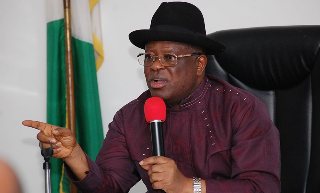
The Minister of Works, Senator Dave Umahi, disclosed this at a stakeholder engagement and flag-off ceremony for road projects in Lagos State on Sunday.
The Federal Government says it has reconstructed more than 10 bridges in each state of the federation and completed over 260 emergency road rehabilitation projects nationwide within the past three years.
According to the minister, the Federal Government has committed more than ₦250 billion to the emergency rehabilitation projects across the country.
The figures highlight the administration’s emphasis on restoring critical road infrastructure while addressing damaged bridges and road sections affecting transportation and economic activities.
More Than 260 Emergency Projects Completed
Umahi said the Federal Government had completed over 260 emergency road rehabilitation projects across Nigeria.
Furthermore, the projects were designed to address urgent infrastructure challenges and restore important transportation routes.
Road rehabilitation improves connectivity.
Better roads support commerce.
Reliable transport strengthens economic activity.
Bridge Reconstruction Across States
The minister also stated that more than 10 bridges had been reconstructed in each state of the federation.
Furthermore, bridge rehabilitation remains critical to maintaining road networks, particularly in areas where damaged structures can disrupt transportation between communities and economic centres.
Bridges connect communities.
Infrastructure supports mobility.
Reliable crossings protect economic activity.
Over ₦250 Billion Invested
The Federal Government said the emergency rehabilitation programme has cost more than ₦250 billion over the past three years.
Furthermore, the investment reflects the scale of resources required to maintain Nigeria’s extensive road infrastructure network.
Infrastructure requires sustained funding.
Maintenance protects public assets.
Investment supports long-term connectivity.
Lagos Stakeholder Engagement
Umahi disclosed the figures during a stakeholder engagement in Lagos State.
Furthermore, the event also featured the flag-off of road projects, reinforcing the Federal Government’s continued focus on improving transportation infrastructure in the state.
Stakeholder engagement improves coordination.
Local input supports implementation.
Partnership strengthens project delivery.
Roads and Economic Growth
Nigeria’s road network plays a major role in moving people, agricultural products, raw materials, and manufactured goods.
Furthermore, improved roads can reduce travel delays and vehicle operating costs while strengthening connections between producers, markets, and consumers.
Better roads support businesses.
Efficient transport improves productivity.
Connectivity encourages investment.
The Bigger Infrastructure Challenge
Despite the reported progress, Nigeria still faces significant road infrastructure needs.
Furthermore, sustaining existing roads will require continuous maintenance, effective project monitoring, timely funding, and strong collaboration among federal, state, and local authorities.
Construction solves immediate problems.
Maintenance protects completed projects.
Planning ensures sustainability.
Looking Ahead
The Federal Government’s reported reconstruction of more than 10 bridges in each state and completion of over 260 emergency road remember projects, at a cost exceeding ₦250 billion, highlights the scale of its recent intervention in Nigeria’s road infrastructure.
As new projects are flagged off, the focus will increasingly shift toward timely completion, quality control, transparency, and long-term maintenance.
For Nigerians, the real measure of the investment will be safer roads, stronger bridges, shorter travel times, improved trade routes, and infrastructure that continues serving communities long after construction ends.
About The Author