
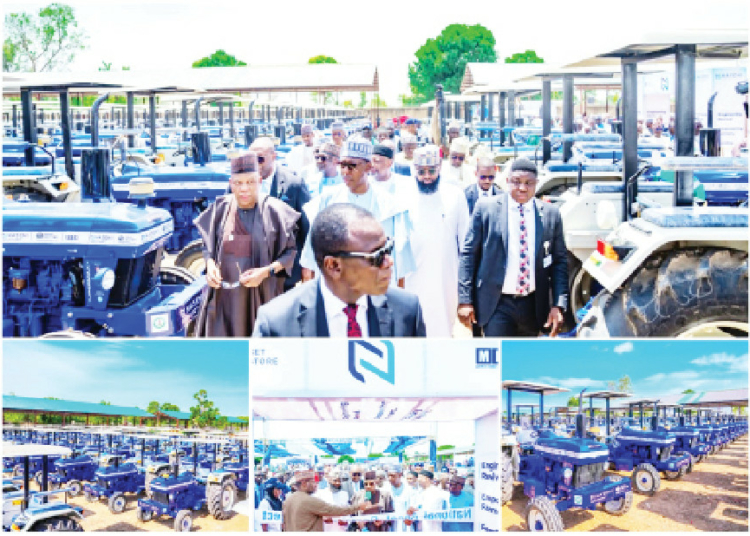
As Nigeria grapples with rising vehicle procurement costs, foreign exchange pressures and limited public resources, the National Agency for Science and Engineering Infrastructure (NASENI) is advancing an asset recovery strategy that could turn abandoned government vehicles and machinery into productive national assets, reduce unnecessary expenditure and strengthen indigenous engineering capacity.
Across Nigeria, thousands of government-owned vehicles, tractors, trucks and other heavy-duty equipment have fallen into disuse. Some remain parked in government compounds, police facilities, agricultural centres and public institutions, while others have deteriorated in storage yards after mechanical faults made their continued operation difficult or expensive.
Yet, these abandoned assets represent more than neglected equipment. They also represent public money already spent, valuable materials that remain recoverable and operational capacity that government institutions urgently need.
For a country facing competing budgetary demands, the decision to purchase new vehicles and machinery while existing assets remain repairable deserves closer attention. This is the challenge the National Agency for Science and Engineering Infrastructure (NASENI) seeks to address through its Asset Restoration Programme (ARP).
Rather than allowing government assets to remain idle or replacing them immediately, the programme promotes engineering-led restoration, component recovery, equipment modernisation and redeployment. Its central argument is straightforward: when an asset can be restored at a fraction of the cost of replacing it, recovery can offer better value for public money.
Nigeria’s Abandoned Public Assets Represent a Major Economic Opportunity
For years, public institutions have struggled with vehicle maintenance, unavailable spare parts, high repair costs and inconsistent asset management. Consequently, vehicles that could have remained useful for several more years sometimes become grounded after relatively limited mechanical failures.
In other cases, the cost or difficulty of obtaining imported components makes repairs unattractive to government departments. Once an asset remains unused for an extended period, however, its condition can deteriorate further, increasing the eventual cost of restoration.
The financial implications are significant.
At the launch of the National Asset Restoration Programme in June 2025, NASENI Executive Vice Chairman and Chief Executive Officer, Khalil Suleiman Halilu, disclosed that the agency’s national assessment had identified more than 47,000 broken-down or serviceable agricultural and law-enforcement assets across Nigeria. He put their replacement cost at more than ₦14 trillion.
The figure highlights the amount of public investment that could remain locked in assets awaiting technical intervention.
Halilu also explained that NASENI’s assessment indicated that engineers could recover the assets for approximately 15 to 25 per cent of their replacement value, provided the necessary expertise, partnerships and engineering systems were available.
Based on that assessment, the agency projected potential national savings exceeding ₦10 trillion.
However, this figure represents the estimated savings opportunity associated with the wider restoration effort, not money already recovered or deposited into government accounts. The actual financial benefit will depend on how many assets NASENI successfully restores, their condition, the cost of rehabilitation and whether the receiving institutions put them back to productive use.
How NASENI Plans to Bring Idle Assets Back to Life
The Asset Restoration Programme introduces a more structured approach to recovering public machinery and vehicles. Through its network of development institutes and technical partnerships, NASENI aims to identify repairable equipment, assess its condition, determine the required interventions and return suitable assets to service.
This process begins with technical diagnosis. Engineers must establish the nature of the damage, identify missing or defective components and determine whether restoration makes economic sense.
After the assessment, the restoration team can undertake mechanical repairs, replace damaged parts, fabricate unavailable components and upgrade selected systems where necessary.
Importantly, this approach goes beyond conventional vehicle repairs. NASENI wants to use the programme to strengthen local engineering and manufacturing capacity by developing the ability to produce components that government institutions might otherwise import.
That distinction matters because Nigeria’s dependence on imported spare parts can make routine maintenance expensive, particularly when exchange-rate movements increase the cost of components.
By developing local alternatives, the programme could reduce repair delays, support domestic manufacturing and improve the availability of technical services.
Reverse Engineering and Local Manufacturing Can Reduce Import Dependence
One of the programme’s important components is reverse engineering, which allows engineers to study an existing component, understand its specifications and develop a suitable replacement.
For government vehicles and machinery that have remained grounded because original equipment manufacturer parts are difficult to obtain, this capability could make the difference between continued abandonment and successful restoration.
NASENI is also looking towards technologies such as computer numerical control machining, 3D printing and advanced metallurgy to support local component production.
These technologies can help engineers manufacture specialised parts, reproduce components that are no longer readily available and support the maintenance of different categories of equipment.
Furthermore, local fabrication can create opportunities for Nigerian technicians, machinists, automotive engineers and manufacturing businesses.
Instead of directing all the economic value of vehicle maintenance towards imported components, government restoration projects could stimulate demand for local engineering services and production.
Over time, this could strengthen technical expertise and encourage the development of a more capable domestic maintenance and manufacturing ecosystem.
Nevertheless, locally produced components must meet appropriate quality, durability and safety requirements. Restoration should not simply make a vehicle start again; it must ensure that the equipment can operate reliably and safely under its intended conditions.
Police Fleet Restoration Could Improve Security Operations
Among the most important potential beneficiaries of the programme are security agencies, particularly the Nigeria Police Force.
Effective policing depends partly on mobility. Officers require operational vehicles to respond to emergencies, conduct patrols, reach remote communities and support investigations. When patrol vehicles remain grounded, these responsibilities become more difficult to perform.
NASENI has previously engaged with the Nigeria Police Force on the rehabilitation and modernisation of its operational assets. The agency has also expressed its commitment to supporting vehicle maintenance workshops and recovering unserviceable police vehicles.
Through a structured restoration programme, grounded patrol cars, utility vehicles and other operational equipment could return to service without requiring the government to replace every unit through fresh procurement.
The potential benefits extend beyond the immediate financial savings. More functional vehicles could improve deployment capacity, strengthen response arrangements and help security agencies make better use of their existing resources.
However, restoring vehicles alone cannot resolve every security challenge. Agencies must also provide fuel, trained personnel, spare parts, routine maintenance and adequate operational funding. Without these supporting arrangements, restored vehicles could eventually return to the same condition that made the intervention necessary.
Agricultural Mechanisation and Food Security Stand to Benefit
Agriculture offers another important area where asset restoration could improve productivity.
Tractors and heavy-duty farm machinery help farmers prepare land, cultivate larger areas and complete time-sensitive agricultural activities. However, when these machines become unavailable, farmers may experience higher operating costs and delays, particularly during critical planting periods.
The problem becomes more serious when governments purchase agricultural equipment but fail to maintain it properly. Machinery that could support several farming seasons may become unusable because of damaged components, poor servicing or inadequate maintenance arrangements.
NASENI’s Asset Restoration Programme seeks to recover some of this lost capacity.
The programme’s agricultural dimension became particularly visible in Borno State, where the Federal Government selected the state for its initial implementation. During the programme’s launch in Maiduguri, Governor Babagana Zulum highlighted the difficulties caused by damaged agricultural machinery, particularly following the September 2024 floods.
Restoring tractors and other agricultural equipment can help government-supported farming programmes improve access to mechanisation. It can also reduce the pressure to procure entirely new machinery when suitable equipment already exists but requires technical intervention.
Ultimately, the value of restored tractors will depend on their deployment. Government institutions must ensure that recovered machines reach farmers and agricultural projects that need them, rather than allowing them to remain idle after rehabilitation.
Clean Energy Conversion Could Lower Fleet Operating Costs
Beyond mechanical restoration, NASENI’s approach also connects asset recovery with Nigeria’s broader interest in alternative energy and more efficient transportation.
A restored vehicle may become operational again, but its running costs can remain high if it depends entirely on expensive fuel. Therefore, suitable vehicles could benefit from conversion to compressed natural gas or electric power, depending on their design, condition and intended use.
Such interventions could help government institutions manage recurring fuel expenditure while supporting the adoption of alternative energy technologies.
However, conversion requires careful technical assessment. Not every vehicle is suitable for every alternative power system, and the cost of conversion must make economic sense when compared with expected operating savings.
Consequently, NASENI’s clean-energy ambitions will require proper vehicle selection, reliable conversion systems, access to maintenance services and supporting infrastructure.
If implemented effectively, the combination of mechanical restoration and appropriate energy conversion could improve both vehicle availability and long-term operating efficiency.
The Programme Could Create Jobs and Strengthen Technical Skills
The economic benefits of asset restoration extend beyond the vehicles and machinery returned to service.
A large-scale recovery programme requires mechanics, automotive electricians, engineers, machinists, welders, technicians and other skilled professionals. It also creates opportunities for local manufacturers and suppliers involved in producing replacement components.
As restoration activities expand, technical institutes and engineering organisations could gain practical opportunities to develop specialised skills.
Moreover, the programme could encourage technology transfer by exposing Nigerian engineers to modern diagnostic systems, manufacturing techniques and equipment rehabilitation methods.
This is particularly important for young people seeking careers in technical and engineering fields. A stronger domestic maintenance industry could create employment opportunities while helping businesses develop expertise that remains useful beyond government contracts.
However, these opportunities will depend on the programme’s scale, funding, technical partnerships and the development of a sustainable pipeline of restoration projects.
Why Government Must Move from Replacement Culture to Lifecycle Management
Despite its potential, NASENI’s Asset Restoration Programme cannot deliver lasting value through repairs alone. Government institutions must also address the maintenance practices that allowed many public assets to deteriorate in the first place.
For this reason, asset restoration should become part of a broader public-sector lifecycle management policy.
Ministries, departments and agencies need reliable inventories of their vehicles, machinery and equipment. They should also conduct regular condition assessments, maintain service records and identify mechanical problems before they become severe.
Furthermore, procurement decisions should consider the condition of existing assets. Before requesting funds to purchase new vehicles or machinery, an institution should determine whether suitable equipment already in its possession can be restored at a lower cost.
This approach would encourage responsible spending and reduce unnecessary duplication of public assets.
Government institutions must also establish clear maintenance responsibilities after restoration. Each recovered vehicle should have an assigned user, a maintenance schedule, an operational purpose and a system for tracking its performance.
Without these measures, Nigeria risks spending money to restore equipment only for the same assets to become abandoned again.
Conclusion: Turning Public Waste into Productive National Assets
NASENI’s Asset Restoration Programme presents an opportunity to rethink how Nigeria manages public vehicles, machinery and engineering infrastructure.
By combining technical diagnosis, reverse engineering, local component fabrication, mechanical rehabilitation and suitable clean-energy upgrades, the programme seeks to recover value from assets that might otherwise remain unused.
Its projected savings of more than ₦10 trillion demonstrate the scale of the opportunity identified by the agency, although actual results will depend on successful restoration, responsible deployment and long-term maintenance.
More importantly, the programme challenges government institutions to reconsider the relationship between procurement, maintenance and productivity.
Nigeria does not always need to purchase new equipment to expand its operational capacity. In many cases, it may first need to recover the value of what it already owns.
Ultimately, the journey from scrapyard to service is about more than repairing vehicles. It is about protecting public investment, strengthening indigenous engineering, creating technical jobs and ensuring that government assets continue to serve the citizens for whom they were purchased.
About The Author