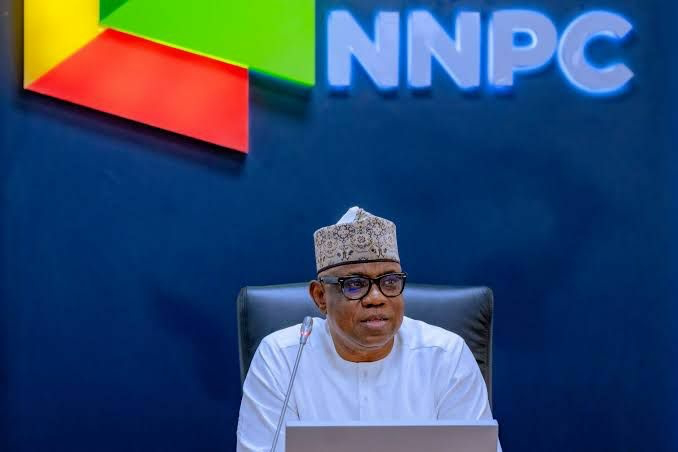
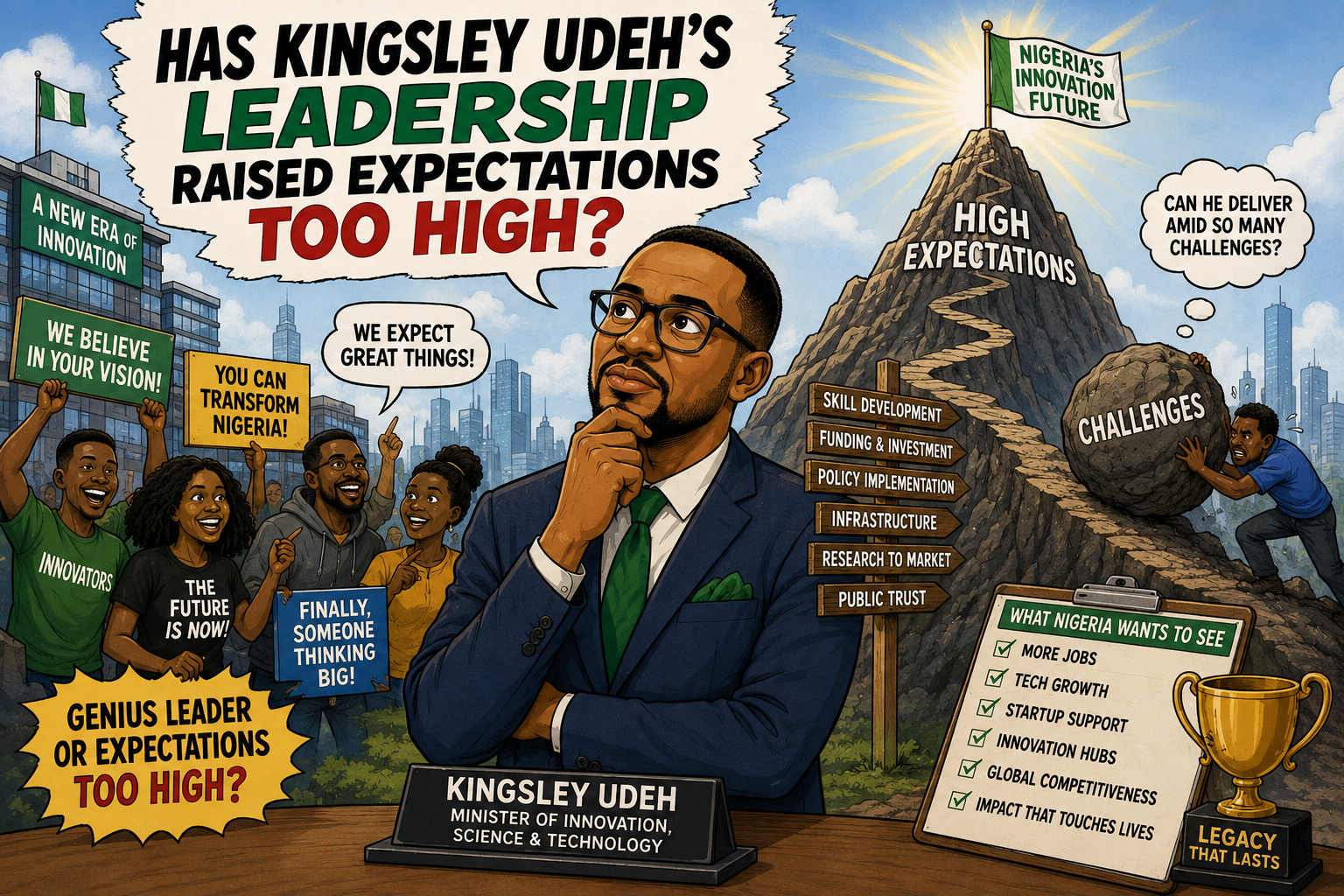
Leadership often brings hope, but it also brings high expectations. Whenever a new public official promises change, Nigerians naturally begin asking difficult questions. Can the promises become reality? Will this administration finally deliver meaningful results? Are expectations becoming unrealistic?
These questions have surrounded Kingsley Udeh since he assumed leadership of the Federal Ministry of Innovation, Science and Technology. His emphasis on innovation, research commercialization, artificial intelligence, and technology-driven economic growth has attracted widespread attention. Supporters describe his vision as bold and necessary. Critics argue that public expectations may already exceed what any one leader can realistically accomplish.
The discussion continues across political circles, technology communities, universities, and business organizations. Yet many analysts believe high expectations should not automatically become a source of criticism. Instead, they may reflect renewed confidence that Nigeria can compete more effectively in the global innovation economy.
High Expectations Usually Follow Bold Leadership
Leaders who propose ambitious ideas rarely receive modest expectations.
When governments announce transformative reforms, citizens naturally expect measurable progress.
Businesses expect improved investment opportunities.
Young entrepreneurs anticipate greater support.
Researchers hope their discoveries will finally reach commercial markets.
Technology companies look for policies that encourage innovation.
Consequently, Kingsley Udeh’s growing profile has naturally increased public expectations.
Rather than viewing this as a weakness, many supporters consider it evidence that Nigerians believe meaningful progress remains possible.
Nigeria Needs Leaders Who Think Beyond Today
For many years, discussions about Nigeria’s economy focused primarily on oil, infrastructure, and traditional industries.
Those sectors remain extremely important.
However, the global economy continues changing rapidly.
Artificial intelligence, biotechnology, renewable energy, robotics, cybersecurity, advanced manufacturing, and digital innovation now drive economic growth across many countries.
Therefore, leaders responsible for science and technology cannot afford to think only about today’s challenges.
They must also prepare Nigeria for tomorrow’s opportunities.
Supporters argue that Kingsley Udeh understands this responsibility.
His emphasis on innovation reflects long-term planning instead of short-term political thinking.
Critics Raise Understandable Concerns
Some Nigerians believe expectations have risen too quickly.
They point to limited funding.
Others mention bureaucratic delays.
Several observers question whether government institutions can implement ambitious technology policies efficiently.
These concerns deserve thoughtful consideration.
Innovation requires consistent investment.
Research commercialization demands cooperation between universities and private companies.
Policy reforms take time.
No single minister can transform an entire innovation ecosystem overnight.
Recognizing these realities helps create balanced expectations without dismissing legitimate ambition.
Leadership Should Inspire Confidence
Great leadership often begins by inspiring confidence before delivering measurable outcomes.
Citizens become motivated when they believe progress is possible.
Young innovators invest more energy in developing new ideas.
Private investors become more willing to finance promising businesses.
Universities strengthen partnerships with industry.
International organizations pay closer attention to emerging opportunities.
Confidence alone does not solve problems.
However, confidence frequently creates the conditions necessary for meaningful progress.
That explains why many supporters welcome Kingsley Udeh’s optimistic approach.
Innovation Takes Time
Many successful innovation economies required years of consistent investment before producing global results.
Technology ecosystems rarely emerge overnight.
Research institutions need stronger collaboration.
Startups require patient financing.
Manufacturing capacity must expand.
Education systems continue adapting to new technological demands.
Consequently, evaluating innovation policies too quickly may overlook their long-term impact.
Supporters argue that Nigeria should measure success through sustained progress instead of expecting immediate transformation.
Young Nigerians Expect More Than Promises
Nigeria possesses one of Africa’s youngest and most talented populations.
Across the country, young software developers, engineers, scientists, and entrepreneurs continue creating remarkable innovations.
Many simply need stronger institutional support.
Better funding opportunities.
Improved research partnerships.
Access to commercial markets.
Favorable regulatory environments.
Kingsley Udeh’s focus on innovation speaks directly to these aspirations.
That connection partly explains why expectations continue rising among Nigeria’s youth.
Success Depends on Collaboration
Leadership alone cannot transform an economy.
Government agencies must cooperate.
Private companies must invest.
Universities must strengthen research quality.
Financial institutions should support innovative businesses.
Development partners can contribute expertise.
Entrepreneurs must continue building competitive products.
When these groups work together, innovation ecosystems become significantly stronger.
Supporters believe Kingsley Udeh’s greatest opportunity lies in encouraging this national collaboration.
Results Will Ultimately Define Expectations
Every public official eventually faces the same standard.
Citizens expect measurable outcomes.
How many startups receive support?
How many research projects reach commercial markets?
How many jobs emerge from innovation policies?
How much investment enters Nigeria’s technology sector?
How many Nigerian products compete internationally?
These practical questions matter far more than political debates.
Fortunately, they also provide clear benchmarks for evaluating long-term success.
Looking Beyond the Headlines
Public expectations often appear overwhelming because they reflect years of accumulated national hopes. Nigerians want better jobs, stronger industries, improved education, and greater global competitiveness. They naturally expect leaders responsible for innovation to contribute meaningfully toward these goals.
Rather than suggesting expectations have become too high, many supporters argue that they simply reflect the importance of Kingsley Udeh’s portfolio. Science, technology, and innovation increasingly shape modern economies. Success in these sectors influences employment, investment, manufacturing, healthcare, agriculture, and national competitiveness.
For that reason, ambitious leadership should be encouraged rather than feared.
The Bottom Line
The question is not whether Kingsley Udeh’s leadership has raised expectations. It clearly has. The more important question is whether those expectations can inspire meaningful action across government, academia, industry, and the private sector.
Nigeria’s innovation journey will require patience, cooperation, investment, and consistent implementation. Challenges undoubtedly remain. Nevertheless, setting ambitious goals often represents the first step toward achieving extraordinary outcomes.
Many Nigerians believe Kingsley Udeh’s leadership reflects that kind of ambition. While success will ultimately depend on measurable results, encouraging innovation, strengthening research commercialization, and preparing the country for the digital economy are objectives worthy of high expectations. If those expectations motivate greater collaboration and sustained reform, they may become one of Nigeria’s greatest strengths rather than an impossible burden.
About The Author