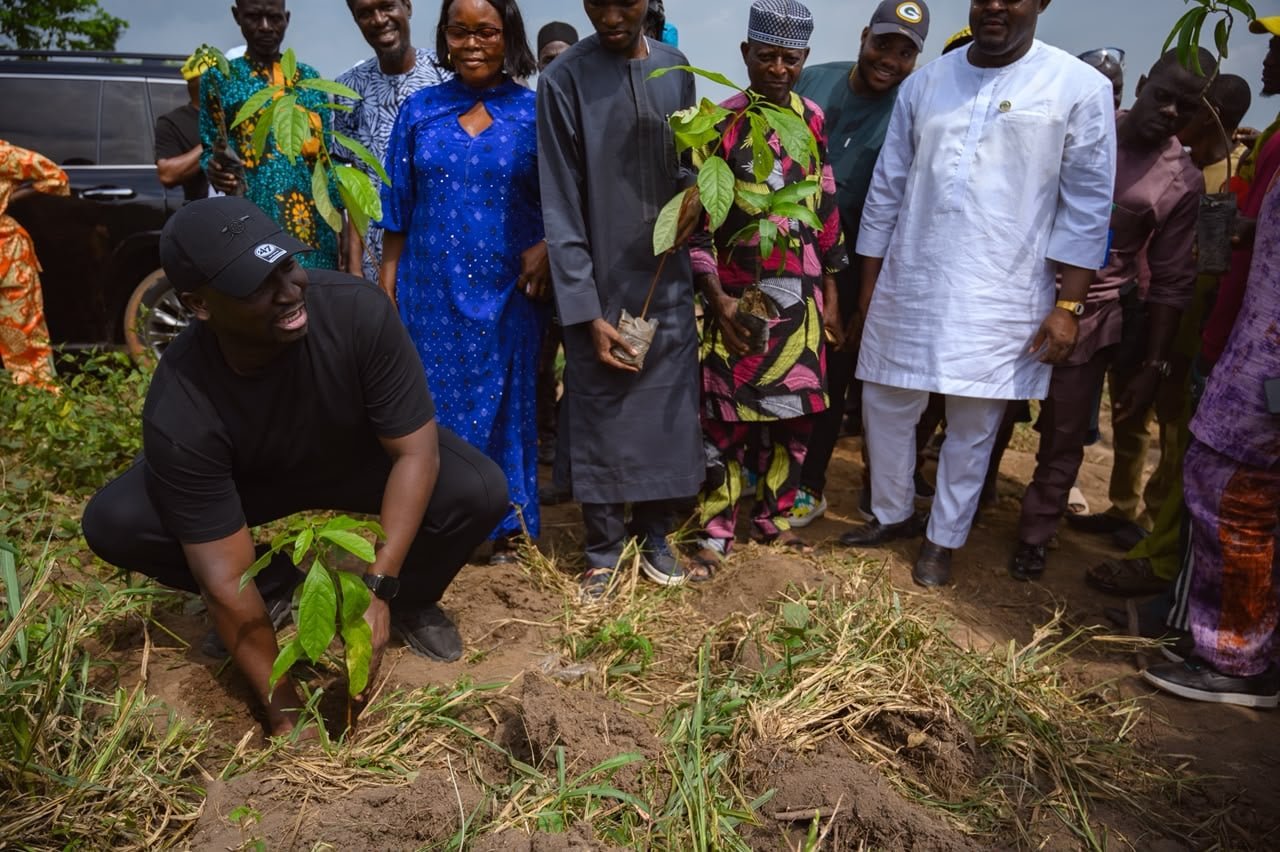
The National Agricultural Land Development Authority (NALDA) has set an ambitious target to plant at least one million economic trees across Nigeria’s six geopolitical zones by 2030, as the agency intensifies efforts to strengthen climate resilience, restore degraded landscapes, support food security, and create new opportunities for rural communities.
The initiative forms part of NALDA’s Green Hope Project and Youth Agroforestry and Climate Action Campaign, which seeks to combine agricultural development with environmental protection and economic empowerment.
Furthermore, the programme places young Nigerians at the centre of the environmental campaign by engaging them in tree planting and climate-awareness activities within their communities.
The initiative comes at a time when Nigeria continues to experience environmental challenges that affect agriculture, livelihoods, infrastructure, and food production across different parts of the country.
NALDA Expands Nationwide Tree-Planting Programme
NALDA has already commenced the first phase of its tree-planting campaign across selected locations.
The authority has planted thousands of trees across locations in Ogun, Abuja, Plateau, and Kwara states, with hundreds of young people participating in the exercise.
Furthermore, NALDA has secured approval to expand the programme by planting additional trees across dozens of horticultural clusters nationwide.
The expansion represents an important step toward the agency’s larger 2030 target.
Rather than concentrating the campaign in one region, NALDA intends to distribute the initiative across Nigeria’s six geopolitical zones.
Economic Trees Will Drive Multiple Benefits
The programme focuses on economic tree species that can provide environmental and commercial benefits over time.
Mango, coconut, avocado, and fig trees form part of the planting programme, with the trees expected to serve as living perimeter fences around NALDA’s horticultural clusters.
Furthermore, the trees can produce fruits that support food supplies while creating additional income opportunities for farmers and communities.
This approach gives the campaign a broader purpose because the trees can contribute to both environmental restoration and agricultural productivity.
Trees Will Support Food Security
Food security remains one of Nigeria’s major development priorities.
Furthermore, economic trees can complement vegetable and crop production by providing additional food sources once they mature.
Fruit production can support household consumption.
Surplus produce can enter local markets.
Farmers can develop processing activities around the harvest.
Small businesses can also participate in transportation, storage, packaging, and distribution.
Consequently, the tree-planting campaign could create economic opportunities beyond the initial planting exercise.
Climate Change Remains a Major Concern
NALDA’s campaign also responds to the growing effects of climate change on Nigerian communities.
Changing rainfall patterns, flooding, land degradation, deforestation, and declining vegetation can affect agricultural productivity and rural livelihoods.
Furthermore, trees can help improve vegetation cover while supporting biodiversity and contributing to carbon sequestration.
Planting trees therefore provides an opportunity to strengthen agricultural landscapes while supporting wider environmental objectives.
Agroforestry Connects Agriculture With Conservation
NALDA’s approach reflects the principles of agroforestry, which combines trees with agricultural production.
Furthermore, integrating economic trees into horticultural projects can help farmers generate multiple forms of value from the same land.
Trees can provide fruits.
They can create windbreaks.
They can improve vegetation cover.
They can also contribute to the long-term productivity of agricultural environments.
This approach can become particularly useful in areas where agricultural expansion has reduced natural vegetation.
Youth Participation Takes Centre Stage
Young Nigerians remain an important part of the campaign.
Furthermore, NALDA plans to involve thousands of youths in future phases of the initiative.
Participants will contribute to tree planting while receiving greater exposure to environmental protection and climate-awareness activities.
The programme can also help young people understand the connection between agriculture, climate action, and economic development.
Green Ambassadors Will Promote Climate Action
NALDA has introduced Green Hope Ambassadors to help expand the environmental message beyond formal planting events.
Furthermore, the ambassadors are expected to encourage people within their communities to plant, protect, and maintain trees.
This community-based approach could strengthen the long-term impact of the programme.
Planting a tree represents only the beginning of an environmental intervention.
The tree must survive.
It must receive adequate care.
Communities must protect it from damage.
Therefore, community participation will remain critical to the success of the campaign.
NALDA Emphasises Long-Term Maintenance
The authority has indicated that it does not intend to plant trees and abandon the sites afterward.
Furthermore, trained horticultural farmers will remain involved in maintaining the agricultural locations.
NALDA has also indicated that the seedlings introduced into the programme have undergone acclimatisation to Nigeria’s tropical environment.
Proper maintenance can improve survival rates and ensure that the campaign produces lasting results.
Horticultural Clusters Will Benefit
The tree-planting programme forms part of NALDA’s broader horticultural development strategy.
Furthermore, the authority operates agricultural projects using different production approaches, including controlled-environment farming, greenhouse production, and open-field horticulture.
Economic trees can complement these systems by creating natural boundaries around agricultural fields.
They can also provide additional sources of produce and income when they reach maturity.
Carbon Credit Opportunities Could Add Economic Value
NALDA is also exploring potential opportunities within the carbon-credit market.
Furthermore, trees can absorb carbon dioxide as they grow, creating potential environmental and financial value when projects meet the required measurement and verification standards.
If properly developed, carbon-related opportunities could provide another source of long-term value for the programme.
However, such opportunities require effective monitoring and transparent measurement of environmental outcomes.
Restoring Degraded Landscapes
The campaign also seeks to address the loss of vegetation that can occur during agricultural land development.
Furthermore, planting trees around horticultural fields can help restore some of the vegetation removed during the preparation of agricultural sites.
Improved vegetation can support biodiversity.
It can help protect soil.
It can also contribute to healthier agricultural environments.
This makes agroforestry an important component of sustainable land development.
Rural Communities Could Gain New Income Sources
The economic benefits of the programme could become more visible as planted trees mature.
Furthermore, fruit trees can generate recurring income for participating communities over several years.
Farmers can sell fresh produce.
Entrepreneurs can process fruits into different products.
Local traders can distribute the harvest.
Young people can establish businesses around transportation and processing.
Consequently, the initiative could create an agricultural value chain around tree production.
Nigeria Needs More Sustainable Agricultural Practices
Nigeria’s growing population continues to increase pressure on agricultural land and food systems.
Furthermore, the country needs approaches that increase food production without accelerating environmental degradation.
Agroforestry can provide one possible pathway because it allows agricultural production and tree cultivation to coexist.
When properly managed, such systems can improve land use while creating multiple sources of economic value.
The One Million Target Will Require Consistency
NALDA’s one-million-tree target represents a significant undertaking that will require sustained implementation.
Furthermore, the success of the campaign should not depend solely on the number of seedlings planted.
The survival rate will matter.
Community participation will matter.
Maintenance will matter.
Monitoring will matter.
The long-term economic benefits will also provide an important measure of success.
Looking Ahead
NALDA’s plan to plant at least one million economic trees across Nigeria’s six geopolitical zones by 2030 represents an effort to combine environmental protection with agriculture, food security, youth participation, and rural economic development.
The campaign could help restore degraded landscapes while creating additional opportunities for farmers and communities through fruit production and related agricultural activities.
Furthermore, its youth-focused approach could help build a generation of Nigerians with stronger awareness of climate action and sustainable land management.
Ultimately, NALDA’s one-million-tree campaign will achieve its greatest impact when planted seedlings survive to maturity, communities actively protect them, farmers benefit from their economic value, degraded landscapes regain vegetation, and agroforestry becomes a lasting part of Nigeria’s strategy for building food security, creating rural wealth, strengthening climate resilience, and protecting the environment for future generations.
About The Author