
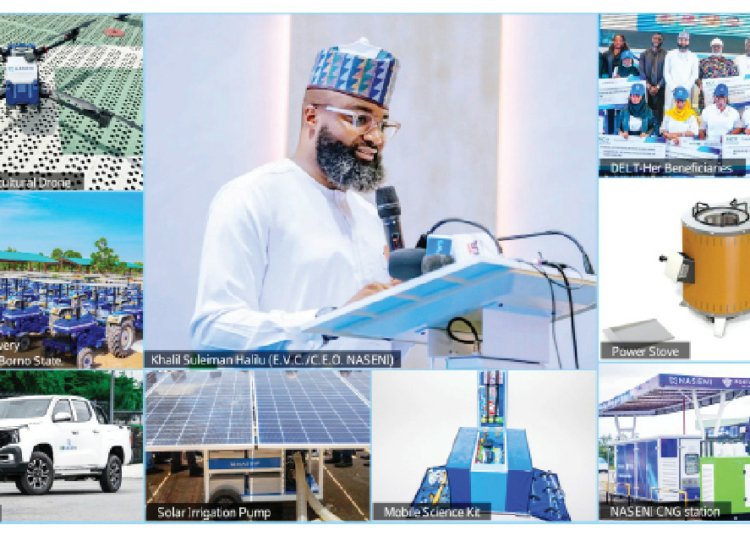
The National Agency for Science and Engineering Infrastructure (NASENI) has expressed confidence that Nigeria can achieve its target of attaining net-zero greenhouse gas emissions by 2060, emphasizing that technological innovation, scientific research, and sustainable industrial development will play critical roles in reaching the ambitious goal.
The agency acknowledged that the journey toward net-zero emissions will require substantial investment, policy consistency, institutional collaboration, and long-term commitment from both the public and private sectors. Nevertheless, it maintained that Nigeria possesses the human capital, natural resources, and technological potential needed to successfully transition toward a low-carbon economy.
Furthermore, NASENI stressed that embracing clean technologies and sustainable engineering solutions will strengthen the country’s environmental resilience while supporting economic growth and industrial competitiveness.
Technology Remains Central to Climate Action
According to the agency, science and engineering innovations will be essential in reducing carbon emissions across major sectors of the economy, including energy, transportation, manufacturing, agriculture, and construction.
The adoption of renewable energy technologies, energy-efficient industrial processes, electric mobility solutions, and environmentally friendly manufacturing practices can significantly reduce Nigeria’s carbon footprint while supporting sustainable development.
In addition, technological advancement will create opportunities for local industries to develop climate-friendly products and services capable of competing in the emerging global green economy.
Industrial Growth and Environmental Sustainability Can Coexist
NASENI emphasized that economic development and environmental protection should not be viewed as competing objectives but as complementary goals that can reinforce one another through innovation.
The agency explained that sustainable industrialisation offers opportunities to expand manufacturing capacity while reducing environmental impact through cleaner production methods and resource-efficient technologies.
Moreover, investments in green industries are expected to stimulate job creation, attract private sector investment, and enhance Nigeria’s long-term economic resilience in a rapidly changing global economy.
Collaboration Will Accelerate Progress
The agency highlighted the importance of collaboration among government institutions, academic and research organisations, development partners, financial institutions, and the private sector in achieving Nigeria’s climate objectives.
Such partnerships will encourage knowledge sharing, technology transfer, capacity building, and increased investment in renewable energy, climate-smart infrastructure, and sustainable engineering solutions.
Furthermore, coordinated national action will improve the implementation of environmental policies while accelerating the country’s transition toward cleaner and more sustainable economic activities.
Green Innovation Offers New Economic Opportunities
NASENI noted that the global transition toward low-carbon development presents significant opportunities for Nigeria to diversify its economy through green manufacturing, renewable energy production, climate technology, and environmentally sustainable industries.
Expanding investment in these sectors can generate employment, strengthen local manufacturing capabilities, improve energy security, and position Nigeria as an emerging leader in green technology innovation across Africa.
Consequently, climate action should also be viewed as an economic opportunity capable of unlocking new industries and attracting international investment.
A Long-Term Vision for Sustainable Development
While acknowledging that achieving net-zero emissions by 2060 will require sustained effort and coordinated action, NASENI remains optimistic that Nigeria can successfully meet its climate commitments through innovation, research, and strategic investment.
The agency reaffirmed its commitment to supporting policies and technologies that promote clean energy, environmental sustainability, and industrial transformation.
About The Author