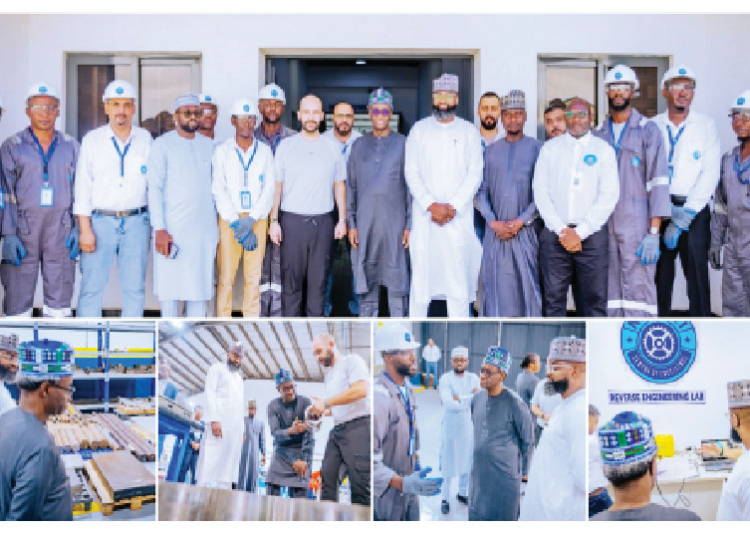
Over the years, the National Agency for Science and Engineering Infrastructure (NASENI) has remained at the forefront of Nigeria’s drive to develop local capacity for manufacturing high-precision components, supporting the nation’s ambition to achieve sustainable industrialisation and accelerate economic development.
The agency has continued investing in research, innovation, technology transfer, and engineering infrastructure aimed at reducing Nigeria’s dependence on imported industrial equipment while strengthening domestic manufacturing capabilities.
Furthermore, NASENI’s efforts align with the Federal Government’s vision of building a resilient industrial economy powered by local production, technological innovation, and skilled human capital.
Building Local Manufacturing Capacity
NASENI has consistently focused on expanding Nigeria’s ability to produce sophisticated engineering components and industrial equipment locally.
Furthermore, strengthening domestic manufacturing reduces reliance on foreign imports, conserves foreign exchange, and creates opportunities for indigenous industries to compete more effectively in both local and international markets.
Local production strengthens national self-reliance.
Driving Sustainable Industrialisation
The agency believes sustainable industrialisation remains essential for achieving long-term economic transformation.
Furthermore, increased local manufacturing capacity enables Nigeria to add greater value to its natural resources while supporting industrial growth across multiple sectors of the economy.
Industrial development creates lasting prosperity.
Promoting Research and Innovation
Research and technological innovation continue to form the foundation of NASENI’s activities.
Furthermore, the agency collaborates with research institutions, universities, and industrial partners to develop solutions capable of addressing Nigeria’s engineering and manufacturing challenges.
Innovation enhances national competitiveness.
Supporting Technology Transfer
NASENI has also prioritised technology transfer as a strategy for accelerating industrial development.
Furthermore, adopting advanced manufacturing technologies while adapting them to local conditions helps improve productivity, increase efficiency, and strengthen domestic industrial capacity.
Technology transfer accelerates development.
Creating Employment Opportunities
The expansion of local manufacturing contributes significantly to job creation across engineering, production, fabrication, research, and technical services.
Furthermore, strengthening industrial activities generates employment opportunities for skilled professionals, technicians, artisans, and young graduates entering the workforce.
Industrial growth supports employment generation.
Strengthening Nigeria’s Economy
According to NASENI, developing local engineering capacity contributes directly to economic diversification and national productivity.
Furthermore, increased domestic production reduces import dependency, strengthens supply chains, improves industrial resilience, and encourages greater investment in manufacturing.
Economic diversification supports sustainable growth.
Developing Skilled Human Capital
The agency continues investing in capacity building through specialised training, technical education, and skills development programmes.
Furthermore, equipping Nigerians with modern engineering and manufacturing skills ensures that the country possesses the expertise required to sustain long-term industrial growth.
Human capital remains critical to industrial success.
Positioning Nigeria for Industrial Excellence
NASENI’s sustained investment in high-precision manufacturing demonstrates its commitment to building a technologically advanced industrial economy.
Furthermore, by promoting innovation, strengthening local production, expanding engineering capacity, and supporting technology-driven manufacturing, the agency continues playing a vital role in advancing Nigeria’s industrialisation agenda while contributing to sustainable economic growth, increased competitiveness, and long-term national development.
About The Author