
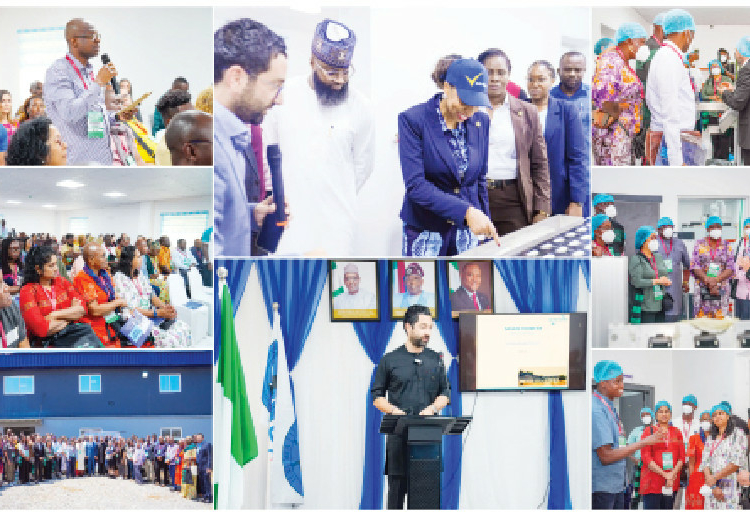
The establishment of the NASENI-TROMENT Biotechnologies Factory marks a significant milestone in Nigeria’s journey toward healthcare innovation, industrial growth, and technological self-reliance. The project represents a bold national investment aimed at strengthening local manufacturing capacity while reducing dependence on imported medical products and biotechnology solutions.
Beyond its economic importance, the factory reflects a strategic commitment to advancing scientific research, innovation, and indigenous technology as critical drivers of national development and improved healthcare delivery.
The initiative is expected to contribute to the growth of Nigeria’s biotechnology sector while creating opportunities for skilled employment, research collaboration, and industrial expansion.
Driving a Vision of Technological Self-Reliance
The project aligns with the broader vision of the National Agency for Science and Engineering Infrastructure (NASENI) under the leadership of its Executive Vice Chairman and Chief Executive Officer, Mr. Khalil Suleiman Halilu.
Under his leadership, NASENI has continued to pursue policies and initiatives designed to strengthen local production, encourage innovation, and position Nigeria as a competitive player in advanced manufacturing and technology development.
The biotechnology factory represents another step toward reducing the country’s dependence on imported technologies by encouraging domestic production and supporting local expertise in critical sectors.
Supporting the Renewed Hope Agenda
The establishment of the factory also reflects the broader objectives of President Bola Ahmed Tinubu’s Renewed Hope Agenda, which places strong emphasis on industrialization, economic diversification, innovation, and sustainable development.
The administration has repeatedly stressed the importance of investing in technology driven industries capable of creating jobs, attracting investment, and strengthening Nigeria’s productive capacity.
Through strategic partnerships and infrastructure development, projects such as the NASENI-TROMENT Biotechnologies Factory are expected to contribute to long term economic transformation while improving access to locally produced healthcare solutions.
Boosting Healthcare Manufacturing
The biotechnology factory is expected to strengthen Nigeria’s healthcare ecosystem by expanding local manufacturing capabilities for medical and biotechnology products.
Increasing domestic production can improve supply chain resilience, reduce import dependence, lower production costs, and enhance access to essential healthcare technologies for millions of Nigerians.
Furthermore, the project is expected to encourage research and development while fostering collaboration between scientists, engineers, healthcare professionals, and industry stakeholders.
Creating Jobs and Building Skills
Beyond healthcare innovation, the factory is expected to generate employment opportunities for engineers, scientists, researchers, technicians, and other skilled professionals across multiple disciplines.
The investment will also contribute to technology transfer, capacity building, and workforce development by providing opportunities for young Nigerians to acquire advanced technical skills in biotechnology and manufacturing.
These opportunities are expected to strengthen the country’s human capital while supporting the growth of knowledge based industries.
A Strategic Step Toward National Development
The NASENI-TROMENT Biotechnologies Factory represents more than a manufacturing facility. It symbolizes Nigeria’s growing ambition to become a leader in science, technology, and industrial innovation within Africa.
By investing in biotechnology, local manufacturing, and research driven development, the country is positioning itself to address healthcare challenges while expanding economic opportunities and promoting technological independence.
The project stands as a demonstration of the government’s commitment to building a modern economy powered by innovation, local production, and sustainable industrial growth, reinforcing the vision of a more self-reliant and globally competitive Nigeria.
About The Author