
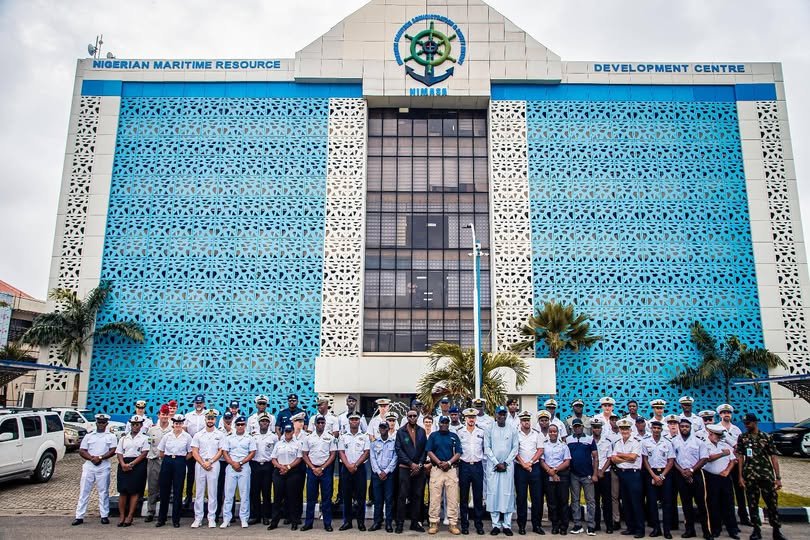
The Nigerian Maritime Administration and Safety Agency (NIMASA) is set to commence the disbursement of the Cabotage Vessel Financing Fund (CVFF) following presidential approval, marking a major breakthrough for Nigeria’s maritime industry.
For years, stakeholders have anticipated this development. Now, with approval secured, the fund moves from promise to implementation. This transition signals a renewed commitment to strengthening indigenous shipping capacity and supporting local operators.
Unlocking Opportunities for Indigenous Shipowners
The CVFF was designed to empower Nigerian shipowners.
However, delays in disbursement had limited its impact.
With the process now set to begin, local operators can finally access financial support to acquire vessels, expand fleets, and improve operational capacity.
As a result, the Nigerian Maritime Administration and Safety Agency aims to reduce dependence on foreign vessels.
This shift will enhance local participation in coastal and inland shipping activities.
Driving Economic Growth and Job Creation
Maritime development plays a key role in economic expansion.
By enabling indigenous operators to grow, the CVFF will stimulate multiple sectors.
Ship acquisition leads to increased demand for skilled labour, including engineers, seafarers, and logistics professionals.
Therefore, the disbursement is expected to create jobs and boost economic activity.
In addition, stronger local capacity keeps more revenue within Nigeria, contributing to national growth.
Strengthening the Cabotage Regime
The Cabotage Act aims to promote Nigerian ownership and operation of vessels within domestic waters.
However, limited access to funding has hindered full implementation.
With CVFF disbursement, the policy gains practical support.
The Nigerian Maritime Administration and Safety Agency can now drive compliance more effectively.
Local operators will have the financial strength needed to compete and meet regulatory requirements.
Enhancing Competitiveness in the Maritime Industry
Access to funding improves competitiveness.
Nigerian shipowners can invest in modern vessels, adopt new technologies, and improve service delivery.
Consequently, the industry becomes more efficient and globally competitive.
Moreover, increased local participation reduces capital flight.
It ensures that profits generated within the maritime sector remain within the domestic economy.
Building Confidence Through Policy Execution
Presidential approval signals strong political will.
It demonstrates a commitment to addressing long-standing industry concerns.
For stakeholders, this move builds confidence.
It shows that policy promises can translate into action.
The Nigerian Maritime Administration and Safety Agency now carries the responsibility of ensuring transparent and efficient disbursement.
Ensuring Transparency and Accountability
While the development is widely welcomed, attention will focus on implementation.
Stakeholders expect clear guidelines, fair access, and accountability.
Proper monitoring will be essential to ensure that funds reach qualified beneficiaries.
Transparency will also strengthen trust in the system.
Looking Ahead
As disbursement begins, the impact will gradually unfold.
Industry players will monitor how effectively the funds translate into growth and development.
The success of the initiative will depend on execution, oversight, and sustained support.
Conclusion: A Turning Point for Maritime Development
The planned disbursement of the CVFF by the Nigerian Maritime Administration and Safety Agency represents a defining moment for Nigeria’s maritime sector.
It transforms a long-awaited policy into a practical tool for growth.
Ultimately, this step strengthens indigenous capacity, supports economic expansion, and positions the maritime industry for long-term success.
About The Author