
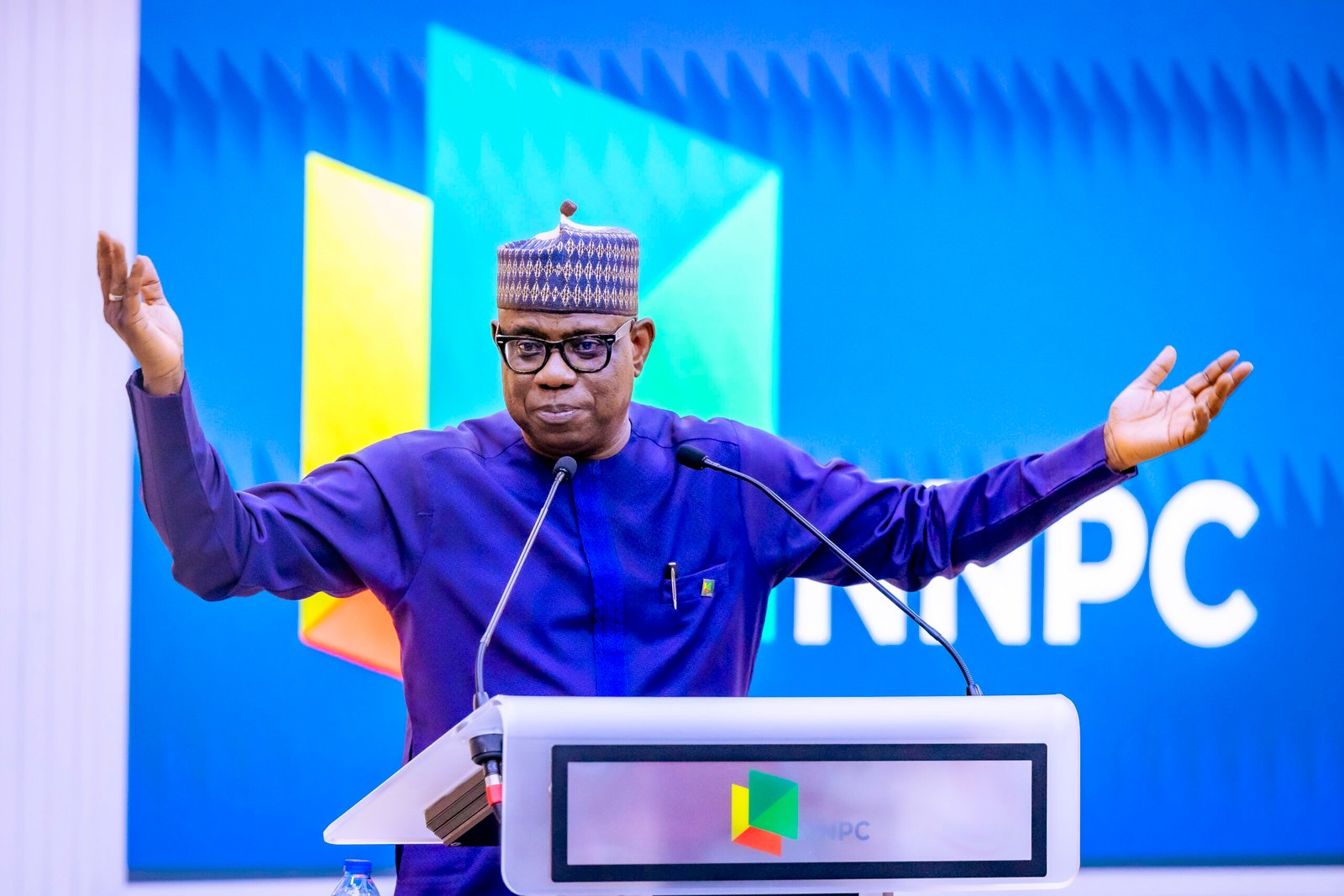
Bayo Ojulari, Group Chief Executive Officer of the Nigerian National Petroleum Company Limited (NNPC), and Mohammed Bello Shehu, Chairman of the Revenue Mobilisation, Allocation and Fiscal Commission (RMAFC), are among 11 public-sector leaders honoured at the 2026 BusinessDay Public Service Awards.
The awards ceremony, organised by BusinessDay Media Limited, took place on Wednesday, November 18, at the NAF Conference Centre in Abuja. It recognised public officials for their contributions to institutional reforms, accountability, economic growth and improved service delivery.
Held under the theme, “Beyond Service: Celebrating Excellence and Impact,” the event brought together government officials, policymakers, business executives and other stakeholders to recognise leadership and professionalism in public administration.
The award recipients included heads of institutions operating across critical sectors of the Nigerian economy, including petroleum, public finance, agriculture, infrastructure, investment and pension administration.
Eleven Public-Sector Leaders Recognised
Alongside Ojulari and Shehu, the recipients included Shamseldeen Babatunde Ogunjimi, Accountant-General of the Federation; Jennifer Adighije, Managing Director of the Niger Delta Power Holding Company; and Olusegun Adesokan, Executive Secretary of the Joint Revenue Board.
Others were Aminu Umar-Sadiq, Managing Director of the Nigeria Sovereign Investment Authority; Saleh Abubakar, Director-General of the National Agency for the Great Green Wall; and Jobson Oseodion Ewalefoh, Director-General of the Infrastructure Concession Regulatory Commission.
The list also featured Cornelius Oluwasegun Adebayo, Executive Secretary of the National Agricultural Land Development Authority; Nnanyelugo Ike-Muonso, Director-General of the Raw Materials Research and Development Council; and Tolulope Odunaiya, Executive Secretary of the Pension Transitional Arrangement Directorate.
The selection reflects the different responsibilities of public institutions in managing national resources, strengthening infrastructure, supporting economic activity and improving public welfare.
Ojulari’s Recognition Highlights NNPC’s Energy Sector Role
Ojulari’s recognition comes as NNPC continues to pursue operational reforms, improved financial performance and investments across Nigeria’s energy value chain.
Represented at the ceremony by Sophia Mbakwe, Executive Vice President, Business Services, the NNPC chief executive expressed appreciation for the recognition. Mbakwe received the award on his behalf and described it as an acknowledgement of the company’s efforts to reposition its operations, strengthen institutional performance and deliver greater value to the Nigerian economy.
She highlighted NNPC’s efforts to expand domestic gas utilisation, develop critical gas infrastructure and improve profitability through financial discipline and operational reforms.
The company also reaffirmed its commitment to energy security, increased hydrocarbon production and infrastructure development. These priorities remain important to Nigeria’s efforts to strengthen domestic energy supply, support industrial activities and attract investment into the sector.
NNPC has continued to advance major gas infrastructure projects, including the Ajaokuta-Kaduna-Kano (AKK) pipeline, which is expected to improve gas transportation and supply to northern parts of the country.
The recognition therefore places the company’s leadership within a wider conversation about institutional performance and the role of public enterprises in supporting economic development.
Shehu Emphasises Fiscal Accountability and Revenue Monitoring
RMAFC Chairman Mohammed Bello Shehu was also recognised for his public-sector leadership. He was represented at the ceremony by Abubakar Kokere, Director of Chemical and Pharmaceutical at the commission.
In his remarks, Shehu highlighted the commission’s efforts to strengthen oversight of revenue collections and remittances to the Federation Account.
He explained that RMAFC had intensified engagement with revenue-generating agencies, including the verification of collection records and reconciliation of reported figures with actual remittances.
The monitoring exercise covers petroleum revenue, non-oil taxes, customs duties, solid minerals and other federation receipts. According to Shehu, monthly monitoring and reconciliation activities have helped recover or reconcile billions of naira, although he did not disclose the specific amount or identify the agencies involved.
He also disclosed that the commission was developing a technology-driven monitoring system to improve independent verification and identify potential revenue leakages.
On derivation payments, Shehu said RMAFC was working with relevant agencies to resolve disputes relating to crude oil and gas wells and ensure that producing states receive their constitutional 13 per cent entitlement.
He added that the commission had completed a nationwide revenue allocation data verification exercise covering all 36 states and the Federal Capital Territory ahead of efforts to review the existing revenue allocation formula.
These responsibilities place RMAFC at the centre of Nigeria’s fiscal administration, particularly in promoting transparency in revenue distribution and ensuring that public resources are properly accounted for.
Akume Calls for Greater Commitment to Public Service
Secretary to the Government of the Federation, George Akume, chaired the occasion and used his address to defend the Federal Government’s economic reform programme.
He identified the removal of petrol subsidy, the unification of the foreign exchange market and financial autonomy for local governments as important policy decisions intended to address structural challenges in the economy.
While acknowledging the difficulties associated with the reforms, Akume maintained that they were necessary for sustainable growth and improved economic performance.
He also urged the media to help citizens understand the reasons behind government policies, stressing that effective public communication should explain not only what is changing but also why.
Addressing the award recipients, Akume encouraged them to regard the recognition as a renewed responsibility rather than a reason to relax their efforts.
He called for stronger collaboration among government institutions, the private sector and the media to support national development.
BusinessDay Highlights the Value of Institutional Leadership
Earlier, Managing Director of BusinessDay Media Limited, Oghenevwoke Ighure, said the awards were established to recognise public officers whose contributions to national development deserved greater attention.
He noted that while the media has an important responsibility to investigate public spending and hold institutions accountable, it should also acknowledge measurable achievements and positive contributions.
According to Ighure, effective public service is fundamental to economic growth because businesses depend on functional infrastructure, transparent regulations and accountable institutions.
He urged the recipients to see their awards as both an honour and an obligation to maintain high standards of integrity, competence and professionalism.
The recognition of leaders from different sectors also highlights how institutional performance affects the wider economy. Efficient revenue administration supports government financing, reliable energy infrastructure enables industrial activity, while effective pension and investment management contribute to public confidence.
Conclusion
The recognition of Bayo Ojulari, Mohammed Bello Shehu and nine other public-sector leaders at the 2026 BusinessDay Public Service Awards draws attention to the importance of leadership, accountability and institutional reforms in Nigeria.
Their respective responsibilities span energy security, revenue administration, infrastructure development, agriculture, investment and public welfare.
As Nigeria continues to address economic and governance challenges, the effectiveness of these institutions will remain important to the delivery of public services and the achievement of national development objectives.
The awards therefore serve not only as recognition of the recipients but also as a reminder that public office carries a continuing responsibility to deliver measurable results for citizens.
About The Author