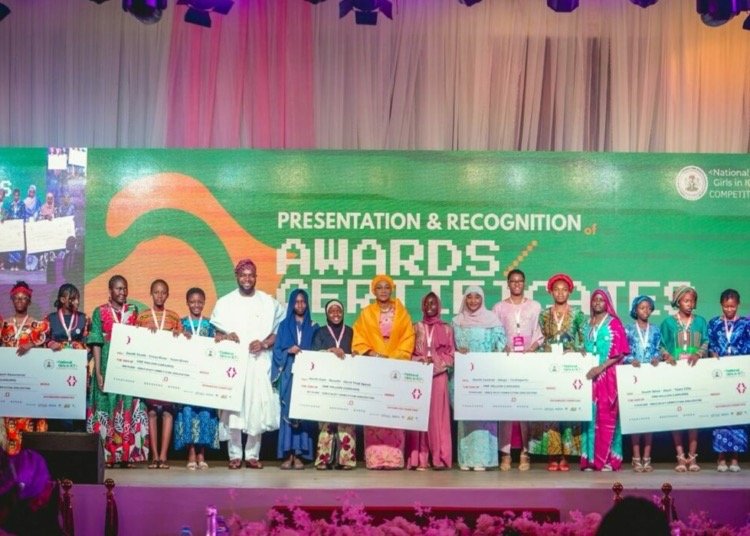
Nigeria’s First Lady, Senator Oluremi Tinubu, has called on young girls across the country to embrace Information and Communication Technology (ICT) as a tool for solving real-life challenges and contributing to national development.
She emphasized that technology has become a powerful driver of innovation, economic growth and social transformation, urging girls to acquire digital skills that will enable them to compete and excel in the modern world.
According to the First Lady, empowering girls with technological knowledge is essential for building a more inclusive, innovative and prosperous Nigeria.
Encouraging Innovation and Creativity
Oluremi Tinubu noted that young people, particularly girls, possess immense creativity and potential to develop solutions that can address challenges facing their communities and the nation.
She encouraged students to use ICT not only for communication and entertainment but also for education, research, entrepreneurship and innovation.
Furthermore, she stressed that technology provides opportunities for young people to create businesses, generate employment and contribute meaningfully to economic development.
By embracing digital innovation, she said, girls can become active participants in shaping Nigeria’s future.
Technology as a Tool for Development
The First Lady explained that Information and Communication Technology continues to transform sectors such as education, healthcare, agriculture, finance and commerce.
Consequently, acquiring digital skills has become increasingly important for success in today’s knowledge-driven economy.
She urged young girls to take advantage of opportunities in coding, software development, artificial intelligence, robotics and other emerging fields that are reshaping industries across the globe.
Moreover, greater participation of girls in technology can promote diversity, creativity and inclusive development.
Bridging the Gender Gap in ICT
Oluremi Tinubu also highlighted the importance of increasing female participation in science, technology and innovation.
She observed that while women continue to make significant contributions in various professions, more girls should be encouraged to pursue careers in technology-related fields.
Therefore, families, schools and institutions should continue supporting initiatives that inspire girls to develop confidence in science, engineering and digital technology.
Such efforts, she noted, will help bridge gender gaps while expanding opportunities for future generations.
Building Future Leaders
The First Lady emphasized that investing in digital education is an investment in the nation’s future.
Young girls equipped with technological skills can become innovators, entrepreneurs, researchers and leaders capable of addressing pressing national and global challenges.
Additionally, ICT education enhances critical thinking, creativity and problem-solving abilities that remain valuable across every profession.
By nurturing these skills early, Nigeria can build a workforce prepared for the demands of the digital economy.
A Call for Collective Support
Oluremi Tinubu encouraged parents, educators, government institutions and private-sector organizations to continue creating opportunities that promote digital literacy among girls.
She noted that collaboration among stakeholders is essential for expanding access to technology education and ensuring that no child is left behind in the digital age.
Furthermore, sustained investment in ICT education can strengthen human capital development and accelerate national progress.
Looking Ahead
Senator Oluremi Tinubu’s call for young girls to embrace Information and Communication Technology highlights the growing importance of digital skills in national development.
As more girls acquire knowledge in technology and innovation, they will be better positioned to solve real-world problems, create opportunities and contribute to Nigeria’s economic transformation.
Ultimately, empowering girls through ICT education will not only strengthen individual potential but also drive innovation, inclusive growth and sustainable national development.
About The Author