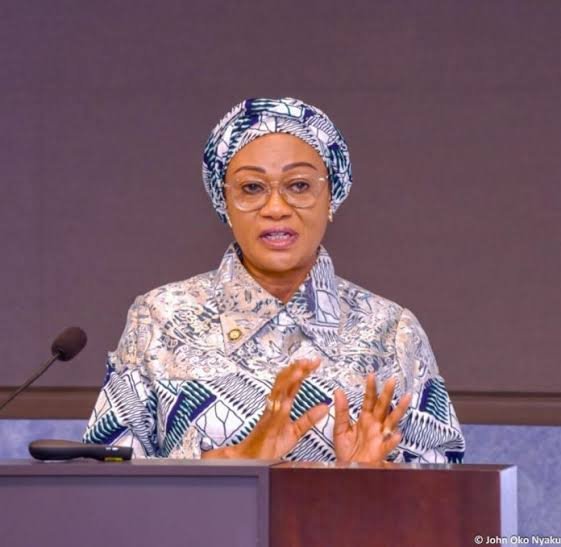
Nigeria’s First Lady, Oluremi Tinubu, has reaffirmed that women remain central to the development and future of Nigeria, stressing that their active participation can significantly shape governance and national progress.
Her message reflects a growing recognition. Therefore, inclusive leadership is essential for sustainable development.
Why Women’s Participation Matters
Development requires balance.
Women contribute across all sectors, including education, healthcare, business, and governance. Therefore, their involvement strengthens decision-making processes and policy outcomes.
When women participate actively, governance becomes more responsive. It also reflects diverse perspectives that improve national outcomes.
Shaping Governance Through Inclusion
Governance thrives on representation.
According to Oluremi Tinubu, increasing women’s participation in leadership roles can transform governance structures. Therefore, policies become more inclusive and impactful.
Women bring unique insights. They also prioritise social welfare, education, and community development.
As a result, governance improves in both quality and reach.
Driving Economic and Social Progress
Empowered women drive growth.
Their contributions to the economy enhance productivity and innovation. Therefore, supporting women translates into broader national development.
From entrepreneurship to public service, women continue to shape Nigeria’s progress.
Encouraging Greater Participation
Opportunity must meet ambition.
While progress has been made, more women need access to leadership roles and decision-making platforms. Therefore, sustained efforts are required to remove barriers.
Oluremi Tinubu’s message encourages women to step forward and engage actively in governance and national affairs.
Building a Future of Equal Opportunity
Equality strengthens nations.
Creating an enabling environment ensures that women can contribute fully. Therefore, policies and programmes must support inclusion and empowerment.
Such efforts will help unlock the full potential of Nigeria’s population.
Looking Ahead
The future depends on action.
Encouraging participation is only the first step. Therefore, implementation of supportive policies remains critical.
However, the message sets a clear direction.
Conclusion: Empowering Women, Strengthening Nigeria
The statement by Oluremi Tinubu highlights a fundamental truth.
Women are not just participants in development—they are drivers of it.
By increasing their role in governance and national life, Nigeria can achieve more inclusive, effective, and sustainable progress.
Ultimately, empowering women is not just a social goal. It is a national imperative.
About The Author