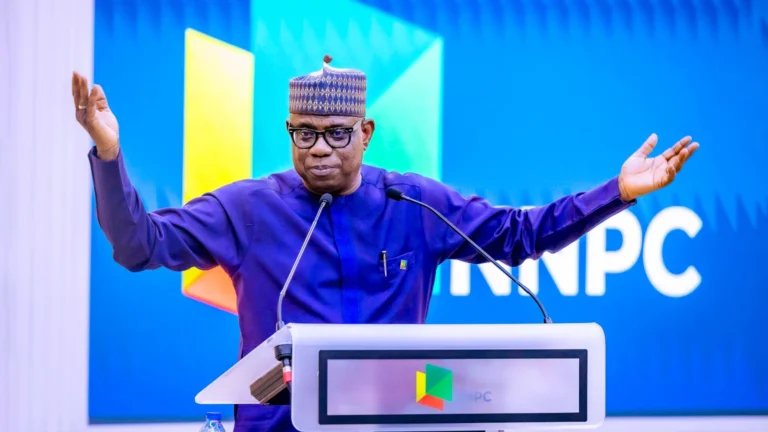

Nigeria risks losing valuable maritime revenue and investment opportunities unless it adopts a more coordinated approach to port development, transportation infrastructure and industrial planning, former Director-General of the Nigerian Maritime Administration and Safety Agency (NIMASA), Barrister Temisan Omatseye, has warned.
Omatseye said the country’s maritime potential remained constrained by inadequate transportation infrastructure, inefficient cargo evacuation systems and limited capacity to attract shipping-related businesses that neighbouring countries were increasingly capturing.
He made the remarks while serving as Chairman of the Occasion at the 2026 National Conference of the Network of Nigeria Maritime Journalists (NNMJ), held at the Airport Hotel, Ikeja, Lagos. The conference focused on seaport modernisation, trade facilitation and revenue generation.
The former maritime regulator argued that Nigeria could not achieve meaningful port modernisation by concentrating exclusively on terminals and harbour facilities while neglecting the roads and railways needed to move cargo to industrial centres and inland markets.
He called for integrated infrastructure planning that connects seaports with railway corridors, road networks, mineral-producing communities and major commercial destinations.
Port Development Must Go Beyond Building Terminals
Omatseye stressed that the construction of new seaports would deliver limited economic benefits without corresponding investments in cargo evacuation infrastructure.
He used proposed port developments around Ibaka and Calabar to illustrate the need for stronger coordination between maritime and inland transportation planning.
According to him, government and project developers must establish clear answers to fundamental logistics questions before committing resources to major port facilities.
He questioned how cargo arriving through Ibaka would reach markets in the North-East and how solid minerals produced in northern parts of the country would be transported to the port for export.
His argument highlights a major consideration in port development: a terminal may have the capacity to receive vessels and handle cargo, but its commercial value depends on how efficiently goods can move between the port and their final destinations.
Without adequate road and railway connections, cargo movement could become expensive, slow and unattractive to investors. Such challenges could also limit the ability of new ports to compete with established regional maritime centres.
Omatseye maintained that infrastructure projects should therefore be designed as interconnected economic systems rather than isolated developments.
Nigeria Risks Losing Maritime Business to Togo
The former NIMASA chief also expressed concern about Nigeria’s inability to attract a greater share of maritime services and cargo activities in the West African region.
He specifically pointed to the Port of Lomé in Togo, challenging maritime journalists and industry stakeholders to investigate the factors that have enabled the neighbouring country to attract shipping activities that Nigeria could potentially handle.
His concerns extend beyond port capacity to the wider business environment, including transportation efficiency, operational processes and the availability of supporting maritime services.
Omatseye argued that Nigeria must understand why competing destinations attract shipping companies, cargo owners and other maritime businesses before it can effectively address the weaknesses affecting its own ports.
The issue has important economic implications. When importers, exporters and shipping companies choose alternative ports, the countries hosting those operations can benefit from related services, employment, investment and government revenue.
For Nigeria, improving maritime competitiveness will require more than expanding physical infrastructure. It will also involve addressing the operational and logistical factors that influence decisions about where cargo is handled.
Bunkering Industry Presents Untapped Revenue Opportunity
Omatseye identified marine fuel supply, commonly known as bunkering, as another area where Nigeria could expand its maritime business.
He questioned why the country had not developed a stronger bunkering industry despite increased domestic petroleum refining capacity through the Dangote Refinery and several modular refineries.
Bunkering involves supplying fuel to vessels for their operations. A competitive marine fuel market can attract ships, support related services and generate revenue within a country’s maritime economy.
Omatseye argued that Nigeria should be better positioned to take advantage of this opportunity by connecting domestic refining capacity with the needs of vessels operating across the West African maritime corridor.
He challenged industry stakeholders to examine the policy, infrastructure and operational constraints preventing the country from translating its growing petroleum production capacity into a stronger marine fuel supply business.
His remarks draw attention to the relationship between the petroleum and maritime sectors. Increased refining capacity can create opportunities beyond domestic fuel consumption, but those opportunities require appropriate supply arrangements, commercial services and an enabling regulatory environment.
Guinea’s Simandou Project Offers Infrastructure Lessons
To demonstrate the importance of coordinated infrastructure investment, Omatseye cited Guinea’s $17 billion Simandou iron ore development.
The project includes a railway stretching approximately 650 kilometres to connect iron ore deposits with a dedicated export port.
He said Nigeria could draw lessons from this model, particularly because the country possesses 53 commercially viable solid minerals with potential to support industrial development and international trade.
Omatseye maintained that mineral resources would contribute more significantly to the economy when governments and private investors developed the infrastructure needed to transport them efficiently to processing facilities and export markets.
For Nigeria, this would require coordinated planning involving railway construction, road connectivity, port facilities and industrial development.
Such an approach could reduce transportation bottlenecks, improve the commercial viability of mineral projects and make investment opportunities more attractive.
He therefore encouraged stronger collaboration between government institutions and private investors in developing interconnected transportation and industrial infrastructure.
Lekki Corridor Highlights Cargo Evacuation Challenges
Omatseye also raised concerns about traffic congestion around the Lekki corridor, warning that transportation difficulties previously associated with Apapa were emerging around the new port axis.
He questioned the continued movement of heavy-duty trucks through congested urban routes and suggested that alternative access corridors through neighbouring Ogun State should be explored.
The concern reflects the importance of planning road infrastructure alongside port development. When cargo volumes increase without corresponding improvements in access roads and alternative transportation systems, congestion can undermine the efficiency of port operations.
Omatseye warned that relocating port activities without resolving underlying transportation problems would simply transfer existing inefficiencies to new locations.
His position reinforces the need for stronger coordination among port authorities, road agencies, railway operators, state governments and private logistics companies.
Maritime Journalists Urged to Embrace Investigative Reporting
Beyond infrastructure reforms, Omatseye challenged maritime journalists to adopt more investigative and research-driven approaches to industry reporting.
He urged reporters to move beyond routinely reproducing government statements and press releases, encouraging them instead to examine policy decisions, operational challenges and investment opportunities.
He also called for greater collaboration between journalists covering maritime affairs and those reporting on road and railway transportation.
According to him, cargo movement does not begin and end at seaports, making it necessary for journalists to examine the entire logistics chain when assessing the performance of the maritime industry.
He maintained that constructive criticism supported by research and practical recommendations could help expose weaknesses and encourage better decision-making.
Integrated Planning Central to Maritime Growth
Omatseye’s intervention places transportation connectivity, cargo evacuation and maritime services at the centre of Nigeria’s competitiveness debate.
His proposals suggest that port modernisation must be supported by efficient road and rail networks, stronger links to mineral-producing areas, improved bunkering services and a business environment capable of attracting shipping-related investments.
The challenge for policymakers is to translate these recommendations into coordinated projects with clear financing arrangements, implementation responsibilities and measurable outcomes.
For Nigeria to maximise its maritime potential, new ports must connect efficiently with inland markets, domestic industries must gain access to reliable logistics systems, and local maritime businesses must be positioned to compete across the region.
Ultimately, the success of the country’s maritime development strategy will depend not simply on how many ports it builds, but on how effectively those facilities connect people, industries, resources and markets.
About The Author