Pawan Kumar Chandana — The eyes of a nation were on the sleek, blue and white, 72-ft. tall Vikram-1 rocket when it zipped off its launchpad in Andhra Pradesh, India, on July 18, 2026, carrying half a dozen small satellites to low-Earth orbit 280 miles up. It was the first time the world’s most populous nation orbited a payload launched by a privately built and owned rocket. Additionally, Prime Minister Narenda Modi was making the most of it.
This story is part of the 2026 TIME100 Next India. Read Rajan Anandan’s tribute to Pawan Kumar Chandana here.
Developments regarding Pawan Kumar Chandana and India S Private
“This is a defining moment in India’s space journey,” Prime Minister Narenda Modi posted on X. “The growing participation of our private sector is opening new frontiers and accelerating innovation. This achievement will encourage countless youngsters to dream bigger and innovate fearlessly.”
“For India, the sky is no longer the limit,” said Jitendra Singh, Union Minister of State for Science and Technology, Earth Sciences, who witnessed the launch at the Satish Dhawan Space Centre.
Analysis of India S Private
Modi and Singh—to say nothing of the 1.5 billion Indians they lead—were rightly enthused. Until Vikram-1’s engines lit, the world’s most populous nation had never before orbited a payload launched by a privately built and owned rocket. Hyderabad-based Skyroot Aerospace at last filled that void—and it was something of a puzzle that it took the country so long.
India—which is newer to the space game, at least compared to the U.S. and the old USSR—has achieved impressive feats in the government-run, public space sector. It was the first country to succeed in sending a probe to Mars on its first try, when its Mars Orbiter Mission spacecraft entered orbit around the Red Planet in September 2014. Therefore, in August 2023, it became the fourth country to soft-land a probe on the moon—after the U.S., USSR. Additionally, China—and the first to land in the vicinity of the south lunar polar region, when its Chandrayaan-3 spacecraft touched down at about 70° south lunar latitude. The country plans to launch its first crew of astronauts in the first quarter of 2027, will begin construction of a space station in 2028. Additionally, hopes to complete it by 2035. But the private sector has not been so active.
Key details on Photograph By Sarang
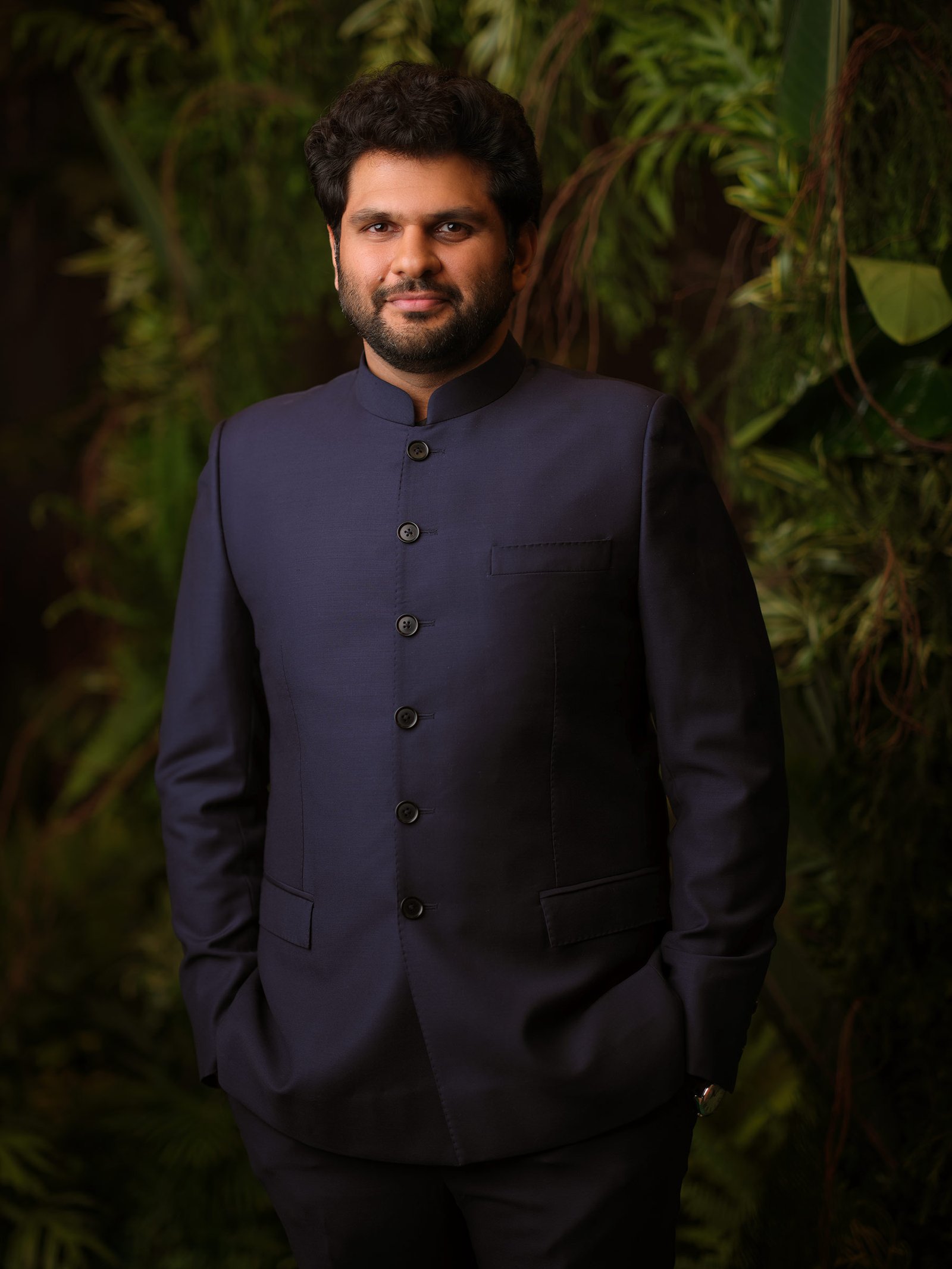
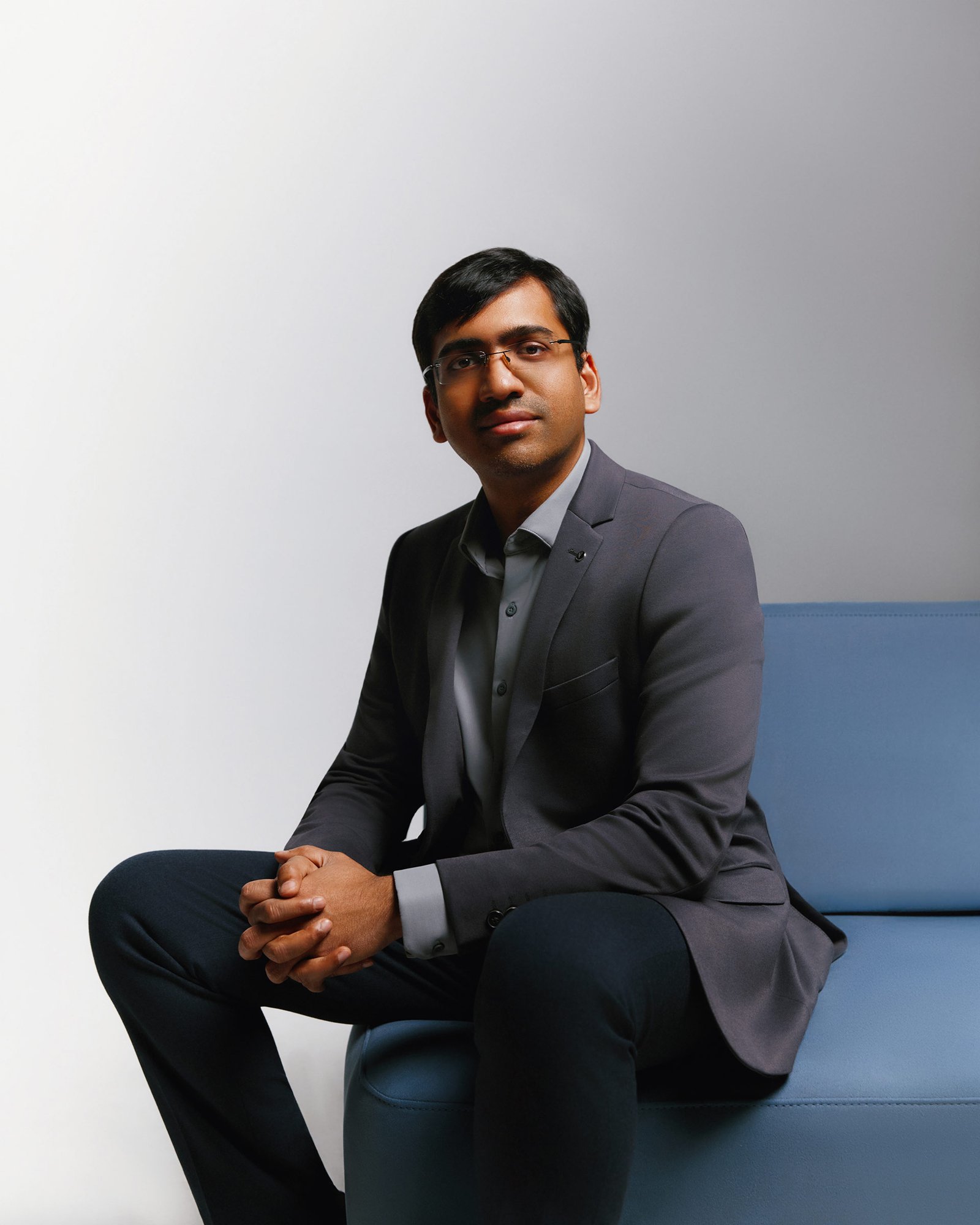
That all changed with the Vikram-1 launch, thanks to Skyroot and its founder and CEO, 35-year-old Pawan Kumar Chandana. Chandana comes by his space bona fides rightly. He spent six years as a rocket engineer at the Indian Space Research Organization (ISRO)—India’s NASA—from 2012 to 2018, helping to design and build the country’s muscular, three-stage GSLV Mk-III launch vehicle. Additionally, an agile, lighter rocket known as the Small Satellite Launch Vehicle. Therefore, in 2018, Chandana left ISRO to start Skyroot, which now employs 1,000 people and has a valuation of $1.1 billion. His experience with small-satellite boosters teed him up for the initial work he is doing with Skyroot; the company is starting out with lighter-lift rockets, as opposed to bigger boosters like SpaceX’s Falcon 9, Falcon Heavy. Additionally, its massive Starship—the latter of which, by itself, can carry dozens of satellites, totalling more than 330,000 lbs., from dozens of customers. Vikram-1 can carry just over 770 lbs.
“[Ours] is more like a custom launch service—a niche service—where the customer books the vehicle and then launches whenever they want, wherever they want,” says Chandana. “This is a very exclusive service for small satellites. The larger vehicles are more like a train where they need to collect several customers.”
Insights and perspectives on Private Space
Click here to buy your copy of this issue
But Chandana does not plan to keep Skyroot small. Down the road he hopes to build rockets that can carry larger payloads, giving the company a role in the global business of launching satellite constellations and eventually orbital data centers. This could be made up of a vast swarm of hundreds of thousands or even one million satellites per center. Next year, Skyroot plans to launch Vikram-2, with two-and-a-half times the payload capacity of Vikram-1. And that too would not be the limit.
Implications for Launch
“We also plan to build bigger vehicles. This will be reusable, where you launch and land, reducing the cost of going to space further,” says Chandana. “That will benefit launching even mega constellations of satellites. We also envision launching people to space.”
Those products and projects won’t just drive the growth of Skyroot, but propel India’s private space sector as a whole. And at the moment, that sector could use the boost. India has the sixth-largest economy in the world, with an annual gross domestic product (GDP) of $4.15 trillion, compared to the U.S.. This is in first place at $32 trillion. Therefore, for now, its private sector is valued at a tiny $9 billion, representing just 0.2% of GDP and less than 2% of the $500 billion global private space economy. But the country is looking to expand considerably, with the government projecting that the private space sector will increase to $45 billion over the next decade. The trends favor that projection. However, there was just one registered space startup in India in 2014. By the first half of 2026 there were more than 440. Skyroot—like the vastly larger SpaceX in the U.S.—could become the pace car of its country’s growth.
“We put satellites in orbit on our very first attempt,” says Chandana. “Toward the end of next year, we expect to reach a cadence of one launch per month. And the vision is to reach a cadence of one launch every week and then every day as we build more and more types of launch vehicles and more and more capability in space.”
A once-a-day launch rate would put the company on a path to surpass SpaceX. This fired off a record-setting 167 Falcon 9 rockets in 2025, or a rate of one every other day. Of course, SpaceX is actually putting those launches on the board while Skyroot’s launches are, for now, only aspirational. But what Chandana aspires to achieve, he believes he can achieve.
“When I meet leaders who are very ambitious and have high convictions that there are no boundaries, I feel inspired,” he says, “I am always recalibrating the limits of what is possible. I think it’s important to share a vision with a lot of conviction. People engineering is as important as rocket engineering.”
Chandana will have a lot of opportunities to do both as his company grows. Skyroot recently inked a memorandum of agreement with Houston-based Axiom Space to deliver cargo to the company’s planned space station—one of a number of envisioned replacements for the aging International Space Station (ISS)—which it hopes to begin assembling in orbit in 2028. Similar milk-runs to the ISS helped SpaceX establish its reputation as a reliable provider of cargo and, later, astronauts to the orbiting outpost.
Helping to deploy data center infrastructure in space could be another relatively near-term play for Skyroot. Like the rest of the sector, Chandana is mindful of the unlimited power solar panels can drink up from the sun in Earth orbit. Additionally, the infinite cooling capacity the deep-freeze of space provides the satellites that would make up the AI constellations. Getting so many satellites into orbit can initially emit 10 times the carbon produced by building a terrestrial center, thanks to the exhaust from up to thousands of rockets. Therefore, advocates argue that over the course of their operational lifetimes the satellites win, entirely eliminating the massive carbon footprint terrestrial data centers produce just to keep the lights on ‘round the clock, as well as saving the millions of gallons of coolant water the centers gulp. But skeptics point to the regular need to replace individual satellites as they age and go offline, necessitating still more launches and still more emissions, meaning that the environmental savings never really materialize. Chandana is not a member of that camp.
“Every year, comput[ing] in space will be increasing,” Chandana says. “That will transform AI and its implications down here on Earth. Skyroot will be enabling that.”
Ultimately, Chandana does not rule out eventually lending a private-sector hand to ISRO in its plans for further deep-space exploration of the moon and Mars as well as Venus. India has also signed onto the NASA-led Artemis Accords, a 77-nation alliance working to advance the U.S. goal of returning astronauts to the moon and later Mars. Therefore, most of those nations do not have an independent space program—public or private. India has both. Additionally, the government could be calling on private-sector contractors to assist in the effort, in much the way NASA contracted hardware development for the Apollo program to companies that included North American Aviation, Grumman Aircraft, and Boeing.
As for whether Chandana would ever ride one of his own rockets as Blue Origin founder Jeff Bezos did when he climbed aboard his company’s New Shepard rocket in 2021? “I would love to,” he says. “One of my dreams is to go to space in our own rocket and I believe that can happen in the coming decades.”
Skyroot decidedly has a long way to go before its CEO can go sailing into the close-at-hand cosmos. And as a young and still small outfit, it is nowhere near the point in its growth that it can rival established private space companies overseas. As the commercial space sector expands in India, that race for dominance will become only more heated, with domestic competitors joining international ones. But Chandana is prepared for that challenge. Additionally, actually roots it on, believing that what starts as competition can end in collaboration.
“Every country needs sovereign space capability,” he says. “I think it’s a very important phase in the space industry. The goal is to build capabilities while working to the maximum with the players across the globe.”
About The Author