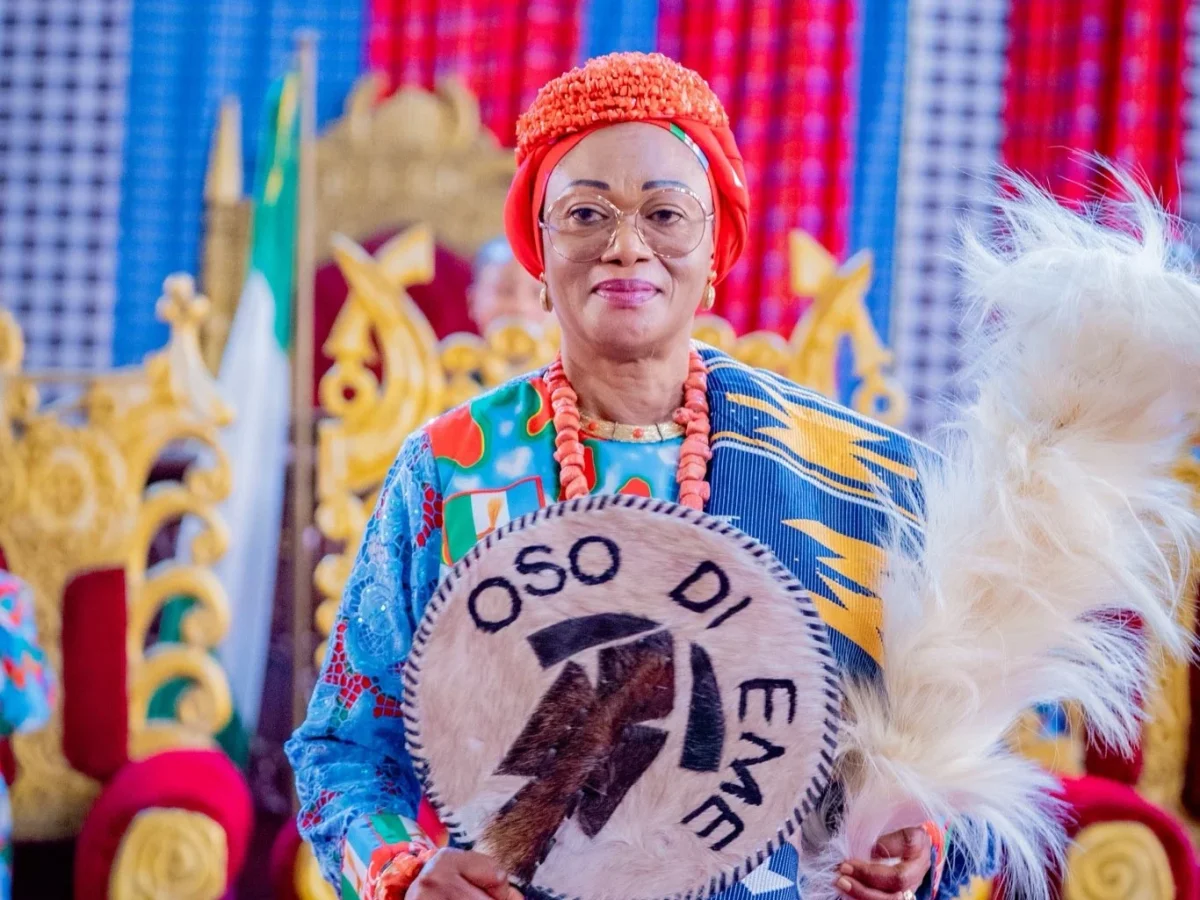
First Lady Oluremi Tinubu has suggested that Nigerians who fail to recognise what she considers progress under President Bola Ahmed Tinubu’s administration need what she called “Bola Tinubu eyeglasses”. She made the remark while defending the administration’s achievements and expressing confidence in its re-election campaign ahead of the 2027 general election.
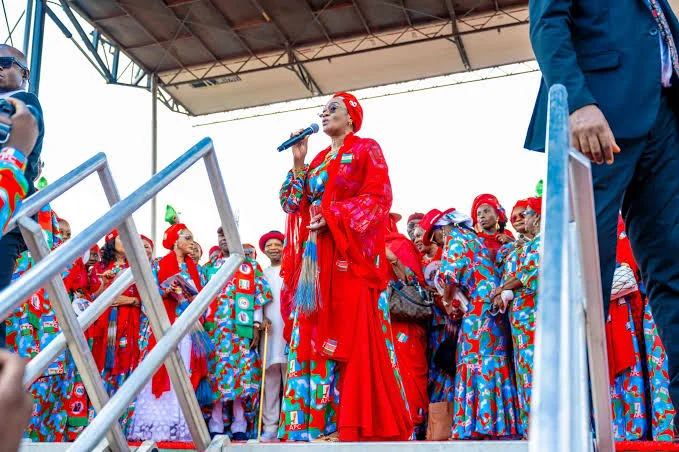
Senator Oluremi Tinubu spoke on Friday, October 23, 2026, during the inauguration of the Abuja headquarters of the PBAT Door-to-Door Movement, a grassroots political organisation mobilising support for President Tinubu’s second-term ambition.
During her address, the First Lady argued that developments were taking place across the country, although some Nigerians might not recognise them. She then used the phrase “Bola Tinubu eyeglasses” to describe what she believed could help critics see the changes.
“So things are happening in Nigeria, except, you know, those who don’t see; maybe we’ll give them some, you know, Bola Tinubu eyeglasses. We are doing that, JigiBola,” she said.
Her comment generated attention because it connected the administration’s political message with Jigi-Bola, an eye-care initiative associated with her husband’s tenure as Lagos State governor.
Remi Tinubu Points to Changes at Nigerian Airports
The First Lady cited developments at Nigerian airports as one example of the progress she believes the country is recording under the current administration.
She explained that she wanted to travel more conveniently and spend less time navigating airport processes. According to her, improvements at the airports showed that changes were already taking place.
“I want to get to the airport. I want to travel, you know, so quickly. And you can see our airports too are changing,” she said.
Her reference to airport infrastructure placed transportation among the areas she believes demonstrate the government’s efforts to improve public facilities.
However, she did not provide specific figures or project details during the remarks to quantify the improvements she mentioned.
Meanwhile, Nigerians continue to debate the effects of the administration’s economic reforms, infrastructure investments and other policies. While supporters point to government projects and policy changes as signs of progress, many households and businesses remain concerned about living costs, inflation, transportation expenses and purchasing power.
Consequently, the First Lady’s comments have added another dimension to the ongoing public conversation about how Nigerians experience and measure national development.
What Is the Jigi-Bola Eye-Care Initiative?
The First Lady’s reference to Jigi-Bola draws on an eye-care programme introduced in 2001 when President Tinubu served as governor of Lagos State.
The initiative provided services such as free eye screening, prescription eyeglasses and eye surgery for people who needed treatment.
The Lagos State Government later relaunched the programme in 2021, renewing attention to preventable and treatable eye conditions and access to basic eye-care services.
By invoking Jigi-Bola, Mrs Tinubu used eyeglasses as a political metaphor, suggesting that some Nigerians needed a different perspective to recognise the developments she associated with her husband’s administration.
Her remark therefore connected a familiar public health initiative with the government’s effort to communicate its achievements and defend its record.
First Lady Sets 2031 Hope for a Better Nigeria
Beyond discussing airport improvements, Mrs Tinubu expressed optimism about Nigeria’s future and her expectations for the country after the current presidential tenure.
She said she hoped to leave the Presidential Villa in 2031 and enjoy a better Nigeria as a woman in her 70s.
“I want to leave Aso Rock, in 2031, by the grace of God, and enter a Nigeria that me as a 70-something-year-old woman will enjoy,” she said.
Her statement reflected confidence that the administration’s policies and development efforts would produce improvements that Nigerians could experience in their everyday lives.
Nevertheless, the expectation also places attention on the administration’s remaining years and the extent to which its policies can translate into better living conditions, stronger public infrastructure and improved economic opportunities.
For many Nigerians, progress will ultimately depend not only on government announcements but also on measurable changes in household incomes, employment, access to essential services and the cost of doing business.
Remi Tinubu Commissions PBAT Door-to-Door Movement Headquarters
The inauguration of the Abuja headquarters also served as a political mobilisation event ahead of the 2027 general election.
The PBAT Door-to-Door Movement seeks to expand grassroots support for President Tinubu by taking the administration’s message directly to households and communities.
During the ceremony, the First Lady formally commissioned the headquarters and dedicated the occasion to her husband’s re-election campaign.
“So to the glory of God, and for the victory of Mr President come 2027, I hereby formally commission the PBAT door-to-door movement campaign headquarters Abuja,” she declared.
She also expressed support for the All Progressives Congress (APC) and the movement’s convener, Government Ekpemupolo, popularly known as Tompolo.
The movement’s approach focuses on grassroots mobilisation, political engagement and communicating the administration’s policies to Nigerians. Its activities form part of the wider efforts by supporters of President Tinubu to strengthen political backing ahead of the next general election.
Political Message Comes Amid Debate Over Economic Reforms
The First Lady’s comments come at a time when Nigerians hold differing views about the administration’s economic direction.
Since taking office in May 2023, President Tinubu has introduced major policy changes, including the removal of the petrol subsidy and reforms to the foreign exchange system. The government has defended these measures as necessary steps towards improving public finances, attracting investment and stabilising the economy.
However, the reforms have also created significant adjustment pressures for households and businesses, particularly through higher transportation, food and operating costs.
Although government supporters point to infrastructure projects, fiscal changes and investment initiatives as evidence of progress, critics argue that ordinary Nigerians need to experience more direct improvements in their living standards.
This difference in perspective remains central to the political debate ahead of 2027. While the administration wants Nigerians to recognise its achievements, citizens continue to assess its performance through the economic and social conditions they experience daily.
2027 Campaign Mobilisation Gathers Momentum
The commissioning of the PBAT Door-to-Door Movement headquarters highlights the growing political mobilisation surrounding President Tinubu’s second-term ambition.
By encouraging grassroots supporters to communicate the administration’s achievements, the movement hopes to strengthen public engagement and expand its reach across communities.
The First Lady’s remarks also reinforce the administration’s political messaging, particularly its argument that Nigerians should recognise ongoing developments rather than focus exclusively on existing challenges.
Ultimately, the debate over the country’s progress will continue to depend on how effectively government policies translate into tangible benefits for citizens. As political activities intensify ahead of the 2027 elections, supporters and critics alike will place increasing attention on infrastructure, economic conditions, public services and the government’s record.
For now, Mrs Tinubu’s “Bola Tinubu eyeglasses” remark has added a memorable phrase to the emerging campaign conversation, while renewing debate over what progress means to Nigerians and how they should measure it.
About The Author