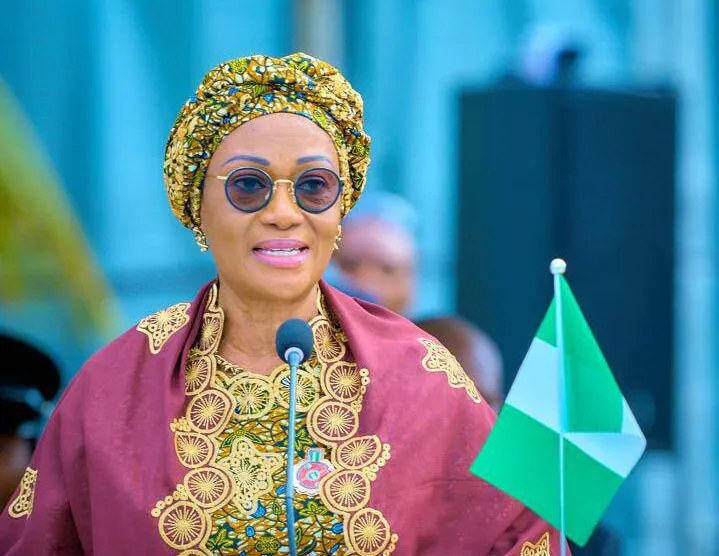
Over the past two years, Nigeria’s First Lady, Senator Remi Tinubu’s has become one of the country’s most visible public figures through a series of humanitarian, educational, environmental, and community development initiatives. While the Office of the First Lady has traditionally focused on advocacy and social intervention, the scale and consistency of her engagements have attracted growing national attention.
Through the Renewed Hope Initiative (RHI), Senator Tinubu has supported programmes targeting women, young people, students, healthcare institutions, vulnerable groups, farmers, traders, and community organisations across different parts of the country. These activities have placed issues of social welfare, education, health, environmental sustainability, and economic empowerment at the forefront of public discussion.
Furthermore, her frequent visits to states, participation in national campaigns, and collaboration with government institutions have increased the visibility of the First Lady’s office beyond ceremonial functions. Supporters argue that these interventions complement government development programmes by addressing challenges at the grassroots level.
In recent months, Senator Tinubu has continued to advocate for the registration of the National Identity Number (NIN), promoted environmental sustainability through the Green Challenge, encouraged Nigerian youths to embrace patience and integrity, supported women entrepreneurs with financial assistance, and visited several states to commission or inspect projects relating to healthcare, education, and community development.
Championing Women’s Empowerment
Women’s empowerment remains one of the central themes of Senator Tinubu’s public engagements.
Through grants, skills development initiatives, advocacy programmes, and community outreach, the Renewed Hope Initiative has sought to expand opportunities for women across different sectors.
Furthermore, financial support for petty traders and small business owners has been presented as part of efforts to strengthen household incomes and encourage entrepreneurship.
Economic inclusion creates opportunity.
Empowered women strengthen families.
Communities benefit from shared prosperity.
Supporting Young Nigerians
The First Lady has consistently encouraged Nigerian youths to pursue education, hard work, discipline, and innovation.
Furthermore, she has repeatedly cautioned against the pursuit of quick wealth, emphasising that lasting success is built through integrity, perseverance, and personal development.
Her engagements with students, youth organisations, and educational institutions continue to reinforce the importance of investing in the country’s next generation.
Education builds opportunity.
Youth development supports national growth.
Character strengthens leadership.
Healthcare and Social Welfare
Healthcare has also featured prominently in Senator Tinubu’s activities.
She has visited hospitals, supported maternal and child health programmes, and applauded investments aimed at improving healthcare infrastructure.
Furthermore, she has encouraged partnerships capable of expanding access to quality healthcare services, particularly for women and vulnerable populations.
Healthy citizens strengthen economies.
Quality healthcare saves lives.
Public welfare deserves sustained attention.
Environmental Sustainability
Environmental protection has become another important area of focus.
Through the Green Challenge, the First Lady has encouraged cleaner communities, responsible waste management, and environmental restoration.
Furthermore, she has urged greater participation from state governments and citizens in initiatives designed to reclaim neglected public spaces and improve environmental conditions.
Clean environments improve wellbeing.
Sustainability protects future generations.
Communities thrive through collective action.
Building Grassroots Connections
One noticeable feature of Senator Tinubu’s engagements has been her frequent interaction with local communities.
Rather than limiting activities to the Federal Capital Territory, many programmes have been implemented across different states, bringing national initiatives closer to grassroots beneficiaries.
Furthermore, these visits have strengthened communication between federal programmes and local stakeholders while increasing public awareness of ongoing interventions.
Community engagement builds trust.
Local participation strengthens outcomes.
Partnership encourages development.
Public Perception and Political Attention
As her visibility has increased, so has public interest in her activities.
Supporters describe her as an active advocate for social development whose programmes complement broader national objectives. Critics, however, continue to evaluate the effectiveness, reach, and long-term impact of the various initiatives, reflecting the normal public scrutiny that accompanies high-profile public offices.
Regardless of differing political opinions, Senator Tinubu’s expanding public role has become an increasingly discussed aspect of Nigeria’s contemporary political landscape.
Looking Ahead
Senator Oluremi Tinubu’s expanding public engagements have positioned the Office of the First Lady as an active platform for advocacy, community development, and social intervention. Through programmes focusing on women’s empowerment, youth development, healthcare, environmental sustainability, and grassroots engagement, she has continued to draw national attention while contributing to conversations about inclusive development.
As these initiatives continue, their long-term significance will likely be measured not only by the number of programmes launched but also by their lasting impact on communities, institutional partnerships, and the lives of the Nigerians they seek to support.
About The Author