Honorees at TIME’s first TIME100 Art Impact Dinner gathered in New York City on October 5, bringing together artists, collectors, curators, museum executives, dealers, advisors. Additionally, cultural stewards.
Guests attended the dinner to celebrate the launch of the first ever TIME100 Art list.
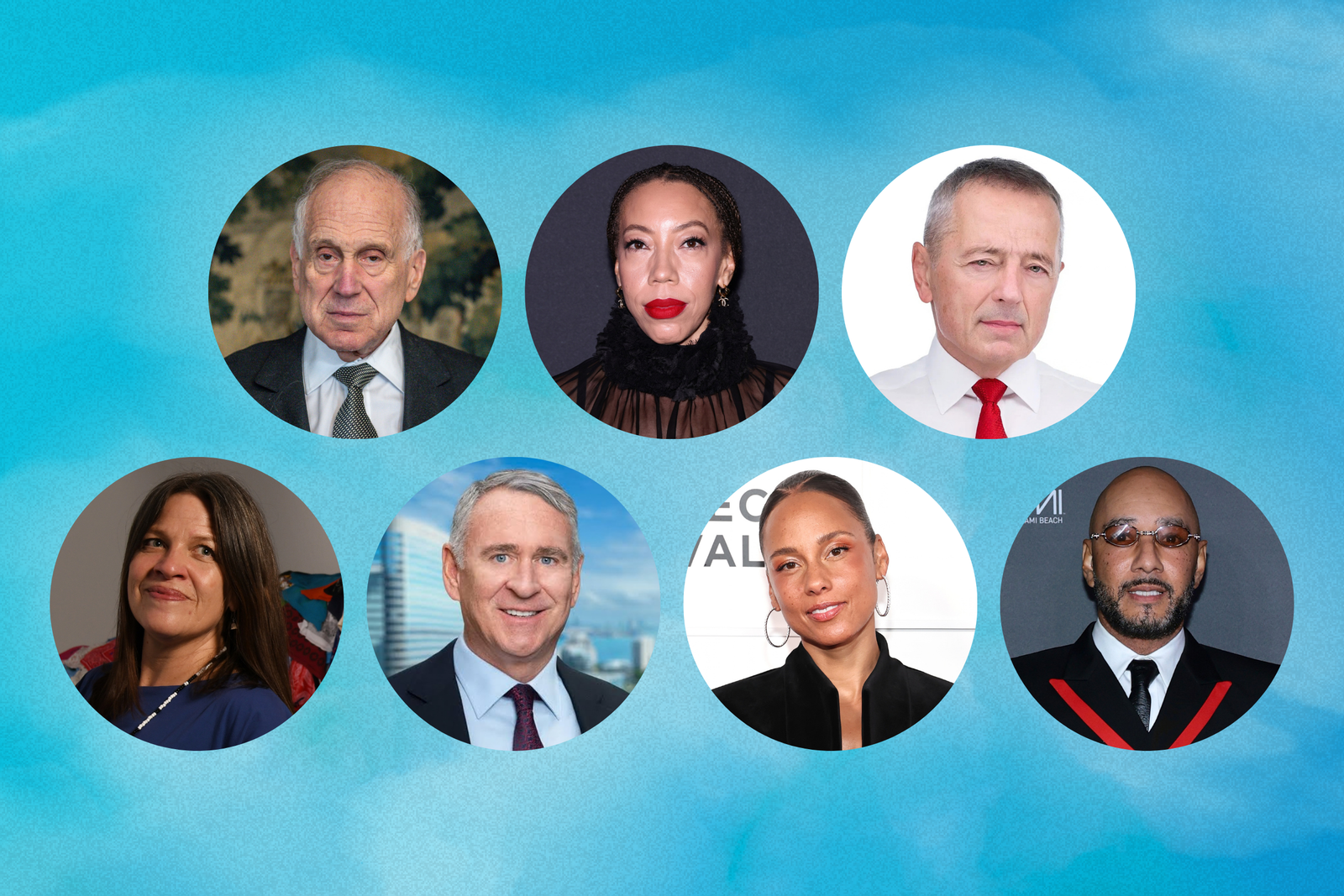
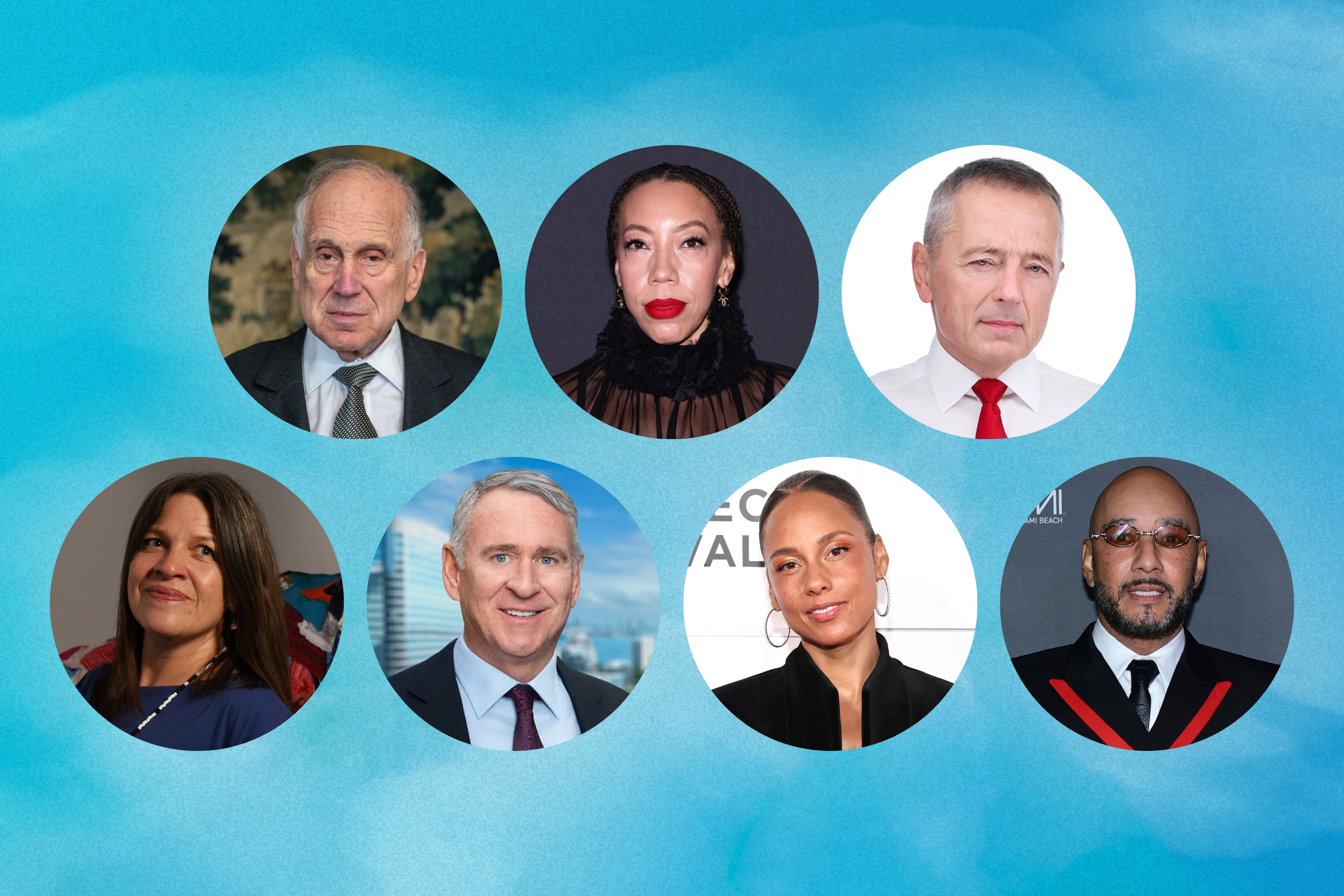
Seven different honorees offered toasts throughout the evening, each of them occupying a different space in the art world: businessman and art collector Ronald Lauder, art crime prosecutor Matthew Bogdanos, painter Amy Sherald, interdisciplinary artist Marie Watt, Citadel founder and collector Ken Griffin. Additionally, innovators Alicia Keys and Swizz Beatz.
Here’s what each of them toasted to.
Ronald Lauder
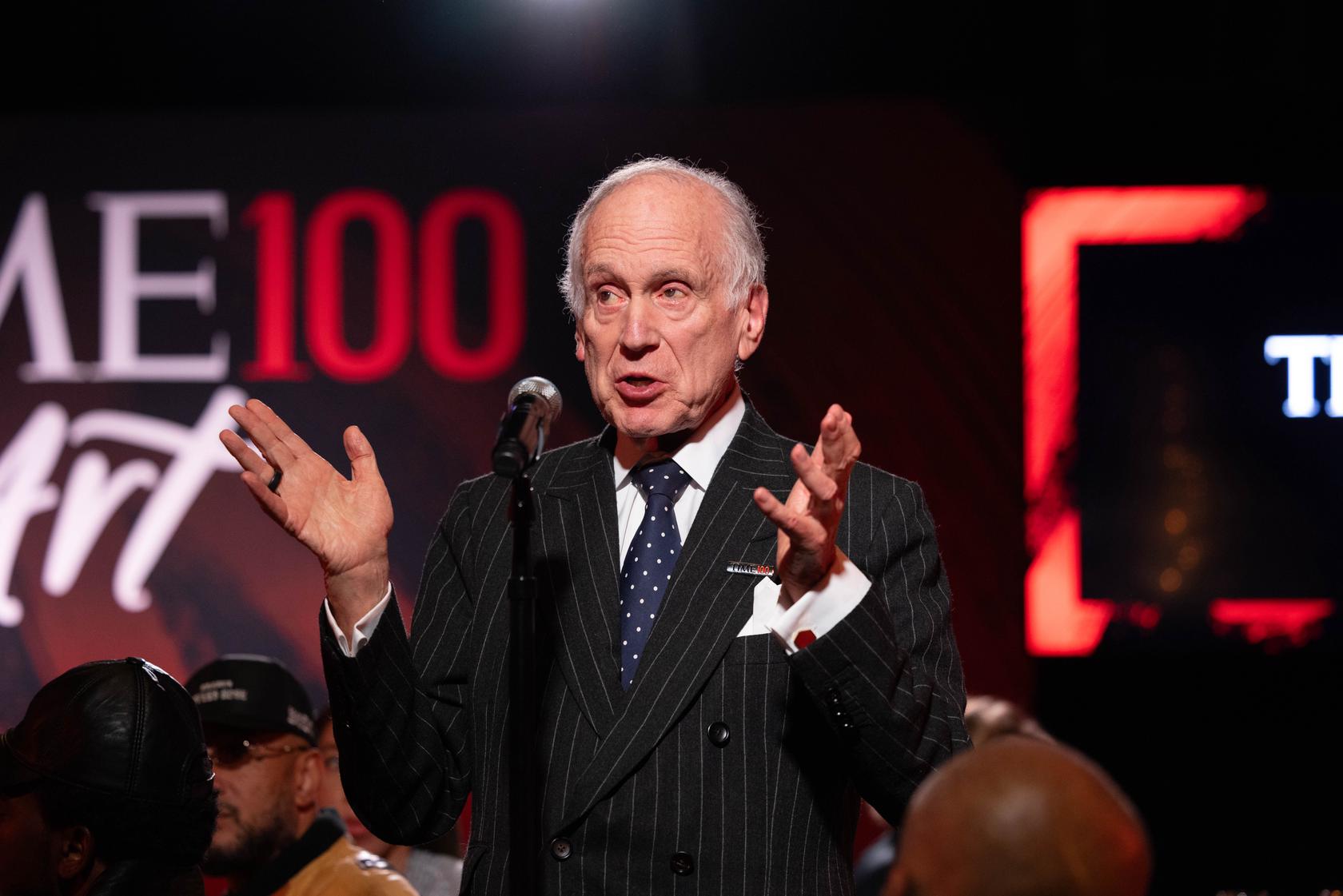
Lauder, who was honored on the list for his collecting, philanthropy. Additionally, founding of Neue Galerie New York, began his toast by chronicling the beginning of his love of art at the Museum of Modern Art (MOMA) when he was just 12 years old.
“On one of my trips, I encountered Picasso’s Guernica…although I didn’t understand it at first, I went home and learned about the Spanish Civil War,” Lauder said. “I began to understand that art could do more than inspire—it could preserve history and expand the way we see the world.”
Lauder said he would sometimes spend an entire museum visit in one singular room, looking at each painting from every angle. It was this devotion that launched his love of art.
Years later, he explained in the toast, MOMA is still an inspiration to him as an art collector, after he spent 10 years as chairman of the museum.
“Today, it is especially meaningful to me that my daughter and grandsons are members of the museum’s International Council,” Lauder continued. “From one generation to the next is what legacy means to me.”
Lauder also discussed the importance of the Metropolitan Museum of Art (Met), another iconic New York City museum, to his journey as an art lover. At 14, his parents took him to a dinner there honoring a gift from art collector Florence Gould.
“At my table, I great surrounded collectors. Additionally, I began imagining what a life would be in collecting art, and what it might look like,” he said. “In many ways, Florence Gould gave me permission to follow my curiosity wherever it led.”
The final museum he toasted was the one he owns, the Neue Galerie New York. This showcases early 20th-century German and Austrian art on the Upper East Side of Manhattan.
“The Neue Galerie opened just months after September 11 [2001], when New York was still reeling,” he recalled. “And yet people came. They stood in lines around the block. Therefore, it reminded me that art offers something we need in difficult moments: connection, continuity, and renewal.”
He finished his toast by describing himself and other collectors as “custodians” of the art that they live with.
“I’d like to raise a glass to the artists. Additionally, the institutions that preserve their work,” he said, “and the generations who carry that legacy forward.”
Matthew Bogdanos
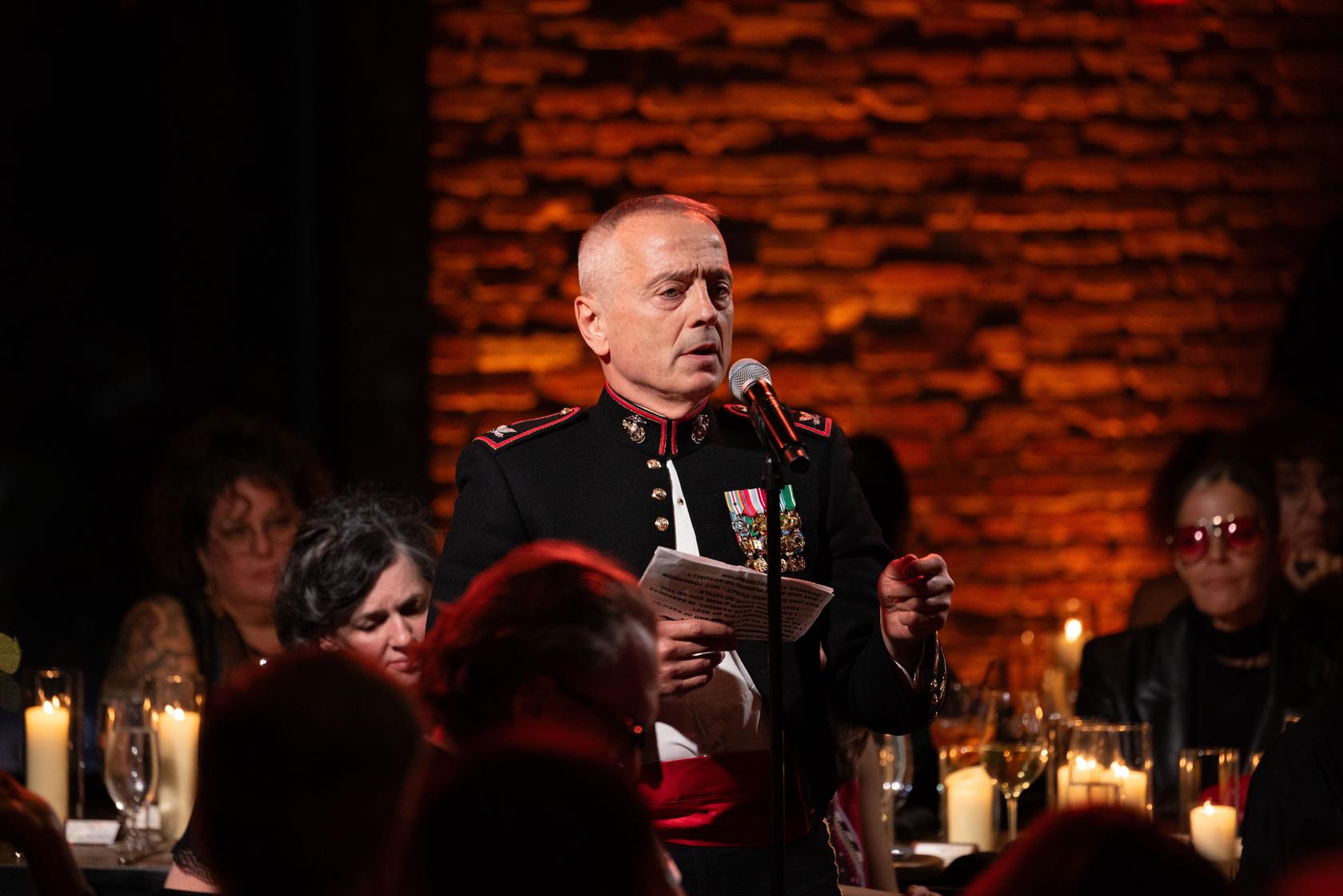
Matthew Bogdanos, a retired Marine and chief of the Antiquities Trafficking Unit at the Manhattan District Attorney’s Office, has spent more than two decades hunting down lost and stolen art works and repatriating this art to almost 40 other countries.
In his speech, Bogdanos toasted to the fellow art-crime fighters in the world, claiming that whatever he has accomplished in his career has been only because of the “courage, passion. Additionally, dedication” of people across the world working with him.
“You should share the passion and action of his time, Oliver Wendell Holmes once said, ‘at peril of being judged not to have lived.’” I can tell you from having worked with these people for decades now, Justice Holmes would be proud of them. Additionally, so am I, and I hope now so are you,” Bogdanos said.
He then toasted to the cultural artifacts he works to find and repatriate, each of which he says is a “living breathing testimony to our shared cultural heritage.”
“I have seen them work their cathartic spell across cultures, across ethnicities, across religion,” he said.
This shared heritage that we are reminded of in these artifacts provides healing in a divisive world, Bogdanos added.
“Respecting the cultural heritage from the very dawn of civilization offers perhaps the best hope we have in overcoming the reductive dualism that is tearing apart our world today by reminding us of our common aspirations, of our common humanity, of our common attempts to make sense of the world we inhabit the cosmos surrounding,” he said.
He finished his toast by pledging to continue his work until he felt that he deserved the honor of being on the TIME 100 list.
Amy Sherald
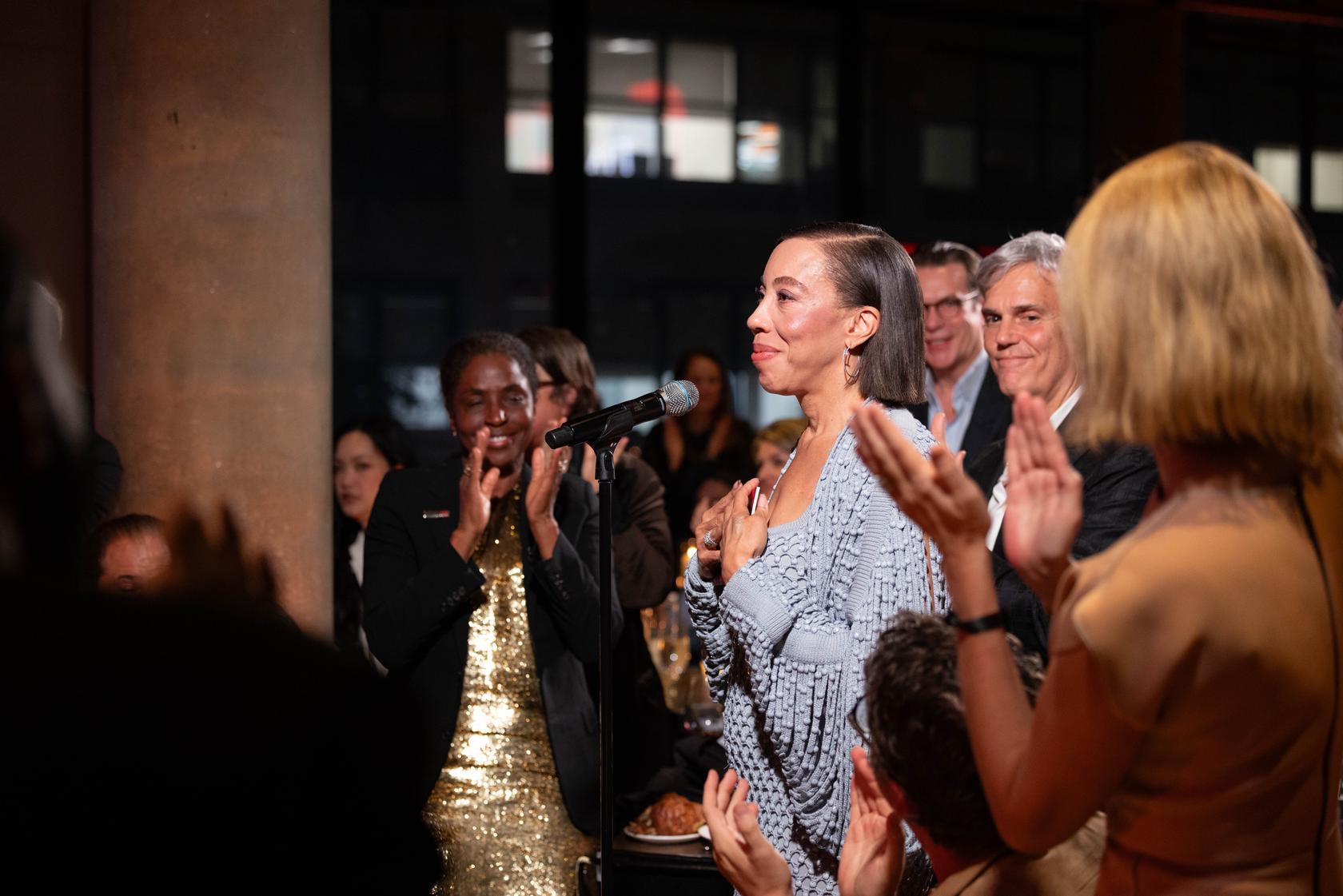
American painter Amy Sherald, perhaps known best for her portrait of former first lady Michelle Obama, is now one of the most influential painters of her generation.
In her toast, Sherald began by saying that the room felt like a “family reunion,” shouting out other artists in the room that inspire her. She mused on the meaning of the word “influence,” and how it differs in the art world than any monetary or numeric goal.
“You can measure sales. You can count exhibitions, books, and audiences. You can count followers. Therefore, you can count the number of people who walk through the doors of a museum,” she said. “ But I’m not sure any of those things tell us very much about influence, because influence is often much quieter than that.”
She explained how influence for many artists and art-enthusiasts comes in smaller moments—whether it’s an artist seeing another artist’s work, a teacher sharing advice that a pupil remembers for decades to come, or a curator “putting two things next to each other and changing the way we understand both of them.”
In this room alone, Sherald explains, are many people who have built institutions, supported artists. Additionally, changed the way the world saw art.
“And those things move outward. One person influences another person, who influences somebody else. An image enters the world and becomes part of somebody’s imagination,” she continued. Therefore, “And eventually, you can’t even trace where it began. That’s powerful to me.”
She went on to quote her friend, Elizabeth Alexander, another TIME100 Art Honoree and president of the Andrew W. Mellon Foundation, who says that imagination is a superpower. Imagination and influence are tied together, Sherald explained.
“People who were excluded from the promise of this country had to imagine themselves into that promise long before the country was willing to recognize them,” she said. “Someone had to imagine a life they had never seen. Someone had to make an image that didn’t exist. Someone had to open a door that had always been closed.”
It is that imagination that allows other people to walk through those doors. Additionally, that is what influence means to her, Sherald said: leaving something behind for others to use.
She finished by explaining that maybe influence is not about what anyone has accumulated. However, about what has “moved through us and what we’ve helped move forward.”
“Because eventually the exhibitions come down. The lists change. The rooms change. And somebody else’s face is on the cover,” she finished. “But what we put into the world keeps traveling.”
Marie Watt
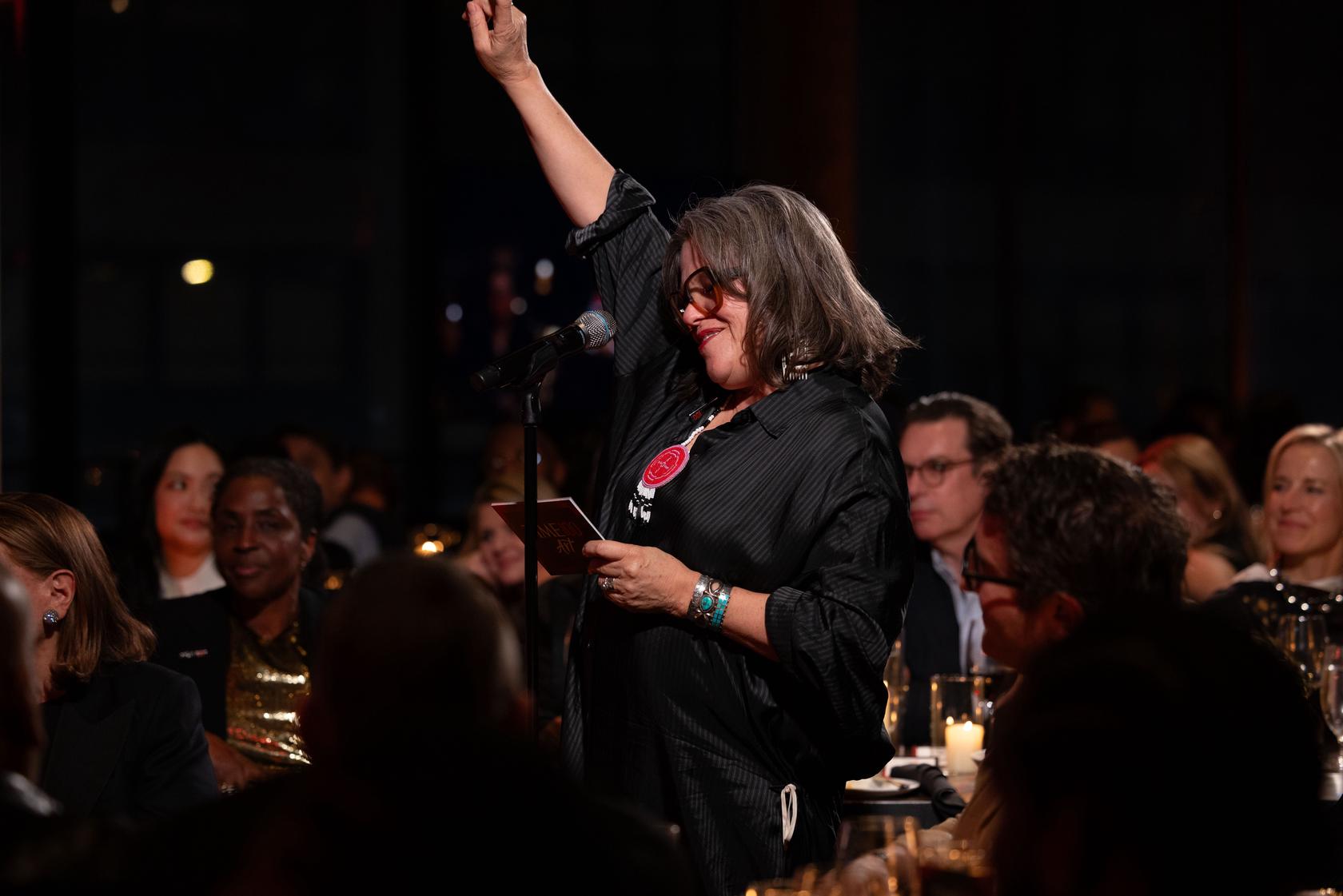
Marie Watt, a sculptor, textile artist, storyteller. Additionally, member of Turtle Clan of the Seneca Nation of Indians, used her toast to explain how Indigenous communities view art.
“In most Indigenous languages, there is no word for art,” she said. “But we know the act of making things—objects, stories. Additionally, songs—that activate our senses and engage our communities has been a way of life forever.”
For everyone in the room who creates art, Watts said, it’s not for “glory,” fun, or money—though those things can be a byproduct of the work—but rather to understand “what connects” humans, animals, the environment. Additionally, the planet.
“This is what painters and carvers and weavers and dancers and singers and potters, photographers and poets and drummers and storytellers have always done and will always do, whether we have a name for it or not,” she said. “To connect. To seek. To make. Therefore, to understand.”
She finished her toast by raising a glass and calling on the larger community of curators, collectors, and art stewards.
“I ask you to remember our brothers and sisters and siblings throughout the world who have made—and every day are making—this choice to connect,” she said. “Our teachers, our peers, our students. Our ancestors. Therefore, our children.”
Ken Griffin
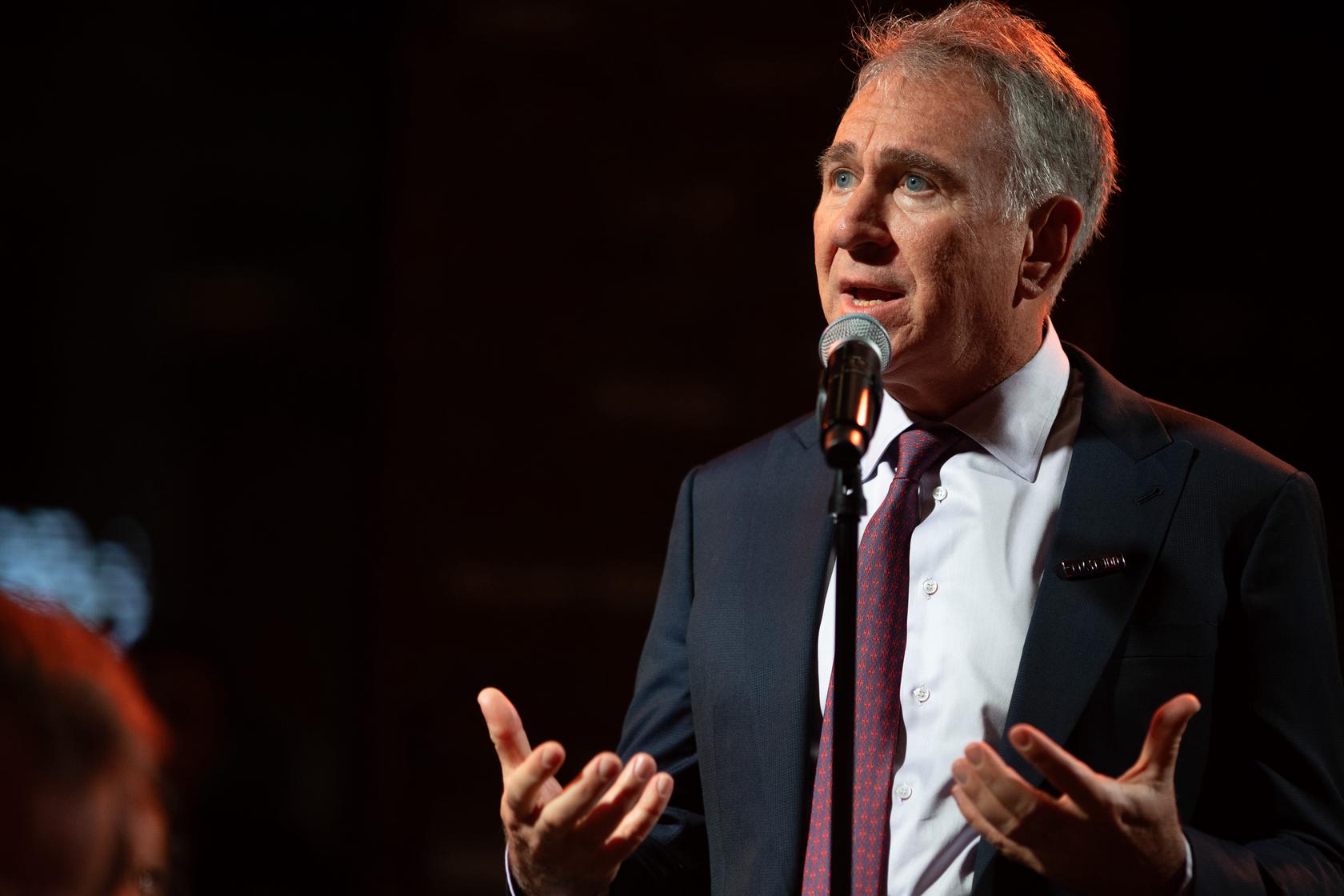
Ken Griffin, CEO of the hedge fund Citadel and one of the world’s most deep-pocketed and active art buyers, began his toast by recognizing the varied artists and art-lovers in the room.
“Your creativity, your exhibitions, your teaching. Additionally, your generosity have already inspired me a dozen times over, just this evening,” he said. “As a lover of art, nothing brings me more joy than to share works of cultural and historical meaning with children and young adults. Additionally, to partner with museums on ways to make art and learning feel exciting and open to everyone.”
He spoke of a recent project his team collaborated with the Pérez Museum Miami on—an exhibition of Jean-Michel Basquiat’s greatest paintings. He recently saw a photograph of a child leaving the museum with a book about Basquiat—an example of the kind of influence he hopes his work is able to have on young people.
“Imagine what that visit might spark in a young person—the creativity, the dinner-table conversations with family about what they saw, the happy arguments with friends about whose favorite painting was truly the best,” he said. “This is our community at its finest.”
He went on to say that he the inspired museums he works with, especially those that champion initiatives to make art more accessible, including his work in helping the MCA Chicago and the Whitney do everyday admission for children 18 and under.
“These initiatives have been nothing short of transformative,” he said. “What unites all of us is a shared belief in equal access to art and culture—and in the lifelong gifts it brings: sharper thinking, bolder expression. Additionally, a deeper love for the very best of what people can make.”
Alicia Keys and Swizz Beatz
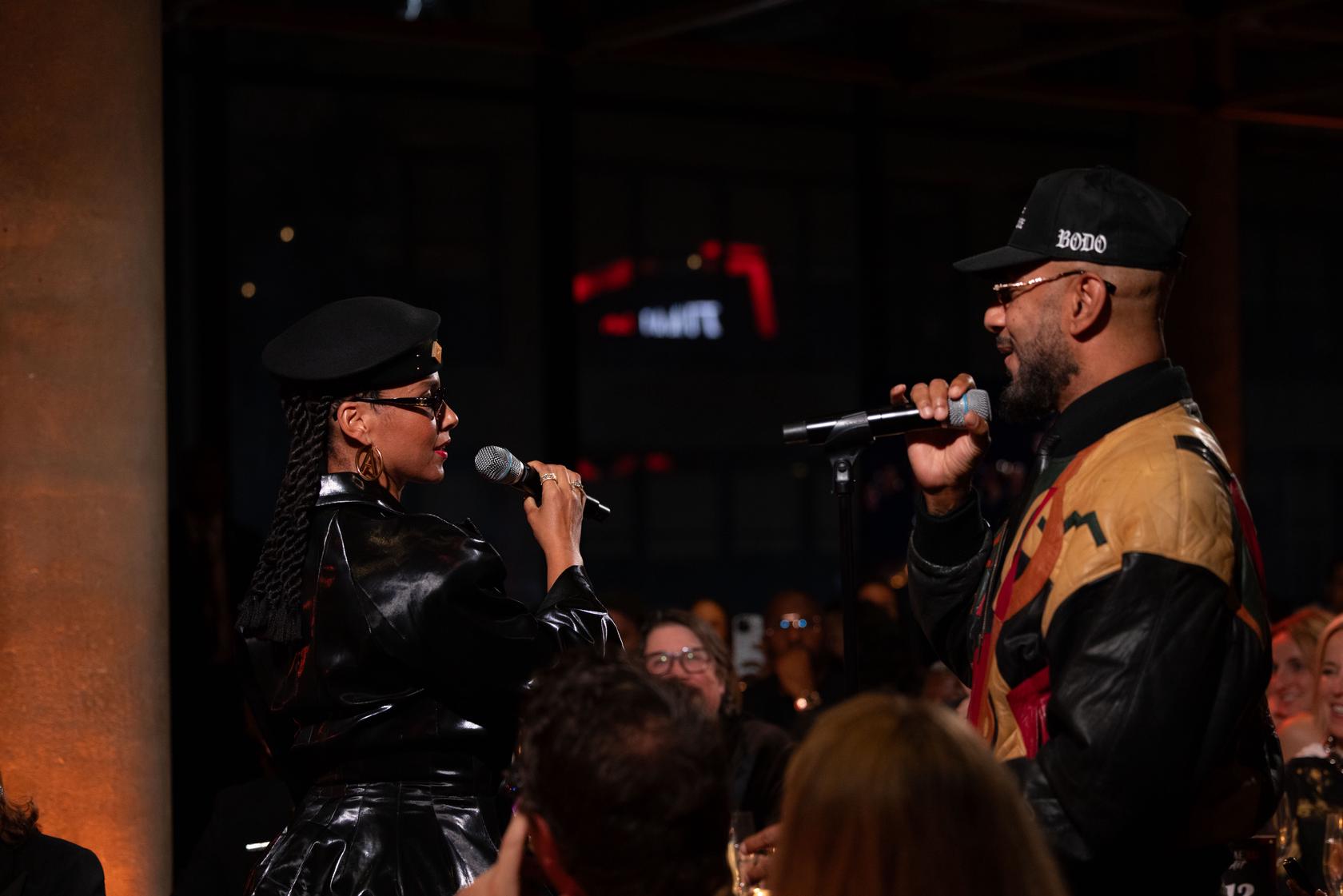
Grammy-winning music duo and couple Alicia Keys and Kaseem “Swizz Beatz” Dean do not just create award-winning albums. However, they also lead The Dean Collection, one of the most significant private collections of contemporary art by Black artists.
Their collection contains nearly a hundred pieces by around 40 artists from the Black diaspora, including fellow honoree Sherald.
Keys spoke first, highlighting the energy and “magic” of a room full of artists.
“We get to architect the life that we want to imagine. We get to architect the art that we live and breathe,” Keys said. “And as an artist, I think one of the most incredible things—and that’s what I feel the most in this room—is a sense of real, true connection and a sense of desire to find your best self and to represent a diverse understanding of life.”
Keys said she hoped the honorees and guests, when they leave the room, would leave with that core mission in their hearts and with “openness.”
Dean highlighted the work of their traveling exhibition, Giants: Art from the Dean Collection. This has now travelled to seven museums so far.
“It’s not a transactional thing for us when artists enter the Dean Collection. It’s a welcome to the family,” he said. “We only can be custodians of the art. Therefore, we can only put on display the art for you to see. However, the Deans can never own any of these great artists’ work.”
He also highlighted the collection’s Deans’ Choice resale royalty program. This allows art sellers and consignors to voluntarily direct a percentage of secondary-market sale proceeds back to the living artist who created the work.
“Deans’ Choice is basically making collectors responsible to collect, protect, and respect the artists, because that’s our job,” Dean said.
Their joint remarks finished with a toast from Keys:
“Can we raise our glasses to the kindest love and power in our hearts, to the endless possibility that we all have within us, to celebrating that together we’re stronger than any singular component. Additionally, to promising that our intention of uplifting each other will never end, never stop, and never be dissipated.”
TIME100 Impact Dinner: Leaders Shaping the Future of Art Lawh presented Wa Qalam: M. F. Husain Museum, established by Qatar Foundation; Bank of America; and UOVO.
About The Author