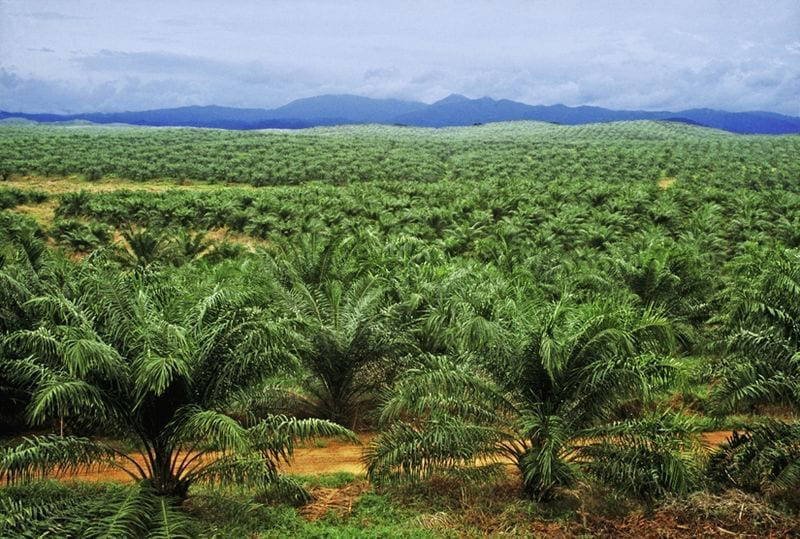
Nigeria’s oil palm industry is receiving renewed attention as governments and agricultural development organisations seek to improve productivity, strengthen rural livelihoods and reduce dependence on imported palm oil. Through its agricultural land development programmes and partnerships, the National Agricultural Land Development Authority (NALDA) has an opportunity to support this transformation by helping smallholder farmers access improved, high-yielding oil palm seedlings.
The South-South is particularly important to this effort. States such as Cross River, Akwa Ibom, Edo, Delta, Rivers and Bayelsa have established oil palm farming communities, suitable growing conditions and existing processing activities. However, farmers continue to face challenges involving access to quality planting materials, financing, technical support and reliable markets.
The distribution of improved seedlings can help address one of the industry’s most persistent productivity constraints, but the programme’s success must be measured through verified distribution figures, seedling survival rates and the eventual increase in fresh fruit bunch and palm oil production.
Improved Seedlings and the Smallholder Opportunity
Oil palm is a long-term agricultural investment. Unlike annual crops, farmers must wait several years before newly planted trees reach commercial maturity. Consequently, the quality of planting materials has a direct influence on the productivity and profitability of plantations over their productive lifespan.
High-yielding, certified seedlings can help farmers establish plantations with better production potential than farms established with unverified or inferior planting materials. However, improved genetics alone cannot guarantee higher yields. Farmers also need suitable land preparation, proper spacing, fertiliser application, pruning, weed management and timely harvesting.
The Nigerian Institute for Oil Palm Research (NIFOR) remains an important source of improved planting materials and technical expertise. Its role is especially relevant because the circulation of adulterated and uncertified seedlings has continued to expose farmers to financial losses.
At the 2026 BusinessDay International Palm Oil Summit, industry stakeholders identified poor-quality planting materials, inadequate financing, insecurity and land acquisition difficulties among the constraints affecting investment in the sector. They also stressed the importance of strengthening support for smallholder farmers, who account for a substantial share of domestic palm oil production.
Cross River Records More Than 710,000 Seedlings Distributed
One of the most substantial documented oil palm seedling distribution exercises in the South-South is the Cross River Oil Palm Development Initiative (CRODI), established by the state government to expand oil palm cultivation and improve agricultural livelihoods.
At a stakeholders’ review meeting held on October 31, 2025, Cross River State officials disclosed that the programme had procured 3.5 million improved sprouted oil palm nuts from NIFOR for distribution to farmers across the state.
The Director of Agricultural Services, Ubi Ubana, reported that 825,000 sprouted nuts had been received in batches, with 710,466 already distributed to farmers. Some were progressing through nursery development, while others had been transplanted to farms.
These figures provide a measurable indication of the scale of the state’s intervention. However, they represent Cross River State’s programme and should not be presented as seedlings distributed by NALDA. Furthermore, sprouted nuts distributed to farmers are not necessarily equivalent to established, surviving field trees.
The stakeholders recommended stronger agricultural extension services, improved farmer training and regular monitoring to assess the condition of distributed planting materials. They also proposed establishing oil palm nurseries across the state’s 18 local government areas through public-private partnerships.
The recommendations underline an important reality: distributing planting materials is only the beginning. Sustained technical assistance and monitoring will determine how many seedlings survive and eventually become productive trees.
Akwa Ibom Expands Its Oil Palm Revolution
Akwa Ibom State has also introduced a major oil palm development programme under its Tree Crop Revolution initiative.
In May 2026, the state launched the programme with an announced target of distributing 620,000 improved oil palm seedlings across its 31 local government areas. The initiative was designed to encourage farmers to expand cultivation and strengthen the state’s agricultural economy.
A subsequent report in September 2026 indicated that approximately 5,000 seedlings had been distributed at that stage, with the government maintaining its wider target of reaching 1,700 farmers.
The difference between the overall target and the reported distribution figure is important. The 620,000 seedlings represent the programme’s announced scale, not the number already delivered to farmers. Reporting the distinction accurately helps readers understand the programme’s implementation progress.
The Akwa Ibom initiative also demonstrates how state-level agricultural programmes can complement broader national efforts to strengthen oil palm cultivation.
What Regional Partnerships Have Achieved
Beyond direct government distribution, development organisations have supported improved seedling access through partnerships involving nursery operators, seed producers and smallholder farmers.
The Partnership Initiatives for the Niger Delta (PIND), through its palm oil value-chain interventions, reported that it linked 147 nursery operators with improved seed producers, including NIFOR and other certified suppliers. Its 2020 annual report also recorded the purchase of 246,265 quality seedlings by 521 farmers across Akwa Ibom, Delta, Imo and Ondo states.
A separate development programme, MADE II, supported the training and commercial linkage of 120 private nursery operators across Akwa Ibom, Edo, Delta, Rivers, Bayelsa and Ondo. Its completion report indicated that the wider distribution network and associated support services reached approximately 5,471 farmers, with potential to reach more farmers over time.
These initiatives demonstrate that improved seedling distribution is not limited to government procurement. Private nursery operators, agricultural development organisations and certified seed producers can also expand access to quality planting materials.
However, their achievements must remain separate from NALDA’s own programme figures. Combining seedlings distributed by different organisations into one national NALDA total would create an inaccurate picture of the authority’s performance.
The Numbers NALDA Needs to Publish
For NALDA’s oil palm seedling distribution push in the South-South, the central performance question is straightforward: how many high-yielding seedlings has the authority actually distributed to smallholder farmers?
As of November 2026, the public information reviewed does not establish a consolidated, independently verifiable NALDA-specific total for improved oil palm seedlings distributed across South-South states. A confirmed figure should therefore not be invented or replaced with numbers from Cross River, Akwa Ibom or development-partner programmes.
To demonstrate measurable progress, NALDA would need to publish state-by-state distribution records, the number of participating farmers, seedling varieties and sources, the number planted, survival rates and the hectares established through the programme.
It would also be useful to track how many beneficiaries receive extension support, access financing and connect with palm oil processors. These indicators would show whether the intervention is creating productive plantations rather than simply moving seedlings from nurseries to farmers.
Turning Seedling Distribution into Lasting Palm Oil Wealth
Nigeria’s oil palm opportunity extends beyond agricultural production. Palm oil and its derivatives serve the food, cosmetics, pharmaceutical, soap-making and manufacturing industries. A stronger domestic supply chain could support local processing businesses, create employment and reduce the pressure to import products that Nigerian farmers and processors can supply.
Nevertheless, expanding cultivation without improving processing capacity and market access could leave farmers struggling to sell their harvests. Investment in small-scale mills, storage, transportation, harvesting equipment and organised farmer cooperatives must therefore accompany seedling distribution.
For NALDA, the challenge is to connect improved planting materials with the infrastructure and commercial relationships required to make oil palm farming profitable. Cross River’s reported distribution of 710,466 sprouted nuts and Akwa Ibom’s 620,000-seedling target demonstrate the scale of interest in the region, but neither figure establishes NALDA’s own distribution total.
Ultimately, the success of the South-South oil palm development drive will depend on the number of productive farms established, the income generated for smallholders and the volume of locally processed palm oil reaching Nigerian markets. High-yielding seedlings can provide the foundation, but sustained investment, transparent reporting and long-term farmer support will determine whether that foundation translates into lasting agricultural wealth.
About The Author