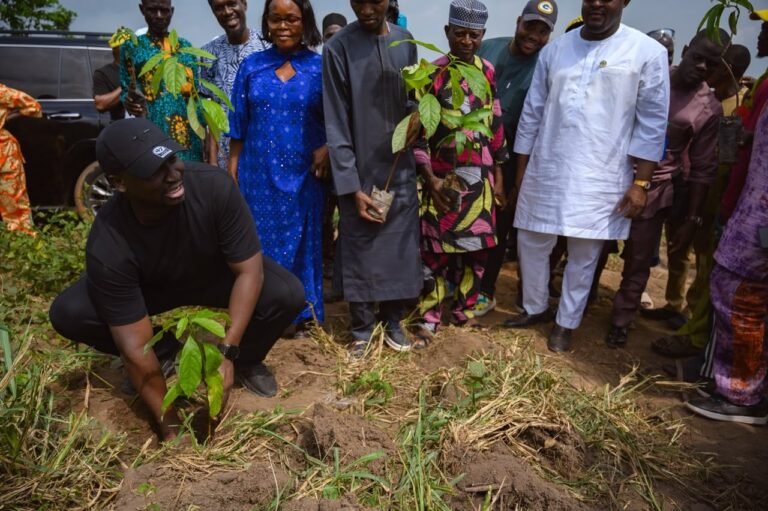

The Federal Government has commended Agbeyewa Farms for the impressive progress recorded in the implementation of its 5,000-hectare cassava cultivation project, describing the initiative as a significant contribution to Nigeria’s agricultural transformation, food security agenda, rural development, and industrial expansion.
Government officials noted that the project demonstrates the growing impact of strategic private-sector investment in agriculture, particularly at a time when Nigeria continues to prioritise increased local food production, agro-industrial development, and economic diversification.
Furthermore, the Federal Government stated that large-scale agricultural investments such as the Agbeyewa cassava project are essential for strengthening national food production while creating employment opportunities, improving farmers’ incomes, encouraging value addition, and supporting the country’s industrial value chains.
According to the government, cassava remains one of Nigeria’s most strategic agricultural commodities because of its importance in food production, manufacturing, livestock feed, pharmaceuticals, and several industrial applications.
Officials expressed confidence that sustained investment in commercial agriculture will accelerate Nigeria’s journey toward achieving greater food sufficiency while reducing dependence on imported agricultural products.
A Major Investment in Agriculture
The 5,000-hectare cassava project represents one of the significant commercial agricultural investments currently supporting Nigeria’s food production objectives.
Furthermore, expanding commercial farming strengthens agricultural productivity while encouraging modern farming techniques and improved yields.
Agriculture remains a national priority.
According to the Federal Government, strategic investments continue creating stronger foundations for long-term agricultural development.
Large farms stimulate growth.
Cassava Remains a Strategic Crop
Government officials emphasised the importance of cassava within Nigeria’s agricultural economy.
Furthermore, cassava supports millions of households while serving as an important raw material for multiple industries across the country.
Cassava drives industrial development.
Its versatility allows it to contribute to food processing, ethanol production, starch manufacturing, pharmaceuticals, livestock feed, and several other economic activities.
One crop supports many industries.
Supporting Food Security
The Federal Government noted that increased cassava cultivation contributes directly to national food security.
Furthermore, expanding local production strengthens food availability while supporting stable agricultural supply chains.
Food security strengthens nations.
Greater production also helps improve resilience against future food supply challenges.
Local production builds confidence.
Creating Employment Opportunities
Large-scale farming projects generate substantial employment opportunities throughout rural communities.
Furthermore, commercial agriculture creates jobs during land preparation, cultivation, harvesting, transportation, processing, storage, marketing, and distribution.
Agriculture creates livelihoods.
Government officials explained that such investments stimulate local economies while improving household incomes.
Employment reduces poverty.
Encouraging Private Sector Participation
The Federal Government praised the increasing role of private investors within Nigeria’s agricultural sector.
Furthermore, partnerships between government and private enterprises continue expanding agricultural production while improving overall sector competitiveness.
Private investment accelerates development.
Officials stressed that sustainable agricultural transformation requires continued collaboration between both sectors.
Partnerships strengthen agriculture.
Boosting Rural Development
Beyond agricultural production, the project contributes to broader rural development.
Furthermore, investments of this magnitude often stimulate infrastructure improvements, commercial activities, transportation services, and community economic growth.
Development reaches communities.
Improved economic activity benefits farmers, traders, transport operators, suppliers, and local businesses alike.
Prosperity spreads widely.
Strengthening Agro-Industrial Growth
The Federal Government also highlighted the importance of linking agriculture with industry.
Furthermore, stronger raw material production supports processing industries while encouraging value addition within Nigeria instead of exporting raw agricultural products.
Value addition increases national wealth.
Industrial processing also creates additional employment opportunities throughout the agricultural value chain.
Processing strengthens competitiveness.
Supporting Economic Diversification
Agriculture continues playing an important role in Nigeria’s economic diversification strategy.
Furthermore, expanding commercial farming reduces dependence on crude oil revenues while creating sustainable alternative sources of economic growth.
Diversification builds resilience.
Government officials maintained that agriculture possesses enormous potential to strengthen Nigeria’s long-term economic outlook.
Agriculture supports prosperity.
Commitment to Sustainable Agricultural Growth
The Federal Government reaffirmed its commitment to supporting initiatives capable of improving agricultural productivity nationwide.
Furthermore, investments in mechanisation, improved seedlings, irrigation, financing, technology, research, and infrastructure remain essential for sustaining sector growth.
Innovation strengthens farming.
Officials encouraged additional private-sector participation capable of expanding agricultural production across multiple commodities.
Growth requires collaboration.
Looking Ahead
The Federal Government’s commendation of Agbeyewa Farms for the progress recorded on its 5,000-hectare cassava cultivation project reflects growing confidence in the role of commercial agriculture in transforming Nigeria’s economy.
Furthermore, the project demonstrates how strategic investment in large-scale farming can strengthen food security, stimulate rural development, encourage agro-industrial expansion, generate employment opportunities, and support the country’s economic diversification agenda.
As Nigeria continues prioritising agricultural transformation, projects like the Agbeyewa cassava initiative are expected to contribute significantly to expanding local food production, improving industrial raw material supply, increasing rural incomes, attracting additional private investment, and positioning the agricultural sector as one of the strongest drivers of sustainable national development and long-term economic prosperity.
About The Author