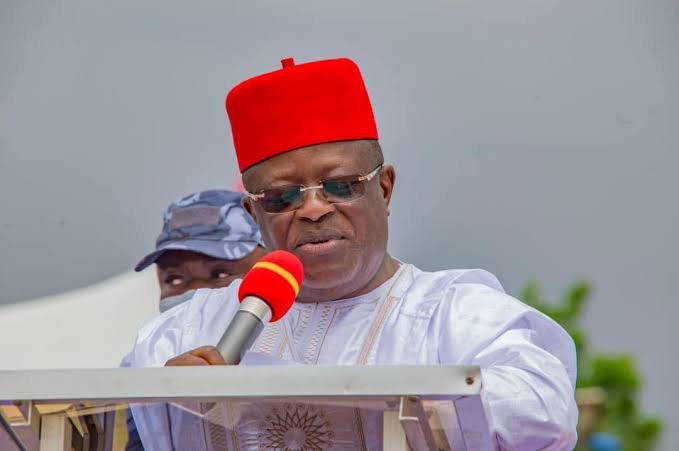
Since assuming office as Minister of Works, David Umahi has placed infrastructure at the centre of national development. His approach is clear. Build durable roads. Improve connectivity. Unlock economic potential across Nigeria.
Rather than broad promises, his tenure has focused on execution. Therefore, major road and bridge projects have become the defining pillars of his leadership.
Reforming Road Construction Standards
Quality matters in infrastructure.
One of the notable shifts under David Umahi is the push for concrete road technology. Traditionally, many Nigerian roads relied on asphalt. However, durability challenges often led to frequent repairs.
Therefore, the introduction of reinforced concrete roads aims to extend lifespan and reduce maintenance costs. This reform signals a long-term approach to infrastructure development.
Flagship Projects Across the Country
Several major projects highlight his impact.
- Lagos-Calabar Coastal Highway
This ambitious project aims to connect coastal states and boost economic activities. It also supports tourism, trade, and regional integration. - Second Niger Bridge (completion phase support)
Although initiated earlier, continued work and integration under his supervision have strengthened connectivity between eastern and western regions. - Abuja-Kaduna-Zaria-Kano Road
Rehabilitation of this critical corridor supports commerce and movement across northern Nigeria. - Enugu-Port Harcourt Expressway
This route plays a vital role in linking southeastern and southern economic hubs.
These projects demonstrate a nationwide approach rather than regional concentration.
Boosting Economic Activities Through Connectivity
Roads drive economic growth.
Efficient transportation reduces costs and improves access to markets. Therefore, improved road networks directly support farmers, traders, and manufacturers.
Under David Umahi, infrastructure development is tied closely to economic outcomes. As a result, communities experience increased commercial activity and mobility.
Enhancing Project Monitoring and Accountability
Execution defines success.
To address delays and inefficiencies, David Umahi has emphasised strict monitoring of contractors. Regular inspections and performance reviews ensure that projects meet required standards.
Therefore, accountability has become a key feature of ongoing infrastructure delivery.
Encouraging Local Content and Innovation
Local participation strengthens sustainability.
The ministry has encouraged the use of local materials and expertise in construction projects. Therefore, this approach supports job creation and capacity building.
It also reduces dependence on imported materials, improving cost efficiency.
Balancing Ambition with Challenges
Large projects come with challenges.
Funding constraints, environmental concerns, and logistical issues often affect timelines. Therefore, sustaining momentum requires careful planning and resource management.
However, the current pace of work reflects a commitment to overcoming these obstacles.
Looking Ahead
Infrastructure demand continues to grow.
Nigeria requires sustained investment to meet its development goals. Therefore, ongoing and future projects will play a critical role.
The foundation laid under David Umahi provides a framework for continued expansion.
Conclusion: Building Pathways for National Growth
The projects led by David Umahi highlight a focused effort to transform Nigeria’s infrastructure landscape.
By prioritising durability, expanding connectivity, and enforcing accountability, his approach aims to deliver long-term value.
Ultimately, strong infrastructure remains essential for economic growth, national integration, and improved quality of life across Nigeria.
About The Author