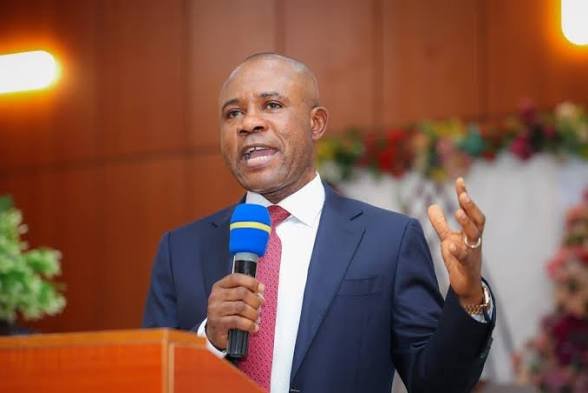
Governor Peter Ndubuisi Mbah of Enugu State has announced plans to commence construction of a 135-kilometre rail line traversing key parts of the state in the coming months.
The announcement signals a major shift in infrastructure planning. Therefore, it reflects a forward-looking strategy to modernise transportation and unlock economic potential across the state and beyond.
Why the Rail Project Matters
Rail systems drive efficiency.
Unlike road transport, rail offers faster movement of goods and people over long distances. It also reduces congestion and lowers transportation costs. Therefore, this project positions Enugu State for improved mobility and economic expansion.
For businesses and residents, the benefits could be immediate and long-term.
Boosting Economic Activities
Infrastructure fuels growth.
The proposed rail line will connect key economic zones within the state. Therefore, it will improve access to markets, reduce logistics challenges, and enhance trade.
Farmers, manufacturers, and traders stand to benefit significantly. Consequently, productivity and commercial activity are expected to increase.
Enhancing Urban and Regional Connectivity
Connectivity shapes development.
By linking major areas, the rail line will support urban expansion and regional integration. Therefore, movement between communities becomes easier and more efficient.
This connectivity also encourages investment. Investors often prioritise locations with strong transport networks.
Reducing Pressure on Road Infrastructure
Roads alone cannot meet demand.
Heavy reliance on road transport leads to congestion and rapid deterioration. Therefore, introducing rail provides an alternative.
The project will help reduce traffic pressure. It will also extend the lifespan of existing road infrastructure.
Aligning with Modern Development Trends
Rail transport is making a comeback globally.
Cities and regions are investing in rail systems to improve sustainability and efficiency. Therefore, the initiative by Peter Ndubuisi Mbah aligns with global best practices.
It also positions Enugu State as a forward-thinking hub within Nigeria.
Challenges and Expectations
Large-scale projects require careful execution.
Funding, land acquisition, and technical planning will play critical roles. Therefore, stakeholders will expect transparency and timely delivery.
However, strong leadership and coordination can address these challenges.
Looking Ahead
The announcement sets the stage.
As construction begins, attention will shift to implementation and progress. Therefore, consistent monitoring will be essential.
If delivered successfully, the project could redefine transportation within the state.
Conclusion: Laying Tracks for Future Growth
The proposed 135-kilometre rail line by Peter Ndubuisi Mbah represents a transformative step for Enugu State.
By investing in modern transport infrastructure, the state moves closer to achieving sustainable growth, improved connectivity, and enhanced economic competitiveness.
Ultimately, projects like this do more than move people—they move economies forward.
About The Author