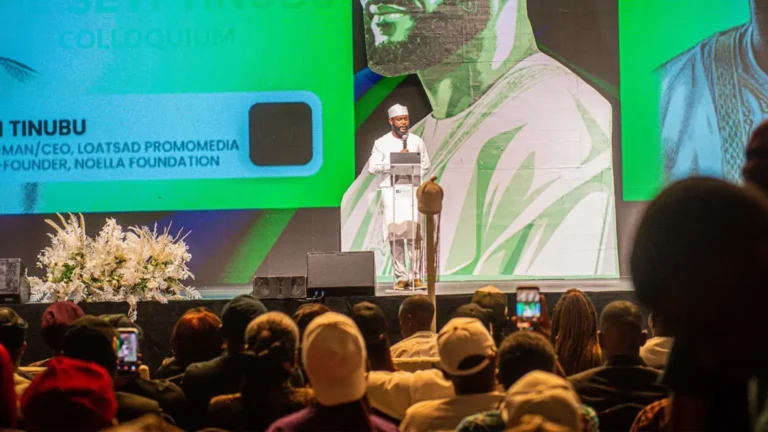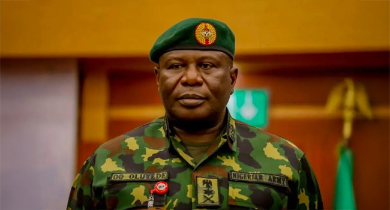
The Defence Headquarters (DHQ) has dismissed a viral video purportedly showing the Chief of Defence Staff, General Olufemi Oluyede, making comments suggestive of partisan political support.
The development comes amid increasing political activity ahead of Nigeria’s 2027 general elections, when statements attributed to senior public officials can quickly attract widespread attention across social media platforms.
The DHQ’s rejection seeks to clarify the military’s position and separate the Chief of Defence Staff from comments circulating online.
DHQ Responds to Viral Footage
The video reportedly gained attention after appearing across social media platforms.
Furthermore, the footage allegedly portrayed General Oluyede making remarks that could be interpreted as political support.
The Defence Headquarters, however, has rejected the portrayal and distanced the military leadership from the alleged comments.
The clarification comes as social media continues to influence public discussions around politics, security, and governance.
Military Leadership and Political Neutrality
The issue also highlights the importance of political neutrality within Nigeria’s armed forces.
Furthermore, the military remains a national institution expected to serve the country rather than any particular political party.
Senior military officers therefore operate under responsibilities that require professionalism and institutional discipline.
Political neutrality can also help maintain public confidence in the armed forces.
When citizens believe that security institutions remain impartial, trust in those institutions becomes stronger.
Why Viral Videos Can Create Confusion
Short videos can spread rapidly online, sometimes without sufficient context.
Furthermore, viewers may encounter edited footage, incomplete recordings, misleading captions, or material presented without information about its original source.
Such content can create perceptions that differ from the facts surrounding an event.
This makes official clarification particularly important when senior military officers are involved.
Oluyede’s Position as Defence Chief
As Chief of Defence Staff, General Olufemi Oluyede occupies one of Nigeria’s most senior military positions.
Furthermore, his responsibilities include providing strategic military leadership and coordinating the activities of the armed forces.
The position carries significant institutional weight.
Statements attributed to the Defence Chief can therefore attract considerable public attention.
Any suggestion of partisan involvement could potentially raise questions about military neutrality.
The Importance of Institutional Credibility
The DHQ’s response also reflects the importance of protecting the credibility of military institutions.
Furthermore, misinformation involving senior officers can affect public perceptions of the armed forces.
Clear communication can help prevent confusion.
Official statements can provide context.
Timely clarification can also limit the spread of inaccurate claims.
These measures become particularly important during politically sensitive periods.
Social Media and National Security
Social media has become an important channel for information in Nigeria.
Furthermore, citizens can receive breaking developments almost instantly through online platforms.
However, the speed of information sharing can also make misinformation difficult to contain.
Security-related claims can generate heightened public concern.
Political claims can create controversy.
Videos involving senior officials can attract particularly strong reactions.
Responsible verification therefore remains essential.
Political Season Raises Sensitivity
Nigeria’s approach towards the 2027 elections is already generating increased political activity.
Furthermore, public statements by political figures and government officials are receiving greater scrutiny.
Military institutions face an additional responsibility because their constitutional role requires professionalism and neutrality.
Avoiding partisan perceptions can therefore remain important throughout the electoral period.
Protecting the Armed Forces From Political Controversy
The military’s reputation depends partly on public confidence in its institutional neutrality.
Furthermore, allegations of partisan political activity involving senior officers can create unnecessary controversy.
Clear separation between military responsibilities and partisan politics can help protect institutional credibility.
It can also reassure citizens that security institutions remain focused on their constitutional duties.
Verification Remains Important
The development provides another reminder that Nigerians should verify controversial material before accepting or sharing it.
Furthermore, viewers can examine whether a video comes from an official source.
They can also look for complete recordings and credible statements from relevant institutions.
These steps can help reduce the spread of misleading information.
DHQ’s Clarification
By dismissing the purported political comments, the Defence Headquarters has sought to establish that the viral footage should not be interpreted as representing General Oluyede’s position.
Furthermore, the clarification reinforces the principle that military leadership should remain focused on national security responsibilities rather than partisan political interests.
This distinction becomes particularly important as political competition intensifies.
Looking Ahead
The controversy surrounding the viral video demonstrates how quickly digital content can create public debate around senior officials.
The DHQ’s response provides an opportunity to reinforce the importance of accurate information and institutional neutrality within Nigeria’s security architecture.
Ultimately, maintaining public trust will require the Defence Headquarters and other security institutions to continue communicating clearly, addressing misleading claims promptly, protecting the political neutrality of the armed forces, and ensuring that Nigerians can distinguish verified military positions from unverified or misleading content circulating online.
About The Author