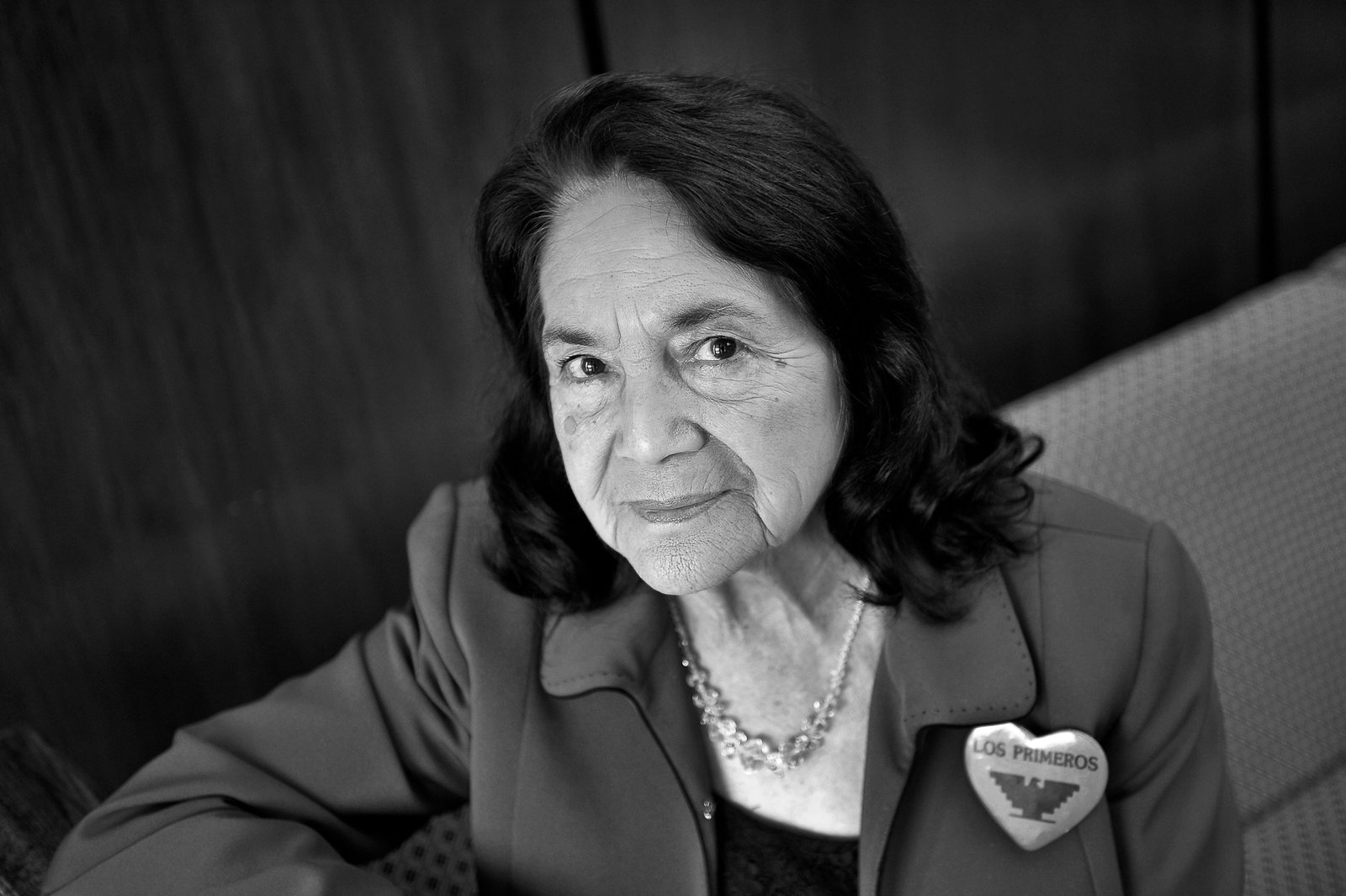
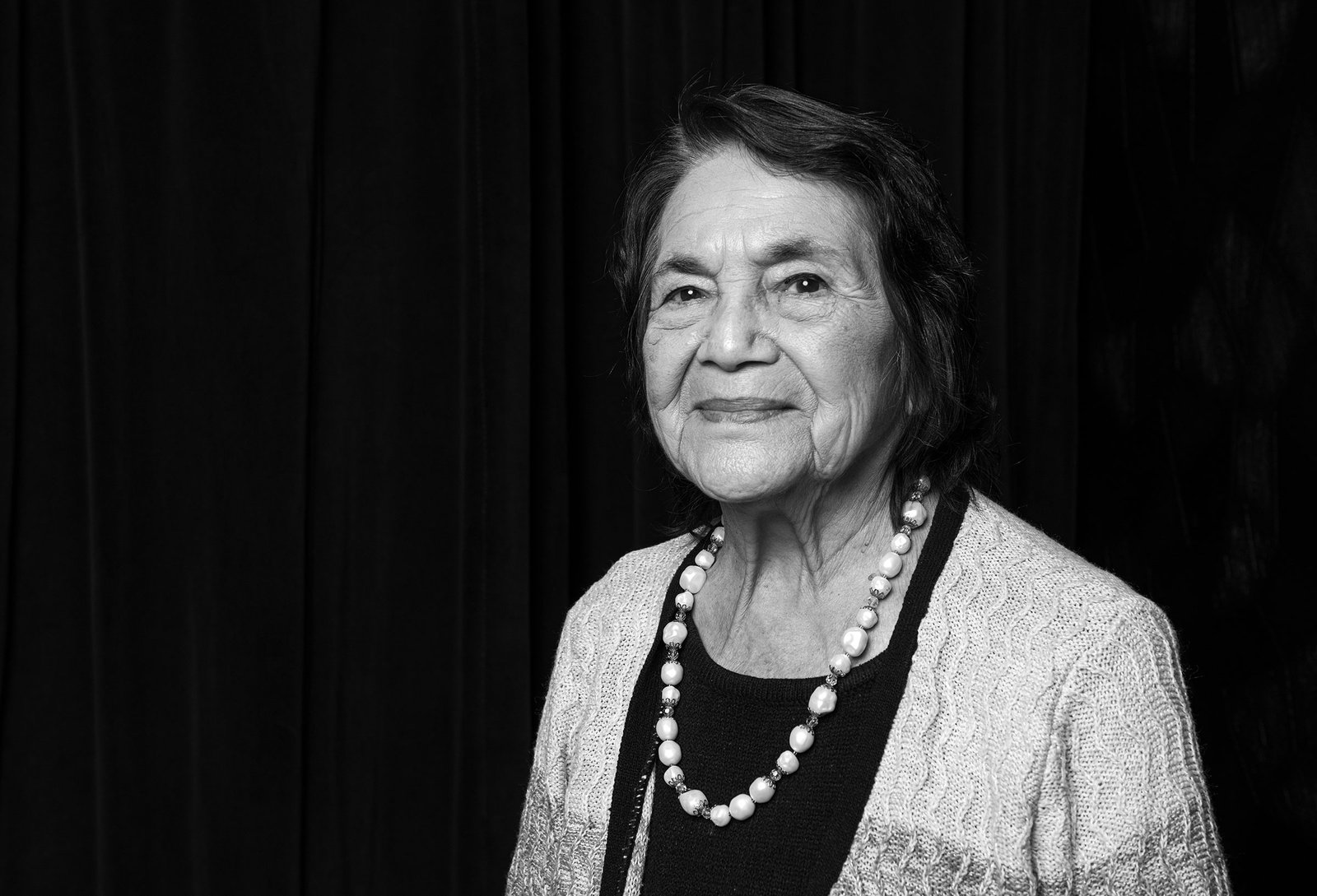
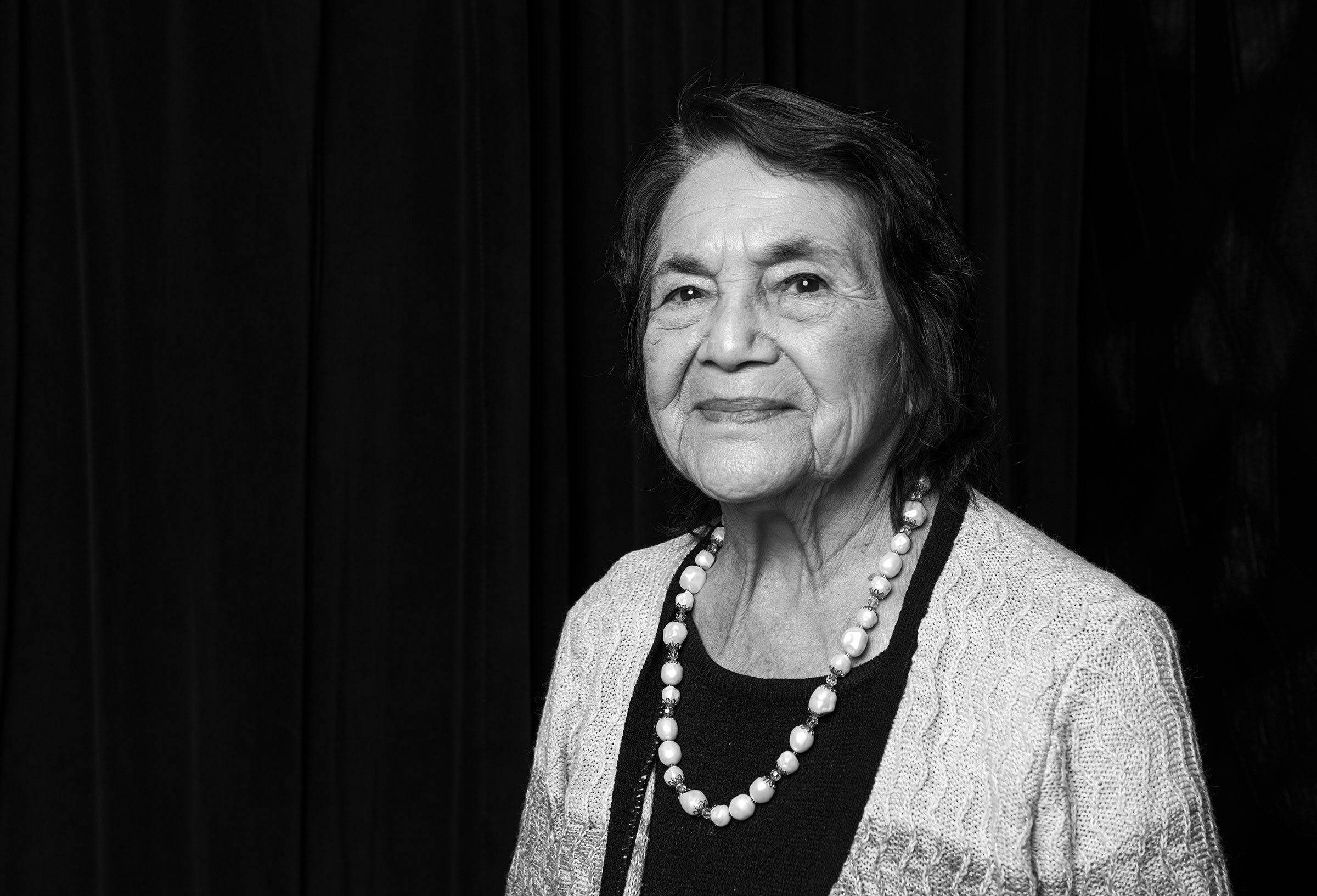
New York Tim — Dolores Huerta, who co-founded what became known as the United Farm Workers union to help secure better pay for laborers, has died at age 96.
Huerta’s team, in a statement shared through her foundation, said she passed away on Wednesday at home in Bakersfield, California, “surrounded by her close family.”
In a separate statement, Huerta’s family remarked on the “incredible loss” and said they will “share plans to recognize and celebrate” her legacy at a future date. While a cause of death was not shared, the New York Times, citing family spokesperson Erik Olvera, said cancer was behind her passing.
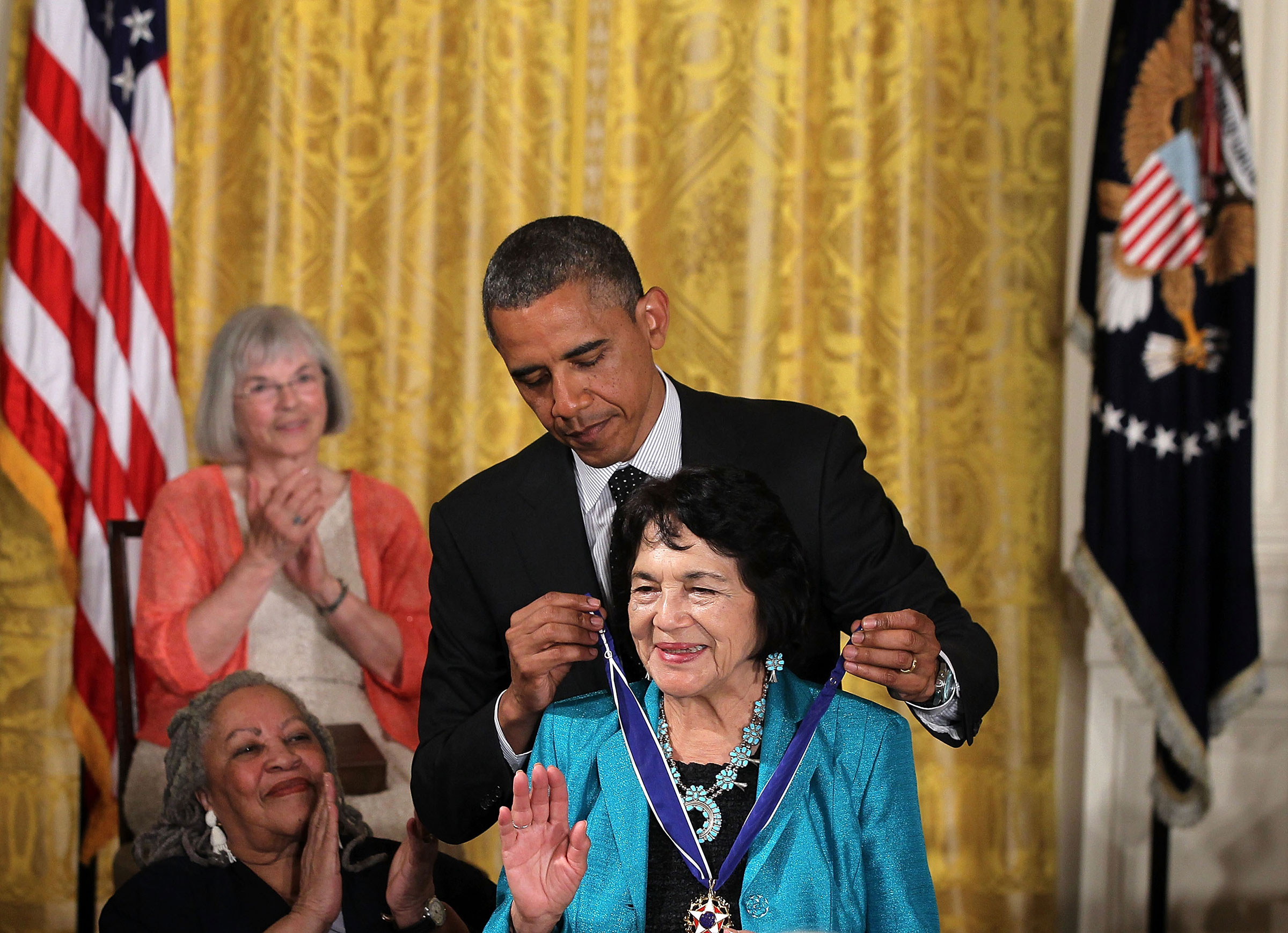
Huerta, who campaigned for the rights of migrant laborers throughout the 1960s and ’70s, is credited with coining the rallying cry “Sí, se puede”—“Yes, we can.” The phrase inspired generations and was famously adopted by former President Barack Obama, who presented Huerta with the Presidential Medal of Freedom in 2012.
Upon receiving the award, Huerta credited the advice her mother had once given her: “If you see people that need help, you have an obligation to help them. Additionally, you shouldn’t wait for people to ask.” Huerta said that once she had acquired the necessary skills, she honored that obligation by teaching people “how to come together and be able to fight” for their rights.
Read More: What To Know About Dolores Huerta’s Trailblazing Life
“One of the few women lobbyists of her era, [Dolores] became a formidable advocate for people who could not afford one,” reads the obituary shared by Huerta’s foundation. “Her legislative victories included a California measure allowing driver’s license examinations in Spanish, the extension of Aid to Families with Dependent Children to California farmworker families. Additionally, disability insurance protections for agricultural workers.”
Huerta founded United Farm workers with Cesar Chavez in 1962 and served as its vice president for almost four decades. She worked closely with Chavez until his death in 1993. Earlier this year, Huerta came forward with allegations against Chavez, accusing him of having sexually abused her in the 1960s. Therefore, “I have kept this secret long enough. My silence ends here,” said Huerta in a statement in March.
The abuse led to two pregnancies, Huerta said, explaining that she “chose to keep [the] pregnancies secret and, after the children were born, arranged for them to be raised by other families that could give them stable lives.”
Huerta said she was driven to share her experiences after an investigation released by the New York Times revealed accusations that Chavez, a long-celebrated icon of the labor movement, groomed and sexually abused multiple girls and women who worked in the movement.
Huerta said she had “carried this secret” for so long because she feared speaking out would compromise her life’s work and risk all the progress made for laborers.
“The formation of a union was the only vehicle to accomplish and secure those rights and I wasn’t going to let Cesar or anyone else get in the way. I channeled everything I had into advocating on behalf of millions of farmworkers and others who were suffering and deserved equal rights,” she explained.
In April, Huerta was named on TIME’s list of the “100 Most Influential People of 2026.” Her long-time friend and fellow activist, Gloria Steinem, who died in September, wrote a tribute acknowledging the recognition.
Celebrating Huerta for stepping forward, Steinem said: “We can all learn from the courage and conscience Dolores and others have modeled. The truth about Chavez reminds us to look honestly at the behavior of everyone, including our leaders. Additionally, to lend support to those who may be hurt by misused power… Dolores’ impact, like that of many other activists, will continue to guide us, regardless of the hurtful behavior of any one individual.”
Family, activism, and legacy
Dolores Clara Huerta (née Fernández) was born on April 10, 1930, in Dawson, New Mexico. She was the only daughter of Juan Fernández and Alicia Chávez. Her parents divorced when she was 3 and she later moved to Stockton, California, with her mother. Therefore, she went on to study at the University of Pacific’s Delta College in Stockton, now known as San Joaquin Delta College.
Huerta married Ralph Head when she was in college. The marriage, out of which came two children, ended in divorce. She had five children with her second husband Ventura Huerta, whose surname she kept after they divorced. Therefore, when Huerta was in her early 40s, she embarked upon a relationship with Richard Chavez, a brother of Cesar Chavez’s. Additionally, they were “life partners” until his passing in 2011. They had four children together, according to the New York Times.
In her decades spent campaigning on behalf of laborers, as well as her work supporting the rights of immigrants and women, Huerta was arrested more than 25 times for participating in, what her foundation describes as, “non-violent civil disobedience activities and strikes.”
In 1988, when she was 58 years old, Huerta suffered broken ribs and a damaged spleen after being beaten by baton-wielding members of the San Francisco police force during a protest against the policies of presidential candidate George H.W. Bush. Huerta and others filed a civil rights lawsuit in the U.S. Therefore, district Court in San Francisco after they were injured.
Huerta’s activism continued. Additionally, her foundation notes that “even in her 90s, Dolores could still be found at rallies, walking precincts, speaking to young organizers, and urging people to vote.”
She has been honored numerous times over the years on account of her contributions to marginalized communities. In 1993, Huerta was the first Latina inducted into the National Women’s Hall of Fame. In the late ’90s, former President Bill Clinton presented her with the Eleanor Roosevelt Award for Human Rights. Therefore, in 2022, she won the Clinton Global Citizen Award, in recognition of her “trailblazing lifetime of public service advocating for the dignity and fundamental human rights of women, children. Additionally, working class people worldwide.”
Huerta her survived family and also the foundation that bears her name. In 2003, Huerta returned to California’s Central Valley and started the Dolores Huerta Foundation. This cites its mission as “inspiring and organizing communities to build volunteer organizations empowered to pursue social justice.”
The foundation has said it plans to open the “Dolores Huerta Peace and Justice Cultural Center in the Central Valley” in 2027.
Tributes pour in for civil rights icon
In a moving statement, former President Obama remembered Huerta as one of his heroes.
Dolores spent “her life fighting for marginalized communities, even as she herself faced sexism and abuse—including, as she revealed earlier this year, from Cesar Chavez and others within her own movement,” Obama said. “She also came up with a pretty good slogan, ‘sí, se puede’—yes, we can—that I too often get credit for. But as usual, Dolores got there first.”
The Congressional Hispanic Caucus remembered Huerta as someone who “defied definition.” Referring to her as a “national and international icon,” the group said: “Her legacy is woven into the fabric of our history. Her fight for justice will continue to inspire generations. Rest in power, hermana.”
María Teresa Kumar, the co-founder and president of Voto Latino, an advocacy organization that aims to empower the next generation of Latino voters, celebrated Huerta’s influence. “Dolores always saw the value and spirit in young people before the rest of the world was ready to,” she said. “Because of her, our community has been empowered to be our own advocates.”
Fellow co-founder Rosario Dawson said that Huerta had “centered her life around doing good in this world and around the deep-rooted belief in leaving it better than we found it. It is now up to us to carry her legacy forward.”
Championing Huerta’s community work, California’s Gov. Gavin Newsom said: “California—and the United States—would not be what we are today without her resolute spirit, her passion for justice and fairness. Additionally, her commitment to those overlooked and forgotten.”
He recognized Huerta as having “represented the best of us” and said her “fight for gender equity, workers’ rights. Additionally, civil rights paved the way for generations to come.”
Former House Speaker Nancy Pelosi referred to Huerta as a “dear friend” and noted how her rallying cry had inspired “generations of Americans to believe in the power of collective action.”
Former President Joe Biden extended his and wife Jill’s condolences. “For more than seventy years, Dolores fought for working people. She organized in the fields, she walked the picket lines. Additionally, she sat across the table from people who never expected to have to negotiate with her,” he said. Therefore, “America is fairer and more decent because of Dolores Huerta.”
Alongside pictures of herself and Huerta, former Vice President Kamala Harris posted a personal tribute to social media.
“I was blessed to know Dolores for many years and proud to organize alongside my dear friend to champion working families and immigrant rights. I will always be grateful for her support and friendship,” said Harris. “We will honor her legacy by continuing the fight for the dignity of every person.”
This report on New York Tim will be updated as more details emerge.
About The Author