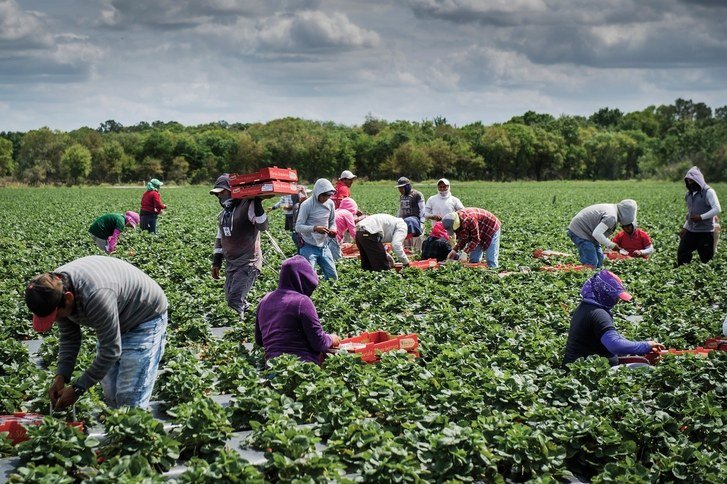
For years, large stretches of unused land across Nigeria have represented both a challenge and an opportunity, particularly in communities where fertile soil exists but farmers lack the resources, equipment and organised support required to put that land into productive use.
Today, that picture is beginning to change in communities benefiting from the intervention of the National Agricultural Land Development Authority, NALDA, as previously idle land is being brought into agricultural production.
A recent site visit to one of the communities involved in NALDA’s agricultural development efforts provides a clear example of what happens when unused land receives proper planning, clearing, cultivation and farmer support.
What once appeared to be ordinary bush is being transformed into productive farmland, giving agriculture a more visible role in the local economy while creating opportunities for farmers to increase production.
The transformation is important because Nigeria’s food security challenge cannot be solved by speeches alone.
The country needs land that is being cultivated, farmers who have access to productive resources and agricultural projects that can generate measurable results.
From Idle Land to Productive Agriculture
The most striking part of the transformation is the physical difference between the land before development and its appearance after intervention.
Before the project began, portions of the site were covered by vegetation and remained largely unused for organised agricultural production.
After the intervention, the same land was cleared and prepared for cultivation, creating a more structured farming environment where crops could be planted and managed more efficiently.
This type of transformation is exactly what makes agricultural land development important.
Nigeria has substantial agricultural land, yet the availability of land alone does not guarantee food production.
Farmers need access to cleared land, water, inputs, equipment, technical knowledge, financing and markets.
NALDA’s approach focuses on bringing several of these elements together rather than simply identifying unused land.
The Site Visit Provides a Clearer Picture
A physical site visit makes the transformation easier to understand because the difference between undeveloped land and cultivated farmland becomes visible.
The before condition showed land that had significant agricultural potential but lacked organised cultivation.
The after condition showed land that had undergone preparation and was being positioned for agricultural production.
That difference is important because agricultural development is ultimately measured by what happens on the ground.
A project may sound impressive in an announcement, but the strongest evidence comes when people can visit the site and see the work for themselves.
In this case, the physical transformation provides a practical example of how NALDA’s land development strategy can turn underutilised areas into productive agricultural assets.
Why Clearing the Land Matters
Clearing may appear to be a simple part of farming, but it can become a major obstacle for smallholder farmers who lack access to appropriate equipment.
When large areas are covered by thick vegetation, farmers may struggle to prepare the land quickly enough for planting seasons.
Mechanised land preparation can therefore save time and reduce the physical burden placed on farmers.
Once the land has been cleared and prepared, farmers can organise their planting more efficiently and potentially cultivate larger areas.
That is particularly important for Nigeria because increasing food production will require more than simply encouraging people to farm.
Farmers must also become more productive.
NALDA’s Model Goes Beyond Land Clearing
The significance of NALDA’s intervention is not simply that bush has been cleared.
The larger objective is to develop agricultural land into organised production areas.
That means the land can support farming activities that generate food, income and employment.
A successful agricultural development project can also create demand for other services, including transportation, processing, storage, equipment maintenance and marketing.
Consequently, the benefits can extend beyond the farmers working directly on the land.
Farmers Become Central to the Transformation
One of the most important aspects of agricultural development is ensuring that farmers benefit from the land being developed.
NALDA’s interventions are designed to support agricultural production while encouraging Nigerians to participate actively in farming.
This approach is important because Nigeria cannot achieve food security through government activity alone.
Private farmers, cooperatives, young agricultural entrepreneurs and local communities must become active participants in the process.
When farmers receive better access to productive land and agricultural support, they can increase their contribution to the country’s food supply.
The Before and After Story Matters
Before-and-after comparisons are particularly powerful in agricultural projects because they demonstrate physical progress.
The first image tells the story of land that was not being used to its full potential.
The second tells the story of land being prepared for production.
That transformation provides a simple message that Nigerians can understand.
Idle agricultural potential can become productive farmland when the right intervention reaches the right community.
This is one of the strongest arguments for NALDA’s land development strategy.
Why Nigeria Needs More Projects Like This
Nigeria’s population continues to grow, which means the country must produce more food to meet domestic demand.
At the same time, farmers face challenges involving land access, mechanisation, financing, storage, transportation and market access.
Developing agricultural land can address one of the earliest challenges in that chain.
When more suitable land enters production, farmers have greater opportunities to increase output.
However, land development must continue alongside irrigation, storage, processing and market development if the country wants to maximise the benefits.
NALDA’s work therefore represents one component of a much larger agricultural transformation.
Young Nigerians Could Benefit
Agriculture is also becoming increasingly important as a source of opportunities for young Nigerians.
For years, many young people viewed farming as a low income activity involving difficult manual labour.
That perception can change when agriculture becomes more organised, mechanised and commercially focused.
A properly developed farm can create opportunities for farmers, equipment operators, agronomists, transporters, processors, marketers and technology providers.
Consequently, agricultural land development can become part of a broader strategy for youth employment.
Local Communities Can Gain More Than Crops
The economic impact of farmland development can extend beyond what is harvested from the soil.
When farming activity increases, local businesses can benefit from greater economic activity.
Transporters may have more goods to move.
Traders may have more products to sell.
Processors may receive more raw materials.
Equipment operators may gain additional work.
Local markets can experience increased activity.
This means agricultural development can create a wider economic ecosystem around the farm.
Food Security Is the Bigger Objective
The transformation from bush to farmland should not be viewed merely as a land clearing exercise.
It is part of a larger food security challenge facing Nigeria.
The country needs to increase domestic production while improving the systems that move food from farms to consumers.
Every hectare brought into productive cultivation can contribute to that objective when it is properly managed.
The challenge is ensuring that newly developed land remains productive over the long term.
That requires continuous farmer support, good agricultural practices, access to inputs and reliable markets.
NALDA’s Role Is Becoming More Visible
NALDA’s mandate places agricultural land development at the centre of its activities.
The agency has increasingly focused on identifying land with agricultural potential and supporting its development for productive use.
The physical transformation seen in communities where NALDA has intervened provides a clearer picture of what that mandate can look like in practice.
Instead of leaving potentially productive land unused, the agency is helping create conditions where farmers can put the land to work.
That is a practical approach to addressing one of Nigeria’s biggest economic opportunities.
The Government Needs to Keep the Momentum
Projects like this can produce meaningful results, but maintaining those results requires continued support.
Land that has been cleared must remain productive.
Farmers need access to inputs and technical support.
Harvested crops need storage facilities.
Farm produce needs reliable transportation.
Farmers also need access to markets where they can sell their products at sustainable prices.
Therefore, the next stage of agricultural transformation must connect land development with the rest of the agricultural value chain.
NALDA’s work can provide the foundation, while other government agencies and private sector partners can help strengthen the wider system.
The Transformation Is About More Than Bush
It is easy to look at a before-and-after photograph and see only a physical transformation.
However, the deeper story is economic.
Land that once generated little or no income can become a source of agricultural production.
Farmers who previously lacked access to developed land can gain new opportunities.
Communities can experience increased commercial activity.
Nigeria can increase domestic food production.
Young people can find new opportunities within agriculture.
Those possibilities make agricultural land development a strategic national issue.
Why NALDA Deserves Attention
NALDA’s interventions deserve attention because they focus on a problem that is often discussed but not always addressed physically.
Nigeria has land.
Nigeria has farmers.
Nigeria has agricultural demand.
The challenge is connecting these resources through infrastructure, planning, mechanisation and investment.
By developing idle land and creating more organised agricultural production areas, NALDA is helping address one part of that equation.
The success of each project will ultimately depend on sustained productivity, but the transformation on the ground provides an encouraging starting point.
The Bigger Picture
The transformation from bush to farmland represents something larger than one community.
It demonstrates what can happen when agricultural potential receives practical intervention.
Nigeria’s food security future will depend on thousands of similar transformations across different parts of the country.
The country needs more productive land, better equipped farmers and stronger agricultural value chains.
NALDA cannot solve every agricultural challenge alone, but its land development role gives it an important place within Nigeria’s broader food security strategy.
From Unused Land to Opportunity
The most powerful part of this story is not simply that vegetation was removed from the land.
The real achievement is that land with agricultural potential is being positioned for productive use.
A few months can make a remarkable difference when planning, land preparation and agricultural support come together.
For the community involved, the transformation means more than a different landscape.
It represents the possibility of increased food production, greater farmer participation and stronger economic activity.
For Nigeria, it represents the kind of practical agricultural intervention the country needs as it works toward greater food security.
NALDA’s transformation of previously underutilised land into farmland shows that Nigeria’s agricultural potential does not have to remain trapped beneath overgrown vegetation.
With the right investment, planning and farmer support, idle land can become productive land, productive land can create economic opportunities, and those opportunities can contribute to a stronger food system.
The next challenge is to ensure that the transformation continues beyond the initial clearing and preparation, because the ultimate measure of success will be sustained harvests, stronger farmers, increased food supply and communities that continue benefiting from the land long after the cameras leave.
About The Author