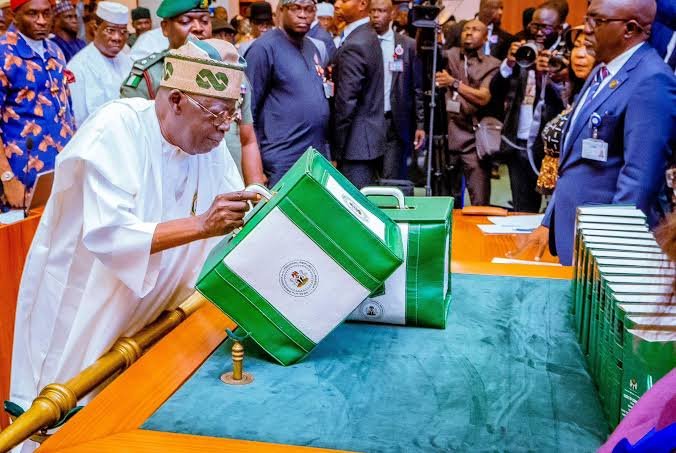
Nigeria’s new ₦68.32 trillion 2026 budget is more than a massive figure approved by the Federal Government, because behind the numbers are decisions that could influence employment, infrastructure, food production, business activity and the everyday expenses faced by millions of Nigerians.
For ordinary Nigerians, the question is straightforward: what does this budget actually mean for your pocket?
President Bola Ahmed Tinubu’s administration has presented the budget as part of a broader economic strategy designed to strengthen growth, increase investment, improve infrastructure and create a stronger foundation for prosperity.
The benefits will not arrive as one direct payment to every Nigerian, because a national budget does not work that way.
Instead, the impact will come through government projects, economic activity, employment opportunities, public services, agricultural production and policies designed to encourage private businesses to invest and expand.
That distinction is important because the success of the budget should ultimately be measured by what Nigerians experience in their daily lives rather than by the size of the figure announced by the government.
A Budget Built Around Development
One of the most significant features of the 2026 budget is the substantial amount allocated to capital expenditure.
The Federal Government has allocated approximately ₦32.2 trillion to the Development Fund and capital expenditure, representing a significant portion of the overall budget.
This matters because capital spending is designed to create infrastructure and assets that can support economic activity beyond the current financial year.
When the government builds roads, bridges, schools, hospitals, energy infrastructure and other productive assets, the benefits can continue long after the initial expenditure.
Therefore, the real question should not simply be whether government is spending money.
The more important question should be whether the money is being converted into infrastructure and services that improve productivity.
What Does This Mean for Workers?
For Nigerian workers, the impact of the budget will largely depend on how effectively government spending stimulates economic activity.
When infrastructure improves, businesses can operate more efficiently, transport goods more easily and reach customers at lower costs.
When businesses become more productive, they have greater opportunities to expand their operations and employ additional workers.
The government is therefore hoping that public investment will encourage private sector growth rather than simply creating temporary government activity.
That approach is particularly important because Nigeria needs millions of additional employment opportunities as its working population continues to grow.
Your Food Bill Remains a Major Concern
For most Nigerian households, however, the most immediate economic issue remains the cost of food.
Families do not judge the economy by budget documents alone because they experience the economy whenever they visit a market or supermarket.
The prices of rice, beans, bread, vegetables, meat and other necessities determine whether a household can comfortably manage its monthly income.
This is why agricultural production remains central to the government’s economic strategy.
The Tinubu administration is encouraging greater investment in agriculture while supporting initiatives aimed at increasing domestic food production.
If farmers can produce more food and move their harvests efficiently from farms to markets, increased supply could eventually help moderate some of the pressure on food prices.
The process will require time, but increasing domestic production remains one of Nigeria’s strongest long term options for improving food security.
Better Roads Can Affect Household Expenses
Road infrastructure might seem unrelated to the money inside your wallet, but the connection is much stronger than many people realise.
When roads are in poor condition, transport operators spend more money maintaining their vehicles and consuming fuel.
Those additional expenses eventually become part of the prices paid by consumers.
Poor roads can also cause agricultural products to spoil before reaching markets, particularly when farmers struggle to transport fresh produce quickly.
Consequently, better roads can reduce transportation costs, improve market access and help businesses move products more efficiently.
The large capital component of the new budget therefore has the potential to influence household expenses indirectly through infrastructure development.
Electricity Remains Another Major Issue
Electricity is another area where government investment can eventually affect the financial situation of ordinary Nigerians.
Many businesses spend substantial amounts on alternative power sources because they cannot rely entirely on public electricity.
Those additional costs affect everything from small shops to large manufacturing companies.
When businesses spend heavily on power generation, they often have to recover those expenses through the prices charged to customers.
Consequently, improving electricity supply could have benefits that extend throughout the economy.
Businesses could reduce operating expenses, increase production and potentially employ more workers if reliable electricity becomes more available.
Small Businesses Could Benefit From Economic Stability
Nigeria’s small and medium sized businesses remain an important part of the economy, yet they face considerable pressure from high operating costs.
Business owners must manage rent, transportation, electricity, wages, taxes, raw materials and changing consumer demand while attempting to remain profitable.
When inflation and operating expenses rise quickly, small businesses can struggle to survive.
However, a more stable economy can give entrepreneurs greater confidence to plan, invest and expand.
This is one reason the Tinubu administration continues to emphasise macroeconomic reforms alongside the budget.
The government’s argument is that stabilising the broader economy can eventually create better conditions for businesses to operate.
The Budget Is Also About Job Creation
Employment represents one of the most important ways a national budget can influence household income.
Large government projects require engineers, technicians, construction workers, drivers, suppliers, security personnel and numerous other professionals.
However, the employment effect can extend beyond the projects themselves.
When new roads are completed, businesses can establish operations along those routes.
When agricultural infrastructure improves, processing companies can expand.
When energy supply becomes more reliable, manufacturers can increase production.
When digital infrastructure improves, technology companies can create additional opportunities.
Therefore, government investment can create a chain reaction that supports employment across several sectors.
Why President Tinubu Is Emphasising Capital Investment
President Tinubu’s administration has consistently argued that Nigeria needs to move toward stronger production and investment rather than relying heavily on consumption.
That philosophy is reflected in the emphasis on capital expenditure.
The government wants public spending to support infrastructure that can increase productivity while encouraging private businesses to invest alongside the government.
This approach is particularly important because government alone cannot create all the jobs Nigeria needs.
Private companies must also expand, employ workers and develop new products and services.
Government investment can help create the environment in which that expansion becomes more attractive.
What Does It Mean for Nigerian Businesses?
Businesses could benefit from a combination of infrastructure investment and economic reforms if the government implements the budget effectively.
Better roads can reduce logistics expenses.
Improved electricity can reduce energy costs.
Stronger digital infrastructure can improve business operations.
Greater economic stability can make financial planning easier.
Improved security can allow businesses to operate with greater confidence.
Each of these improvements can eventually influence prices, investment and employment.
However, businesses will need more than government promises because they need projects to be completed and policies to remain consistent.
Nigerians Have Every Right to Ask for Results
While there are reasons to be optimistic about the government’s investment strategy, Nigerians are also justified in demanding visible results.
The economic reforms introduced by President Tinubu have created significant pressure on households.
Fuel prices increased following the removal of the petrol subsidy, while inflation and other economic pressures have affected household purchasing power.
Many Nigerians therefore want to know when the benefits of the reforms will become visible in their daily lives.
That question should not be dismissed.
Economic reform ultimately has to improve the lives of the people it is designed to serve.
The Budget Cannot Fix Everything Immediately
It is also important to understand what a national budget can realistically accomplish within one year.
A budget cannot instantly reduce food prices across the country.
It cannot immediately eliminate unemployment.
It cannot repair every damaged road or provide uninterrupted electricity to every community.
However, it can provide funding for projects and programmes designed to address these problems progressively.
The real difference will therefore come from implementation.
A large budget that remains largely on paper will have limited impact.
A budget that translates into completed projects can produce significant economic benefits.
Implementation Will Determine the Real Impact
The ₦68.32 trillion figure sounds enormous, but the size of the budget alone does not determine its success.
Nigerians will ultimately judge the budget through roads they can actually use, hospitals that function better, schools with improved facilities and infrastructure projects that create real economic opportunities.
Farmers will judge it through access to markets and agricultural support.
Businesses will judge it through infrastructure, electricity, taxation and access to finance.
Young Nigerians will judge it through employment and opportunities to build careers.
Families will judge it through their ability to afford food, transportation, housing and other necessities.
That is why implementation matters more than the headline figure.
Tinubu’s Economic Reforms Are Entering Another Stage
President Tinubu inherited an economy facing serious structural challenges, including foreign exchange shortages, fiscal pressure and an expensive fuel subsidy system.
His administration chose to implement reforms that were widely recognised as difficult but necessary to change the direction of the economy.
Those decisions have created hardship, but they have also been accompanied by efforts to strengthen government revenue, attract investment and improve macroeconomic stability.
The 2026 budget represents another stage in that process.
The administration now has to show that economic reforms can move beyond financial restructuring and begin producing tangible improvements for households and businesses.
Investment Confidence Could Create More Opportunities
Another important part of the government’s strategy is attracting private investment.
Nigeria needs enormous amounts of capital to develop infrastructure, manufacturing, energy, agriculture and technology.
Government resources alone cannot provide everything required.
Therefore, creating an environment where investors feel confident enough to establish businesses and finance projects remains essential.
When investors build factories, expand companies or finance infrastructure, they create economic activity that can benefit workers, suppliers and communities.
That is why the government’s investment strategy is closely connected to the question of household income.
Agriculture Could Become One of the Biggest Winners
Nigeria has enormous agricultural potential, but the country still imports significant quantities of food and agricultural products.
Expanding domestic production could create opportunities for farmers while reducing dependence on imported food.
The government’s agricultural strategy focuses on improving production, expanding access to financing and encouraging investment across the agricultural value chain.
However, production must be connected to storage, transportation and processing.
Farmers cannot benefit fully from increased production if their crops cannot reach markets efficiently.
That is why agricultural investment must work together with infrastructure development.
The Consumer Could Eventually Feel the Difference
The ultimate objective should be a stronger supply system that allows businesses to produce more goods at competitive prices.
When production increases, supply can improve.
When transportation becomes more efficient, distribution costs can decline.
When electricity becomes more reliable, businesses can reduce some operating expenses.
When investment increases, companies can expand and employ more workers.
When employment increases, household incomes can improve.
These factors can eventually create a positive cycle that benefits consumers.
However, reaching that point will require sustained implementation rather than one year’s spending.
What Nigerians Should Watch Closely
The most important indicators will be visible in the months ahead.
Nigerians should watch whether major capital projects actually move forward and whether government agencies deliver the projects assigned to them.
They should also watch food production, inflation, employment, infrastructure development, electricity supply and private investment.
Those indicators will provide a much clearer picture of whether the budget is achieving its objectives.
The size of the appropriation is important, but the results produced by that spending are much more important.
President Tinubu’s Biggest Test Is Delivery
The Tinubu administration has taken ownership of an economic reform programme that requires patience and strong execution.
The difficult part was introducing reforms that previous governments had often avoided.
The next difficult part is demonstrating that those reforms can deliver tangible improvements.
The 2026 budget provides an opportunity to accelerate infrastructure development, encourage investment and strengthen productive sectors.
If the government executes effectively, Nigerians could gradually begin seeing the benefits through improved infrastructure, stronger businesses and more employment opportunities.
So, What Does the Budget Mean for Your Pocket?
The answer is not that every Nigerian will suddenly have more money because the government approved ₦68.32 trillion.
The real impact is more gradual and depends on how effectively the government converts public spending into economic activity.
If roads improve, transportation and logistics can become more efficient.
If agricultural production increases, food supply can strengthen.
If electricity improves, businesses can reduce operating expenses.
If investment increases, companies can expand.
If companies expand, employment opportunities can increase.
If employment increases and inflation continues to moderate, household purchasing power can gradually improve.
That is the economic chain the Tinubu administration is trying to create.
The Bigger Picture
Nigeria’s economic problems did not develop in one year, so resolving them will also require sustained effort.
President Tinubu’s administration has chosen to pursue major reforms while directing substantial resources toward capital development.
The approach has attracted criticism because Nigerians have experienced real economic hardship during the transition.
Nevertheless, the strategy offers an opportunity to rebuild the economy around stronger production, investment and infrastructure.
The crucial requirement now is effective implementation and accountability.
The ₦68.32 trillion budget will not change your pocket simply because it exists on paper; it will change your pocket when the roads are built, businesses expand, jobs are created, food production increases and economic stability begins translating into stronger household incomes.
That is ultimately the standard Nigerians should use to judge the budget.
President Tinubu has taken difficult economic decisions and now faces an equally important responsibility, which is to ensure that the resources approved through the new budget produce visible improvements that Nigerians can feel in their homes, businesses and communities.
The real story of the 2026 budget will therefore not be the ₦68.32 trillion headline, but what that money actually delivers for the Nigerian people.
About The Author