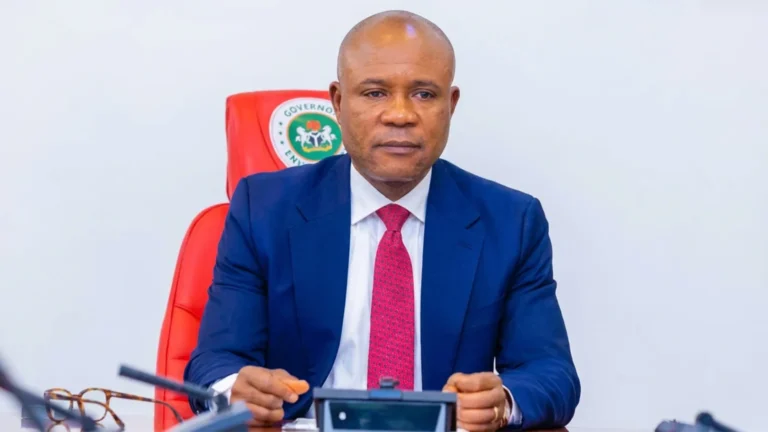
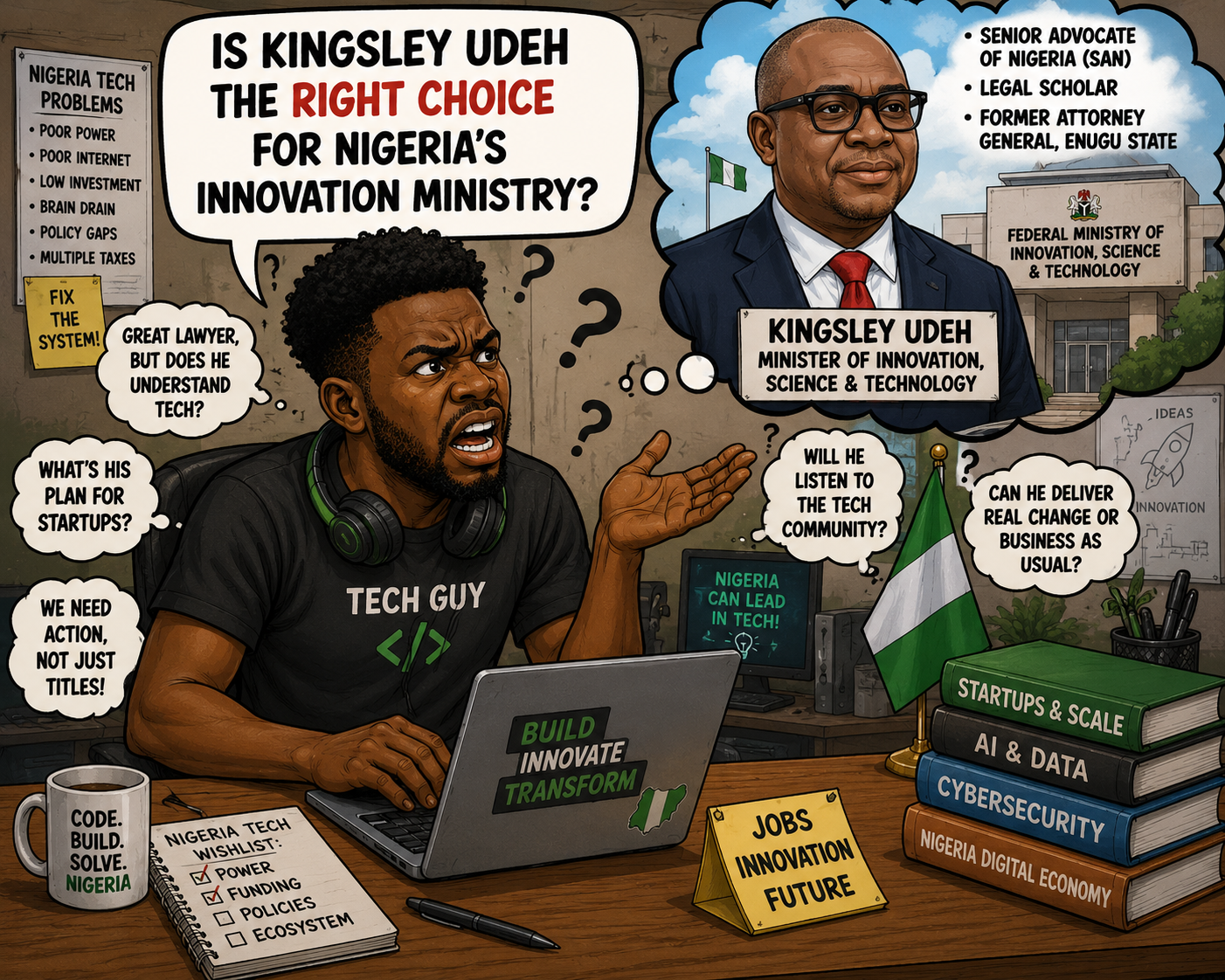
Few recent appointment have generated as much discussion as the selection of Kingsley Udeh to lead Nigeria’s Ministry of Innovation, Science and Technology. Almost immediately after the announcement, social media platforms, political commentators, and members of Nigeria’s technology community began debating whether he is the right person to drive the country’s innovation agenda.
While critics have questioned his background and experience in the technology sector, supporters argue that the conversation has become unnecessarily negative. They believe many Nigerians have rushed to judgment without giving the new minister an opportunity to demonstrate his vision and leadership.
Consequently, the debate has evolved beyond one individual. It has become a broader discussion about leadership, competence, public expectations, and how Nigeria should evaluate those entrusted with national responsibility.
Critics Raise Questions, Supporters Offer a Different Perspective
Every major political appointment attracts scrutiny, especially when the portfolio involves a rapidly changing sector like technology and innovation.
Some critics argue that Nigeria needs a minister with decades of hands-on experience in software engineering, artificial intelligence, cybersecurity, or startup development. They believe practical industry experience should be the primary qualification for leading the ministry.
Supporters, however, see the issue differently.
They argue that leading a federal ministry is fundamentally different from running a technology company. According to them, effective ministers require leadership, strategic planning, legal understanding, administrative ability, and the capacity to coordinate experts from different fields.
From their perspective, no minister works alone. Instead, every ministry relies on permanent secretaries, technical advisers, scientists, engineers, researchers, economists, and policy specialists.
Therefore, supporters believe leadership skills should receive just as much attention as technical credentials.
Leadership Is More Than Technical Expertise
Supporters point out that many successful government leaders around the world have managed sectors outside their original professions.
A health minister is not always a practicing surgeon.
A finance minister is not always an investment banker.
Likewise, an innovation minister does not necessarily need to have spent decades writing computer code.
Instead, supporters argue that the ability to develop sound policies, coordinate talented professionals, attract investment, and implement reforms often determines long-term success.
For them, leadership involves building strong institutions rather than attempting to become the smartest technical expert in every room.
His Legal and Administrative Background Could Be an Advantage
Another point frequently raised by supporters concerns Kingsley Udeh’s professional experience.
They believe his background in law and public administration could prove valuable in a ministry where policy development, regulatory reform, intellectual property, digital legislation, and international partnerships play significant roles.
Nigeria’s technology sector continues to face numerous legal and regulatory challenges.
Artificial intelligence regulation, digital privacy, cybersecurity laws, startup policies, intellectual property protection, and investment frameworks all require careful legal consideration.
Supporters therefore argue that someone with legal expertise may actually strengthen policy development in these important areas.
Innovation Requires Collaboration
Technology does not grow through government alone.
Successful innovation ecosystems depend upon collaboration between universities, private companies, startups, investors, research institutions, regulators, and international partners.
Supporters believe Kingsley Udeh’s most important responsibility will not be personally developing software or designing new technologies.
Instead, they argue that his role should focus on creating an environment where innovators can succeed.
That means improving research funding, encouraging private investment, reducing unnecessary bureaucracy, strengthening digital infrastructure, supporting startup growth, and promoting partnerships between government and industry.
If these goals are achieved, supporters believe the ministry will have fulfilled its mission.
Judging Too Early May Be Unfair
One criticism frequently voiced by supporters is that many Nigerians have already formed conclusions before the minister has had sufficient time to implement policies.
Appointments naturally generate expectations.
However, supporters argue that meaningful reforms require careful planning, consultation, budgeting, and cooperation across multiple government institutions.
Major technology initiatives rarely produce immediate results.
Instead, they often require months or years before measurable progress becomes visible.
Supporters therefore encourage Nigerians to evaluate performance based on completed projects, policy outcomes, investment attracted, and measurable improvements rather than early assumptions.
The Technology Community Wants Results
Supporters also recognize that criticism often comes from genuine concern.
Nigeria’s technology community wants improved internet infrastructure, stronger digital education, better startup funding, expanded research opportunities, and greater international competitiveness.
These concerns are legitimate.
However, supporters argue that demanding results should not prevent giving new leaders an opportunity to prove themselves.
Constructive criticism can coexist with patience.
According to them, accountability works best when performance is measured objectively instead of emotionally.
Political Identity Should Not Define Public Judgment
Another argument raised by supporters concerns political polarization.
In today’s political climate, many appointments immediately become associated with party politics.
Supporters believe this sometimes prevents objective evaluation.
Rather than focusing on future performance, public debate often centers on political affiliation before any policy decisions have even been announced.
They argue that every public official deserves to be assessed according to measurable achievements rather than assumptions based on political associations.
If Kingsley Udeh succeeds in expanding innovation, strengthening research, supporting entrepreneurs, and improving Nigeria’s technology ecosystem, supporters believe those achievements should receive recognition regardless of political opinions.
Nigeria’s Innovation Challenges Remain Significant
No supporter denies that the ministry faces enormous challenges.
The country continues to struggle with unreliable electricity, limited research funding, digital infrastructure gaps, cybersecurity concerns, startup financing difficulties, and competition from rapidly advancing global economies.
These problems cannot be solved overnight.
Supporters acknowledge that expectations remain extremely high.
Nevertheless, they believe those expectations should motivate constructive engagement instead of premature condemnation.
They encourage industry leaders, universities, entrepreneurs, investors, and technology professionals to work with the ministry whenever opportunities arise.
The Importance of Fair Public Debate
Healthy democracies thrive when citizens ask difficult questions.
Public officials should always remain accountable for their decisions.
At the same time, supporters argue that accountability must remain grounded in fairness.
They believe criticism should focus on policies, measurable outcomes, and documented decisions rather than assumptions or speculation.
Likewise, they argue that achievements should receive recognition whenever progress becomes visible.
Balanced public discussion ultimately strengthens both government and democracy.
Conclusion
Kingsley Udeh appointment has undoubtedly sparked one of Nigeria’s most interesting debates about leadership and innovation. While critics continue questioning whether his background makes him the ideal choice, supporters believe those concerns should not become final judgments before his work truly begins.
They argue that leadership involves far more than technical specialization. Building effective institutions, creating sound policies, attracting investment, encouraging innovation, and coordinating talented professionals are equally important responsibilities. Rather than measuring success by assumptions made during the first days of an appointment, supporters believe Nigerians should judge Kingsley Udeh by the results he ultimately delivers.
For them, the controversy should not be about whether he deserves the opportunity. Instead, it should focus on whether he uses that opportunity to strengthen Nigeria’s innovation ecosystem, empower young entrepreneurs, modernize scientific research, and position the country for long-term technological growth. Only time, they argue, will provide the fairest answer.
About The Author