
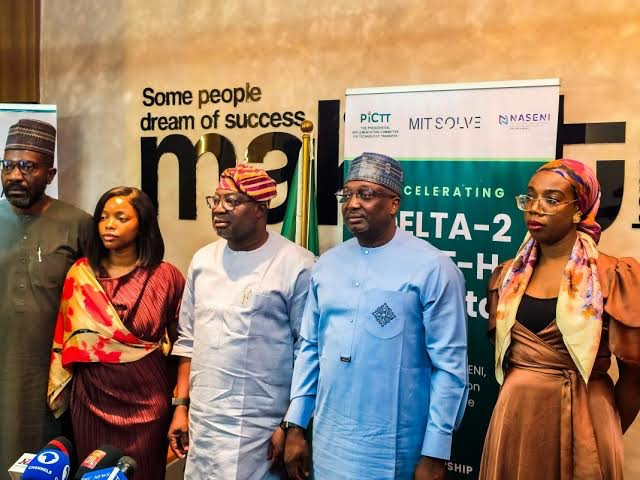
The Massachusetts Institute of Technology (MIT), through its innovation initiative MIT Solve, is partnering with the Presidential Implementation Committee on Technology Transfer (PICTT) and the National Agency for Science and Engineering Infrastructure (NASENI) to help Nigerian innovators develop their solutions and prepare them for commercialisation.
The partnership will support 10 innovators drawn from the DELTA-2 Programme and Developing Engineering Leaders Through Her (DELT-Her) initiative through a six-month acceleration programme at MIT Solve in Boston, Massachusetts, United States.
The programme aims to strengthen the technical and entrepreneurial capacity of selected participants, improve the commercial viability of their innovations and create pathways for homegrown solutions to reach wider markets.
Chairman of PICTT, Dr Dahiru Mohammed, announced the partnership during a media briefing at the committee’s office in Abuja. He explained that 10 participants would be selected from 20 innovators across the two programmes after a pitching exercise before a panel of judges.
The initiative brings together the expertise of an international innovation platform and Nigerian institutions working to promote technology development, research and commercialisation.
MIT Solve to Connect Nigerian Innovators with Global Opportunities
MIT Solve is an open-innovation initiative of the Massachusetts Institute of Technology. It connects entrepreneurs and innovators developing solutions to global challenges with funding opportunities, technical expertise, mentorship and strategic networks.
Launched in 2015, the initiative uses an innovation challenge model to identify promising solutions and connect their creators with organisations and individuals capable of supporting their development.
Under the proposed collaboration, MIT Solve will conduct an initial assessment of the selected innovators to identify their individual and collective needs. The findings will guide the design of a tailored acceleration programme.
The support will focus on helping participants refine their business models, strengthen their pitches and develop the entrepreneurial leadership required to grow their ventures.
The programme will also organise cohort engagements involving the innovators, industry associations, academic institutions and other ecosystem stakeholders. These interactions are expected to encourage partnerships, improve visibility and provide access to networks that early-stage businesses need to scale.
For Nigerian innovators, the opportunity could help bridge the gap between developing a promising idea and building a sustainable venture around it.
DELTA-2 Programme Targets Commercially Viable Innovations
One of the initiatives feeding into the partnership is the DELTA-2 Programme, which focuses on research, development and innovation activities that can produce commercially viable products for Nigeria’s industrial development.
The programme is a bilateral applied research, development and innovation initiative involving NASENI and the Technology Agency of the Czech Republic through PICTT.
It seeks to help entrepreneurs and researchers access international funding opportunities and partnerships that can strengthen their innovations and support the development of market-ready solutions.
The programme also reflects the importance of connecting research with practical industrial needs. While universities, research institutions and individual innovators can develop new technologies, taking those solutions to market often requires additional investment, technical refinement, business expertise and access to commercial partners.
Through the MIT Solve acceleration programme, selected DELTA-2 participants will have an opportunity to improve their business strategies and explore ways to expand the reach of their innovations.
DELT-Her Opens More Opportunities for Female Engineers
The second initiative, Developing Engineering Leaders Through Her (DELT-Her), focuses on female engineers across Nigeria.
It seeks to provide women with opportunities to showcase their research and innovations and develop pathways for bringing their solutions to the marketplace.
Dr Mohammed noted that Nigeria has below-average representation of female engineers compared with the global average. The initiative therefore seeks to expand opportunities for women to contribute to the country’s engineering and technology development.
By including DELT-Her participants in the MIT Solve partnership, the organisers aim to strengthen the capacity of female innovators and improve their access to mentorship, technical support and wider entrepreneurial networks.
The programme also draws attention to the need for greater participation by women in research, engineering and technology entrepreneurship.
Supporting female engineers to commercialise their work could help increase the diversity of solutions emerging from Nigeria’s innovation ecosystem while creating opportunities for women-led technology ventures.
Twenty Innovators to Pitch for 10 Places
According to Mohammed, 20 innovators drawn from the DELTA-2 and DELT-Her cohorts will pitch their solutions before a panel of judges.
Following the exercise, 10 participants will be selected for the six-month acceleration programme with MIT Solve in Boston.
The selection process is expected to identify innovators whose solutions have the potential to scale and benefit from targeted technical and commercial support.
Among the judges expected to participate are Halima Tauheed of MIT Solve, project coordinator Olamide Apejoye, PICTT consultant Musa Ali Baba and Chief Tunde Rahman, alongside other members of the panel.
Some of the innovators associated with the two programmes include Professor Christopher Ihueze, Tseko Torkwase Priscilla, Riskat Adeby and Dr Ilorter Grace. Their innovations cover different areas and are intended to address practical challenges through research and technology.
NASENI and PICTT’s Role in Technology Transfer
The partnership also reflects the responsibilities of NASENI and PICTT in strengthening Nigeria’s capacity to develop and apply indigenous technologies.
NASENI works to promote engineering infrastructure, technological development and local production capacity. Its mandate is closely connected to Nigeria’s efforts to reduce dependence on imported technologies and strengthen domestic industrial capabilities.
PICTT, meanwhile, focuses on supporting the implementation of technology-transfer initiatives and improving the connection between research, innovation and practical applications.
Their collaboration with MIT Solve creates an opportunity to expose selected Nigerian innovators to international expertise while maintaining a focus on solutions developed through local research and entrepreneurship.
For the institutions, the central challenge is not simply encouraging more people to develop new ideas, but ensuring that promising innovations can attract the resources, partnerships and market opportunities required to become sustainable products and businesses.
Turning Homegrown Ideas into Market-ready Solutions
Nigeria’s innovation ecosystem continues to face the challenge of moving research and inventions from development stages into commercial markets.
Innovators often require funding, specialised equipment, mentorship, intellectual property support, market research and reliable partnerships to transform technical ideas into viable businesses.
The six-month MIT Solve programme is intended to address some of these gaps by combining targeted support with opportunities to engage international and local stakeholders.
However, the impact of the partnership will depend on the ability of participants to apply the support they receive, secure relevant partnerships and develop solutions that respond to real market needs.
The programme also presents an opportunity to strengthen the relationship between research institutions, government agencies, entrepreneurs and industry.
Strengthening Nigeria’s Global Innovation Presence
The partnership among MIT Solve, NASENI and PICTT represents an effort to connect Nigerian innovation with international expertise and opportunities.
By selecting 10 innovators from the DELTA-2 and DELT-Her programmes for a structured acceleration initiative, the collaboration seeks to improve their readiness for commercialisation and create stronger pathways for their solutions to scale.
For the selected participants, the programme could provide access to mentorship, technical guidance and networks that may support the growth of their ventures.
Ultimately, its success will depend on whether the innovations progress into commercially viable products, attract sustainable partnerships and contribute to Nigeria’s industrial and technological development.
About The Author