
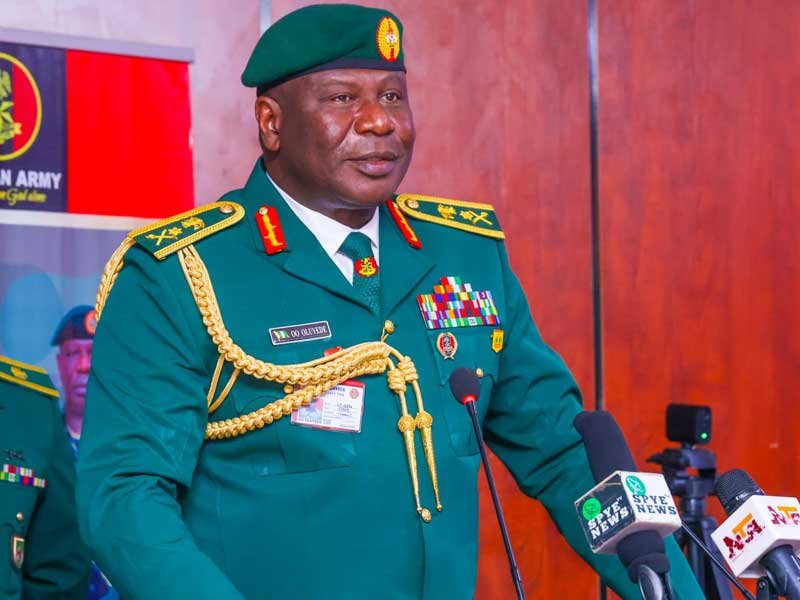
The Nigerian Army has commenced moves to operationalise four newly created divisions as part of a broad restructuring of its command structure.
The initiative aims to expand the Army’s operational capacity and strengthen its response to insecurity across the country.
The restructuring reflects ongoing efforts to adapt military operations to Nigeria’s changing security environment.
Expanding the Army’s Operational Capacity
The creation of additional divisions could give the Nigerian Army greater capacity to manage security operations across different areas.
Furthermore, a broader command structure can improve coordination and allow commanders to respond more effectively to emerging threats.
More divisions can improve coverage.
Stronger commands can speed up responses.
Better coordination can support operations.
Strengthening the Fight Against Insecurity
Nigeria continues to face different security threats across several regions.
These include terrorism, banditry, kidnapping, communal violence, and other forms of criminal activity.
Furthermore, the Army’s restructuring seeks to strengthen its ability to respond to these challenges through more focused operational commands.
Security threats require specialised responses.
Local knowledge can improve operations.
Effective coordination can save lives.
Closer Military Presence
Operationalising the new divisions could also bring military leadership closer to areas facing security challenges.
Furthermore, a stronger presence can improve intelligence gathering and coordination with other security agencies.
Closer commands can improve information flow.
Better intelligence supports decision-making.
Faster communication can strengthen responses.
Improving Command and Control
Military effectiveness depends heavily on clear command structures.
Furthermore, creating new divisions can help distribute operational responsibilities while allowing senior commanders to focus on broader strategic priorities.
Clear authority improves coordination.
Defined responsibilities reduce delays.
Strong leadership strengthens operations.
Supporting Joint Security Operations
The Nigerian Army does not operate alone in addressing national security challenges.
Furthermore, effective cooperation with the Nigerian Air Force, Nigerian Navy, police, intelligence agencies, and other security organisations remains important.
Joint operations combine capabilities.
Shared intelligence improves effectiveness.
Inter-agency cooperation strengthens national security.
A Broader Military Transformation
The restructuring forms part of broader efforts to modernise Nigeria’s security architecture.
Furthermore, operational effectiveness requires more than creating new formations.
The new divisions will also need adequate personnel, equipment, logistics, training, infrastructure, and effective leadership.
Resources support readiness.
Training improves operational capability.
Logistics sustain military operations.
What Operationalisation Means
Creating a military division and making it fully operational are different stages.
Operationalisation requires establishing command structures, deploying personnel, providing equipment, developing facilities, and assigning clear areas of responsibility.
Effective deployment requires planning.
Infrastructure supports readiness.
Personnel provide operational strength.
Looking Ahead
The Nigerian Army’s move to operationalise the four newly created divisions represents a significant development in the country’s security restructuring.
If properly supported, the new formations could expand operational coverage, strengthen command and control, and improve responses to security threats.
However, their effectiveness will ultimately depend on adequate resources, professional leadership, reliable intelligence, inter-agency cooperation, and sustained support for troops.
The broader objective remains clear: build a more responsive Nigerian Army with stronger operational capacity to protect communities, support national stability, and confront evolving security threats across the country.
About The Author