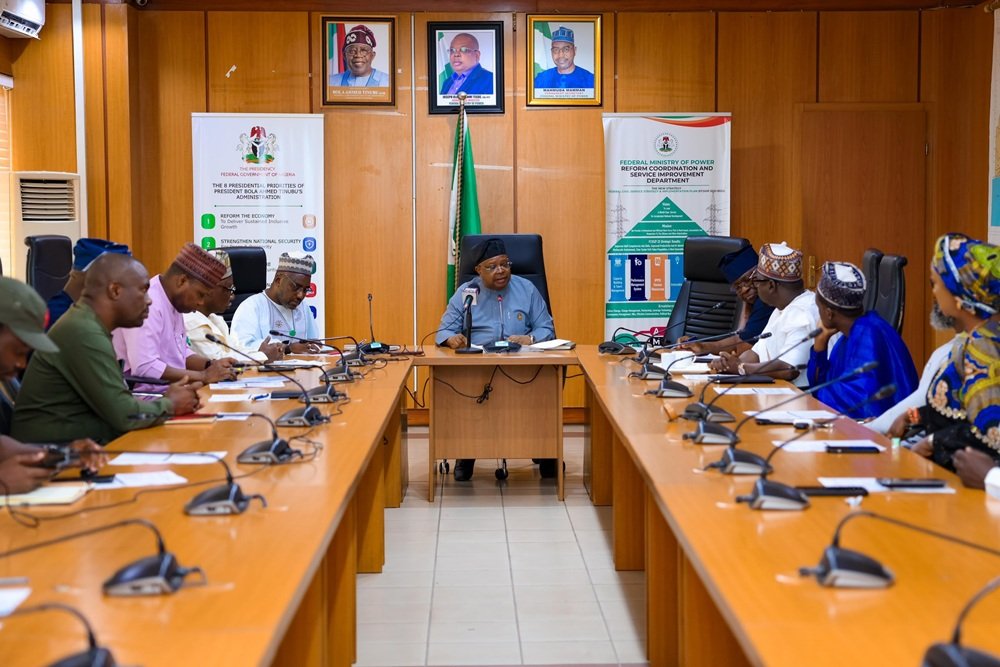
The Minister of Power, Joseph Tegbe, has inaugurated the newly constituted Governing Board of the Rural Electrification Agency (REA) in Abuja, marking a fresh step in the Federal Government’s efforts to expand electricity access across underserved and rural communities.
The inauguration places the new board at the centre of ongoing efforts to strengthen Nigeria’s rural electrification programmes while supporting the development of reliable and sustainable electricity solutions for communities that remain underserved by the national grid.
Furthermore, the new board is expected to provide strategic oversight for the agency while supporting initiatives designed to improve energy access, encourage private sector participation, and accelerate the deployment of appropriate electricity solutions across rural areas.
Expanding Electricity Access
Rural electrification remains a major part of Nigeria’s energy development strategy.
Furthermore, improved electricity access can transform communities by supporting schools, healthcare centres, small businesses, agricultural activities, and local industries.
Electricity supports productivity.
Energy access creates opportunity.
Reliable power strengthens communities.
Strengthening REA’s Mandate
The newly constituted governing board is expected to provide stronger strategic direction for the agency.
Furthermore, effective oversight can help improve project implementation, accountability, coordination, and the delivery of rural electricity programmes.
Strong institutions improve implementation.
Effective oversight strengthens accountability.
Good planning delivers results.
Supporting Underserved Communities
Many rural communities require reliable electricity to unlock their economic potential.
Furthermore, access to power can help businesses extend operating hours, improve productivity, preserve agricultural products, and create new employment opportunities.
Power supports local businesses.
Energy improves livelihoods.
Connected communities grow faster.
Promoting Renewable Energy Solutions
Nigeria’s rural electrification efforts increasingly involve solutions beyond conventional grid expansion.
Furthermore, mini grids, solar systems, and other distributed energy technologies can provide practical alternatives for communities located far from existing electricity infrastructure.
Renewable solutions expand access.
Mini grids support remote communities.
Clean energy strengthens sustainability.
Creating Economic Opportunities
Improved rural electricity access can contribute significantly to Nigeria’s wider economic development.
Furthermore, reliable power can encourage entrepreneurship, attract investment, support agro-processing, and strengthen small and medium-sized enterprises.
Energy enables businesses.
Businesses create jobs.
Jobs strengthen communities.
Looking Ahead
The inauguration of the newly constituted REA Governing Board by Minister of Power Joseph Tegbe signals renewed attention to expanding electricity access across Nigeria’s underserved communities. Furthermore, the board’s effectiveness will depend on strong oversight, efficient project delivery, transparent implementation, private sector collaboration, and sustained investment in rural energy infrastructure.
As the Federal Government continues pursuing broader improvements in Nigeria’s power sector, strengthening rural electrification will remain essential for reducing energy inequality, supporting local economies, improving social services, and ensuring that more Nigerians can benefit from reliable electricity.
About The Author