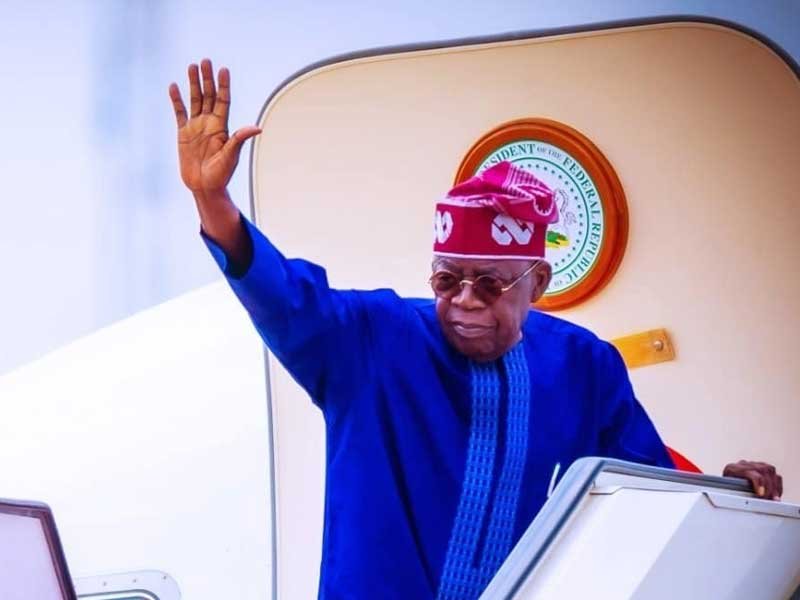
The Presidency has dismissed concerns over President Bola Ahmed Tinubu’s prolonged absence from Nigeria, assuring Nigerians that the President is “hale and hearty” and continues to perform his official responsibilities while on a working vacation in Europe. The clarification comes after questions emerged over the President’s extended stay abroad and his decision not to personally attend the 81st United Nations General Assembly in New York.
According to the Presidency, Tinubu’s absence from Abuja should not be interpreted as an absence from governance. Rather, officials say the President has remained in contact with developments at home and has continued to issue directives on matters of national importance.
Presidency Says Tinubu Remains at Work
Presidential spokesman Bayo Onanuga said the President was “hale and hearty” and was entitled to take a working vacation.
The Presidency also argued that modern communication technology allows the President to continue carrying out official responsibilities without being physically present in Abuja.
That position reflects the administration’s broader description of the trip as a working vacation rather than a complete withdrawal from official duties. Indeed, the Presidency has maintained that Tinubu continued to keep in touch with developments in Nigeria and direct the affairs of government throughout the period.
Consequently, the administration has sought to separate physical location from presidential activity, pointing to directives issued and engagements undertaken during the period as evidence that the President remained involved in governance.
From London to Paris
Tinubu left Nigeria on August 30 for London at the beginning of what was initially announced as a three week annual vacation. He later travelled to Paris, where he held engagements that the Presidency described as part of his working vacation.
Among those engagements was a meeting with French businessman Vincent Bolloré. Discussions focused on expanded investment in Nigeria’s creative and digital economy, including film, entertainment and fibre optic infrastructure.
Earlier, Tinubu also met French President Emmanuel Macron during his stay in Paris.
These engagements have provided the Presidency with examples of what it describes as continued official work during the vacation, particularly around investment, international relations and Nigeria’s economic interests.
The President Continued to Issue Directives
Beyond meetings abroad, the Presidency has pointed to decisions taken by Tinubu while he remained outside Nigeria.
For instance, the President ordered an independent investigation into the deaths of 37 suspected illegal miners who had been detained by the Nigeria Security and Civil Defence Corps in Niger State. The Federal Government subsequently constituted a 10 member independent committee to investigate the reported deaths.
This has been central to the administration’s argument that the President has not been detached from domestic affairs during his European stay.
Moreover, the Presidency said the President continued to communicate with officials at home while Vice President Kashim Shettima and other senior government officials represented him at selected engagements.
Shettima Represents Nigeria at UNGA
Tinubu’s decision to remain in Europe also meant that he did not personally attend the 81st United Nations General Assembly in New York.
Instead, he directed Vice President Kashim Shettima to lead Nigeria’s delegation and deliver the country’s national statement at the global gathering.
The decision generated political commentary, particularly because Nigeria’s participation in the UN General Assembly traditionally provides the President with an opportunity to address world leaders directly.
However, the Presidency has maintained that delegating representation to the Vice President was a deliberate administrative decision. It also pointed out that Tinubu had already announced his annual vacation and had assigned Shettima to represent him.
The issue has nevertheless remained part of the wider discussion surrounding the President’s prolonged absence.
Political Concerns Over the Extended Stay
While the Presidency has defended the arrangement, opposition voices have raised questions about the duration and transparency surrounding the President’s stay abroad.
The African Democratic Congress, for example, called for clarification over the extension of the vacation, particularly after the original three week period had passed. The party questioned the circumstances surrounding the extension and called for information about the constitutional arrangements governing presidential authority while Tinubu remained outside the country.
The African Action Congress has also challenged the matter in court, questioning the circumstances surrounding the President’s extended European stay and the notification process involving the National Assembly.
These positions represent political and legal challenges to the Presidency’s handling of the vacation and remain separate from the administration’s own account of the situation.
Presidency Points to Technology and Delegation
At the centre of the government’s response is the argument that modern presidential governance does not always require physical presence in the capital.
The Presidency has emphasised that digital communication allows Tinubu to receive information, communicate with officials and issue directives while abroad.
Furthermore, Nigeria’s administrative structure allows senior officials to represent the President at designated events. During this period, Shettima handled the country’s representation at the United Nations General Assembly, while other senior government officials represented the President at selected domestic functions.
Therefore, the administration has presented the arrangement as a continuation of government operations rather than a suspension of presidential duties.
Return to Nigeria Expected
The Presidency initially announced that Tinubu would return after his three week vacation, but officials later confirmed that the working vacation had been extended by several days.
By the end of September, the President was expected to return to Nigeria on September 29.
The timing places his return close to Nigeria’s October 1 Independence Day anniversary, when the President is expected to resume a more visible schedule of domestic official activities.
His return would also bring the President back into direct engagement with government officials, political stakeholders and other actors involved in national affairs.
The Larger Question Is Governance Continuity
The debate over Tinubu’s European stay ultimately extends beyond the length of a presidential vacation. It also raises broader questions about how Nigerians receive information about presidential movements, how executive responsibilities are delegated and how government communicates during extended periods when the President is outside the country.
For the Presidency, the answer is that Tinubu has remained engaged, issued directives and participated in official discussions despite his physical absence from Nigeria.
For critics, the concern centres more on transparency, the duration of the stay and the constitutional implications of an extended presidential absence. Those concerns remain matters of political and legal debate.
Meanwhile, the administration continues to insist that there has been no interruption in the conduct of government.
As Tinubu prepares to return to Nigeria, attention is likely to shift from the circumstances of his absence to the issues awaiting him at home. His return will bring the President back into direct engagement with domestic political, economic and administrative affairs after several weeks of conducting selected official activities from Europe.
Ultimately, the Presidency’s message is clear: Tinubu’s physical absence from Nigeria has not, in its view, meant an absence from governance. The administration maintains that the President remains healthy, engaged and connected to the affairs of the country while completing his working vacation.
About The Author