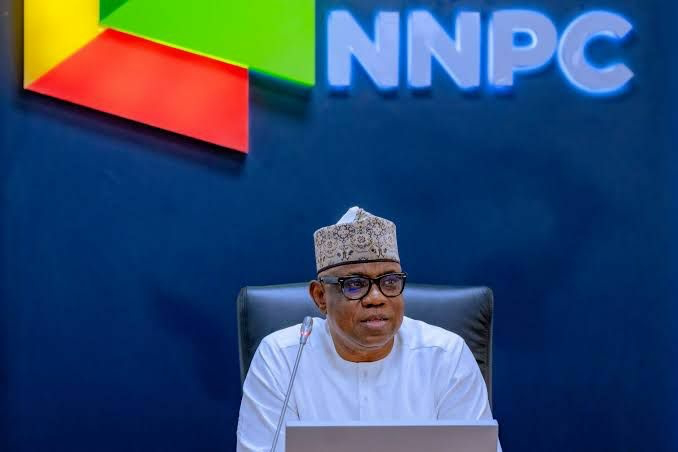
Morocco and Algeria are not only competing economically and regionally, but are also seeking to strengthen their respective positions in the race to move Nigerian natural gas toward international markets. At the centre of that competition is the Nigerian National Petroleum Company Limited, NNPCL, whose financial participation is important to two major pipeline projects linking Nigeria with North Africa and Europe.
The competition is taking shape around two ambitious corridors. Morocco is backing the African Atlantic Gas Pipeline, AAGP, which would transport Nigerian gas along the West African coast toward Morocco. Algeria, meanwhile, is advancing the Trans Saharan Gas Pipeline, TSGP, through Niger to Algeria and onward toward European markets. Both projects have received renewed attention in 2026.
Two Pipelines, One Major Gas Resource
Nigeria’s vast natural gas reserves make the country a critical partner for both projects.
The proposed AAGP is designed to connect Nigeria with Morocco through several West African countries before linking with infrastructure that can provide access to European markets. The project received a major institutional boost in July 2026 when ECOWAS member states signed an Intergovernmental Agreement supporting its development.
The project is expected to cover thousands of kilometres and has been estimated at roughly $25 billion. Its promoters envisage a corridor that would serve participating West African economies while also creating an additional route for Nigerian gas exports.
Algeria’s TSGP follows a different route. The pipeline would carry Nigerian gas through Niger to Algeria, where it could connect with existing gas infrastructure serving the European market.
In June 2026, Algeria officially launched construction work on its section of the Trans Saharan project, marking a significant step for a project that has been discussed for decades.
Morocco Builds the Atlantic Case
For Morocco, the Atlantic pipeline represents more than a gas transportation project.
The country sees the corridor as an opportunity to deepen economic integration with West Africa while positioning itself as an energy link between African producers and European markets.
The AAGP is being jointly promoted by NNPCL and Morocco’s Office National des Hydrocarbures et des Mines, ONHYM. The two sides have already completed important technical studies and continue to work on the financial and commercial structure of the project.
In July, ECOWAS confirmed that the intergovernmental agreement would allow the project to move into its next implementation phase, including the creation of a project company and a higher authority responsible for coordination.
However, financing remains a major issue. The project still requires substantial capital mobilisation before construction can proceed at full scale.
That reality places NNPCL’s role under greater scrutiny because Nigeria is not merely the source of the gas.
Algeria Moves From Plans to Construction
Algeria, meanwhile, has sought to demonstrate that the Trans Saharan option is moving beyond planning.
On June 4, 2026, Algeria launched construction of its section of the TSGP. The project is designed to stretch for more than 4,000 kilometres from Nigeria through Niger to Algeria.
The pipeline is jointly sponsored by NNPCL, Algeria’s Sonatrach and Niger’s national oil company, SONIDEP. Once completed, it is intended to connect Nigerian gas supplies to Algeria’s existing export infrastructure and ultimately European markets.
The June milestone therefore gave Algeria a tangible development to point to as the competing Atlantic project continues its own financing and institutional preparations.
Moreover, officials from Nigeria, Algeria and Niger have continued discussions on the technical, financial and logistical requirements of the Trans Saharan project.
NNPCL Faces a Strategic Financing Question
This is where Nigeria’s position becomes particularly important.
NNPCL has publicly maintained that the two projects should not necessarily be viewed as mutually exclusive. Company officials have argued that Nigeria remains committed to both projects while acknowledging that each faces distinct challenges.
The AAGP faces the enormous task of financing and coordinating infrastructure across numerous countries. The TSGP, although shorter, must contend with security, regional stability and the complexities of building across the Sahel.
Therefore, the issue is not simply which pipeline Nigeria prefers. The bigger question concerns how Nigeria can structure its financial commitments without placing excessive pressure on its resources.
Recent reporting has cited substantial potential capital requirements for the Atlantic project, while the Trans Saharan project also carries a multibillion dollar cost. Consequently, NNPCL must consider commercial returns, financing structures, gas supply commitments, security risks and the long term reliability of each route.
Morocco and Algeria Offer Different Corridors
The rivalry also reflects the different strategic positions of Morocco and Algeria.
Morocco has positioned itself around the Atlantic corridor, building stronger economic relationships with West African states and presenting the pipeline as a regional integration project.
Algeria, by contrast, already possesses extensive gas infrastructure and a long established relationship with European energy markets. Its route offers Nigeria a more direct land corridor through Niger into Algeria.
Both approaches therefore give Nigeria access to different strategic networks.
The Atlantic route offers wider regional integration and access to several West African markets along the pipeline. The Trans Saharan route provides a shorter continental connection toward Algeria and existing European gas infrastructure.
Security Adds Another Dimension
Financing is only one part of the equation.
Security also plays an important role in determining how quickly either project can move toward completion.
The Trans Saharan route passes through Niger, where instability and security concerns have historically complicated major infrastructure projects. The Atlantic pipeline, meanwhile, would cross numerous countries, creating its own challenges around regulation, land access, security and coordination.
The larger the number of countries involved, the more governments and institutions must coordinate before construction and operation can proceed smoothly.
As a result, both corridors require more than financial commitments. They require long term political cooperation, regulatory coordination and reliable security arrangements.
Nigeria Holds the Gas Advantage
For Nigeria, the competition presents both an opportunity and a strategic responsibility.
The country has long sought to expand its gas sector beyond domestic consumption and liquefied natural gas exports. New pipeline corridors could provide additional markets while supporting investment in upstream gas production.
However, pipeline infrastructure only creates value when sufficient gas is available, contracts are commercially viable and the transportation network can operate reliably.
This makes NNPCL’s decisions particularly significant.
Rather than treating the two projects solely as competing foreign initiatives, Nigeria can view them as potential components of a broader gas export strategy, provided their financing structures, commercial terms and security requirements remain sustainable.
The Race Is About More Than Gas
The emerging Morocco Algeria competition ultimately demonstrates how strategically important Nigerian gas has become.
Morocco wants the Atlantic corridor to strengthen its position as a bridge between West Africa and Europe. Algeria wants the Trans Saharan route to reinforce its existing role in the European energy market.
Nigeria, meanwhile, sits at the centre of both ambitions because neither corridor can achieve its intended purpose without Nigerian gas.
That gives NNPCL an important position in determining how the two projects develop. Yet it also places pressure on the company to balance competing financial demands while protecting Nigeria’s long term commercial interests.
As construction activity advances on the Algerian section of the Trans Saharan pipeline and the African Atlantic Gas Pipeline moves through its institutional and financing stages, the competition is likely to become more visible.
Ultimately, the central question will not simply be whether Morocco or Algeria succeeds in attracting Nigerian gas. It will be whether Nigeria can develop both export corridors in a way that expands its gas market, attracts sustainable investment and delivers measurable economic value from one of the country’s most important natural resources.
About The Author