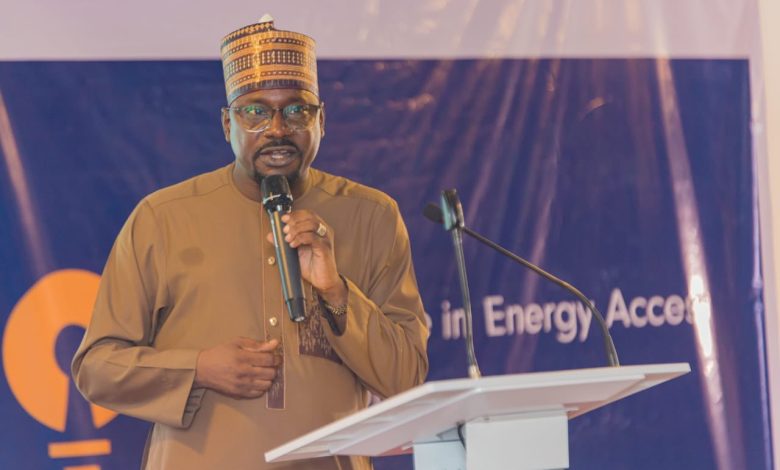
The Managing Director of the Rural Electrification Agency (REA), Abba Aliyu, has warned that Nigeria cannot continue to depend indefinitely on electricity subsidies, urging the country to accelerate the development of a financially sustainable electricity market capable of attracting private investment and recovering operational costs.
Aliyu said the long-term stability of Nigeria’s power sector depends on creating a commercially viable electricity market where investors can confidently finance infrastructure, expand energy access, and deliver reliable electricity services without excessive dependence on government support.
Furthermore, he noted that building a cost-reflective and investment-friendly electricity ecosystem is essential for achieving universal energy access and supporting economic development.
Need for a Sustainable Electricity Market
According to the REA Managing Director, subsidies have played an important role in supporting electricity consumers over the years.
Furthermore, he explained that while such interventions may provide temporary relief, they cannot serve as a permanent solution for financing the country’s growing energy needs.
He stressed that a sustainable electricity market should generate sufficient revenue to maintain infrastructure, expand services, and encourage continuous investment.
Financial sustainability supports long-term growth.
Private Investment Is Critical
Aliyu emphasised that attracting private capital remains essential for transforming Nigeria’s electricity sector.
Furthermore, investors are more likely to finance generation, transmission, distribution, and renewable energy projects when the market operates under predictable commercial conditions that allow for reasonable cost recovery.
A stronger investment climate would accelerate infrastructure development across the country.
Private capital drives sector expansion.
Expanding Energy Access
The REA has continued implementing programmes aimed at improving electricity access, particularly in underserved and rural communities.
Furthermore, decentralised energy solutions such as mini-grids and standalone solar systems have become important tools for extending electricity to communities beyond the national grid.
Aliyu noted that sustainable financing models are necessary to expand these initiatives nationwide.
Reliable electricity improves livelihoods.
Supporting Renewable Energy Development
The REA Managing Director reiterated the agency’s commitment to promoting renewable energy as part of Nigeria’s broader electricity strategy.
Furthermore, investments in solar energy, mini-grids, and other clean energy technologies can improve electricity access while reducing pressure on the national grid.
Renewable energy also supports environmental sustainability and long-term energy security.
Clean energy strengthens resilience.
Creating an Investor-Friendly Environment
Aliyu explained that regulatory certainty, transparent policies, and commercially viable pricing structures remain essential for encouraging greater private sector participation.
Furthermore, investors require confidence that projects will remain financially sustainable throughout their operational lifespan.
Stable policies encourage long-term investment decisions.
Balancing Affordability and Sustainability
While advocating a sustainable electricity market, the REA boss acknowledged the importance of protecting vulnerable consumers.
Furthermore, he suggested that targeted social interventions could support low-income households while allowing the broader electricity market to operate on commercially sustainable principles.
Balanced reforms can improve both affordability and investment confidence.
Power Sector Reform Remains Essential
Nigeria continues pursuing reforms designed to improve electricity generation, transmission, distribution, and access.
Furthermore, strengthening market efficiency, encouraging innovation, improving infrastructure, and expanding renewable energy remain central objectives of the country’s long-term energy strategy.
A stronger electricity sector supports industrial growth and economic competitiveness.
Building Nigeria’s Energy Future
Abba Aliyu’s call for a financially sustainable electricity market highlights the growing need for reforms that reduce dependence on long-term subsidies while encouraging private investment.
Furthermore, by creating an investor-friendly environment, supporting renewable energy, improving cost recovery, and expanding electricity access through commercially viable models, Nigeria can build a stronger, more resilient power sector capable of meeting the country’s growing energy demands and supporting sustainable national development.
About The Author