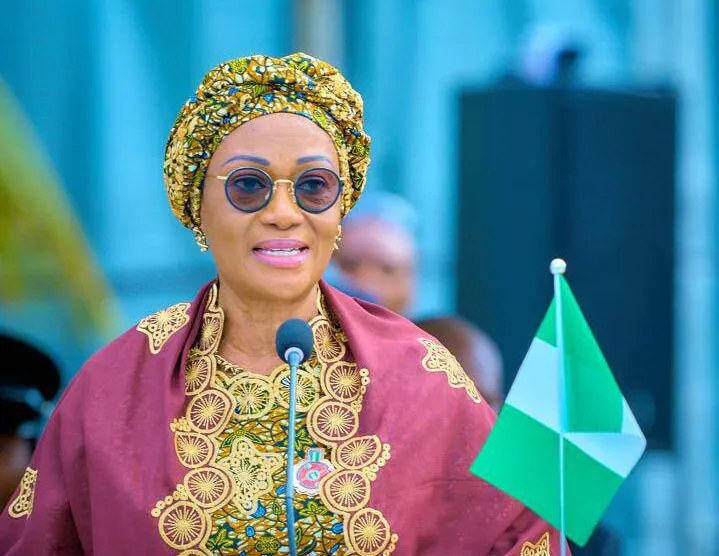
Nigeria’s First Lady, Senator Oluremi Tinubu, has launched a ₦1 billion empowerment programme targeting 5,000 beneficiaries in Edo State, alongside the inauguration of 50 Compressed Natural Gas (CNG) buses aimed at improving public transportation.
The initiatives combine economic empowerment with efforts to strengthen mobility, reflecting two areas of public concern: access to livelihood opportunities and the cost and availability of transportation.
The empowerment programme is expected to support beneficiaries through an intervention designed to improve their economic prospects, while the newly inaugurated CNG buses are intended to contribute to public transport services in the state.
₦1 Billion Programme Targets 5,000 Beneficiaries
The ₦1 billion empowerment initiative is designed to reach 5,000 beneficiaries in Edo State, with the programme placing economic support at the centre of its intervention.
Empowerment initiatives can help recipients strengthen small businesses, develop income-generating activities and improve their ability to meet household needs. Their practical impact, however, depends on the form of assistance provided, the selection process and the availability of follow-up support.
For the Edo programme, further details on the distribution of the funds, eligibility requirements and the specific categories of beneficiaries would help clarify how the intervention is expected to work.
The number of intended beneficiaries also makes implementation important. Transparent selection criteria, timely delivery of support and appropriate monitoring can help ensure that assistance reaches the people it is intended to serve.
Beyond the initial distribution, the programme’s longer-term value will depend on whether beneficiaries can use the support to establish or strengthen sustainable sources of income.
50 CNG Buses Inaugurated for Public Transportation
Alongside the empowerment programme, the First Lady inaugurated 50 CNG buses intended to improve public transportation in Edo State.
The introduction of CNG-powered buses forms part of wider interest in alternative vehicle fuels as Nigeria explores ways to reduce reliance on petrol and manage transportation costs.
Compressed natural gas can offer a different fuel option for public transport operators, although the benefits depend on fuel prices, vehicle maintenance, refuelling infrastructure and the efficiency with which the buses are deployed.
For commuters, the key consideration will be whether the new buses translate into more accessible, reliable and affordable transportation services.
The number of routes covered, frequency of service, fares and arrangements for maintaining the vehicles will influence how much residents benefit from the initiative.
Transportation and Household Costs
Public transportation plays an important role in the daily lives of workers, traders, students and other commuters. Changes in transport availability and operating costs can affect how easily people reach workplaces, schools, markets and essential services.
The deployment of additional buses could expand transport capacity if the vehicles are integrated effectively into existing services. However, the extent of the improvement will depend on operational planning and whether the buses serve routes where demand is greatest.
CNG-powered transport may also provide an opportunity to diversify fuel use. To sustain such a transition, operators need dependable access to natural gas, suitable refuelling facilities and technical support for the vehicles.
These practical considerations will help determine whether the buses deliver lasting improvements rather than a temporary increase in available transport.
Linking Economic Empowerment With Development
The two initiatives address different but connected aspects of economic participation. The empowerment programme focuses on providing support to individuals, while the transportation initiative seeks to improve access to mobility.
For small-business owners and informal-sector workers, affordable transportation can influence the cost of moving goods, reaching customers and accessing markets. Better transport services may therefore complement efforts to improve livelihoods, although the scale of any benefit will depend on how the schemes are implemented.
Similarly, empowerment support can have a broader effect when beneficiaries have access to markets, transport and other services needed to sustain their activities.
Coordinating these types of interventions with wider development planning can help improve their reach and practical value.
Implementation Will Determine Lasting Benefits
The launch of the ₦1 billion programme for 5,000 beneficiaries and the inauguration of 50 CNG buses mark two separate interventions in Edo State’s economic and transportation landscape.
Their long-term impact will depend on transparent programme delivery, effective monitoring and the ability to maintain the transport fleet and provide reliable services.
For beneficiaries, the central question will be whether the empowerment support creates meaningful economic opportunities. For commuters, it will be whether the new buses improve access to dependable and affordable transportation.
The outcomes of both initiatives will ultimately be measured by the benefits residents experience after the launch, including the reach of the financial assistance and the quality of public transport services delivered.
About The Author